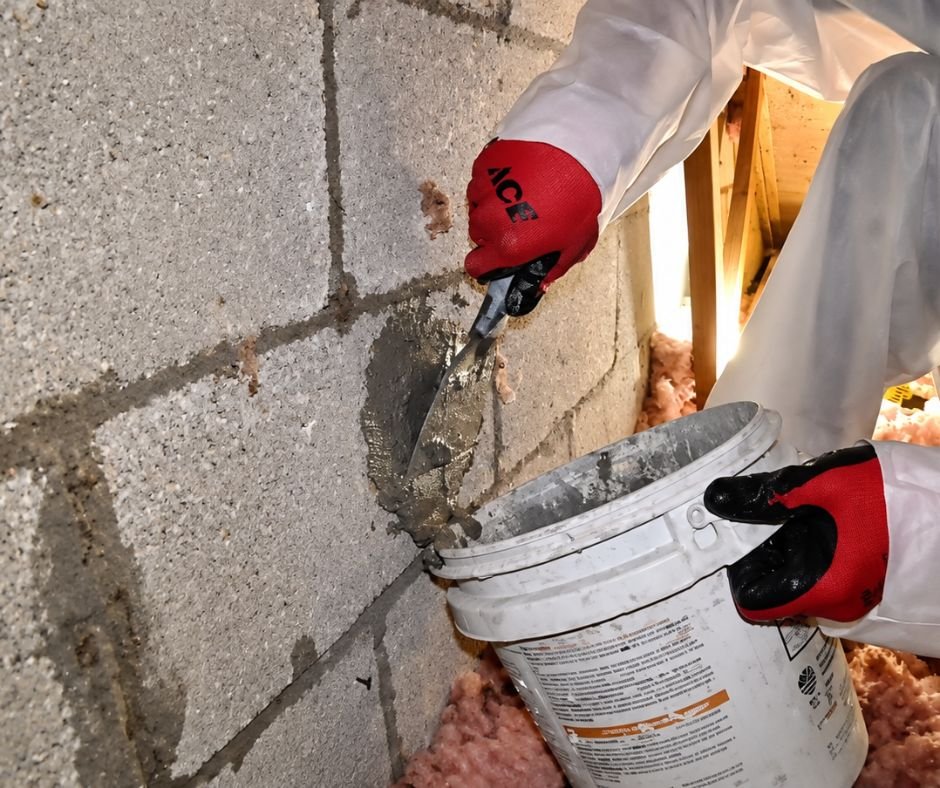
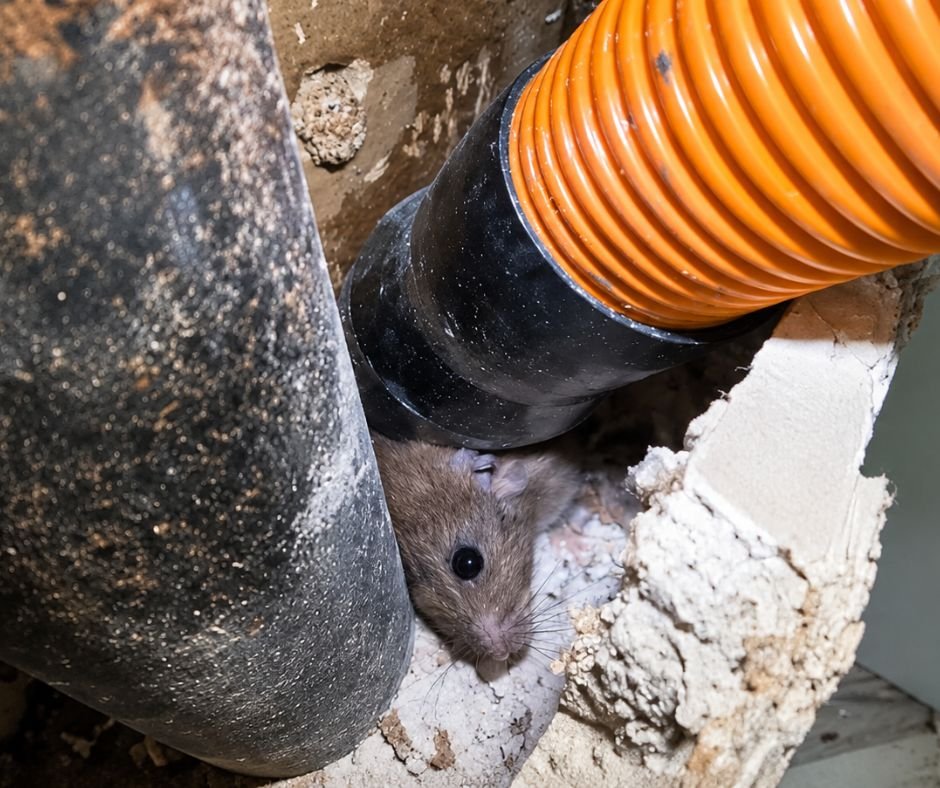
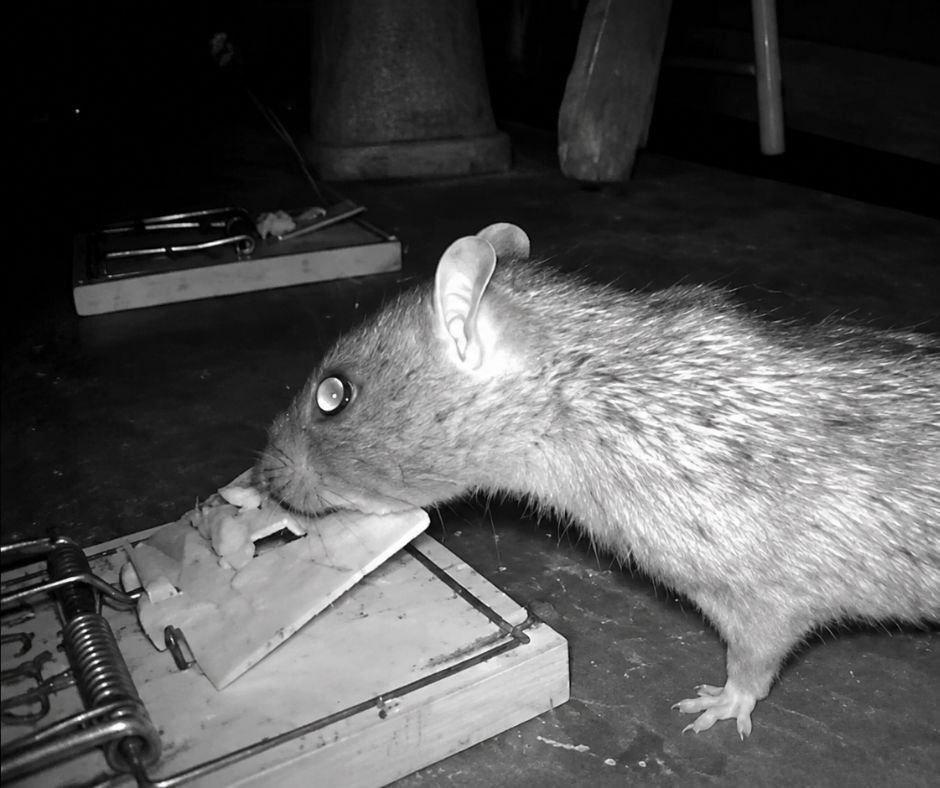
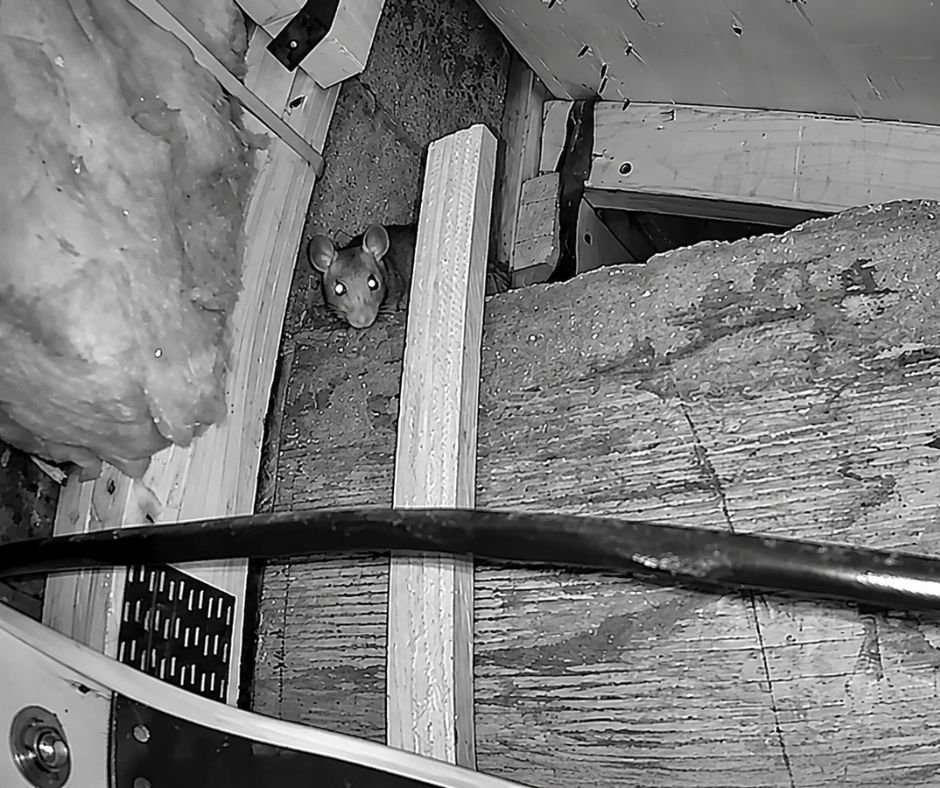
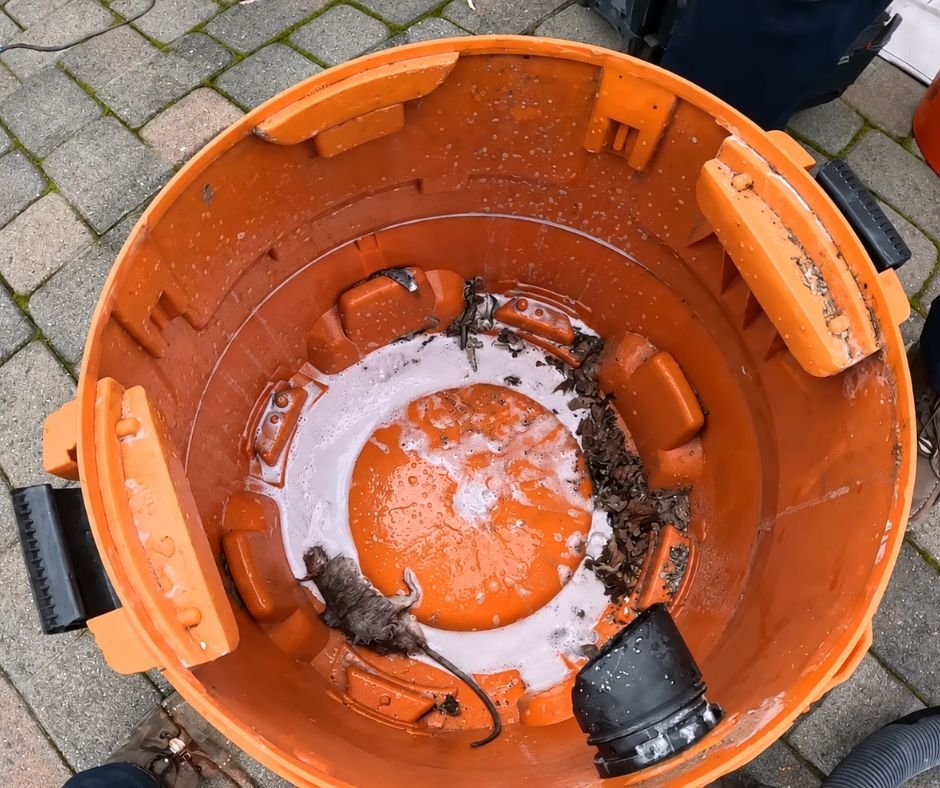
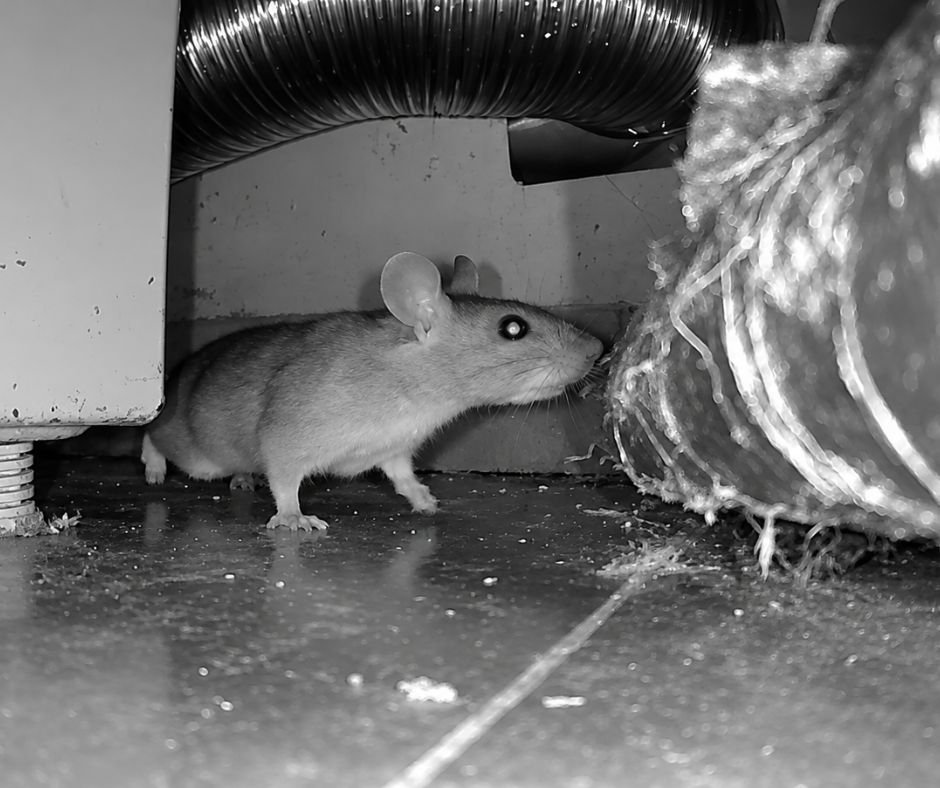
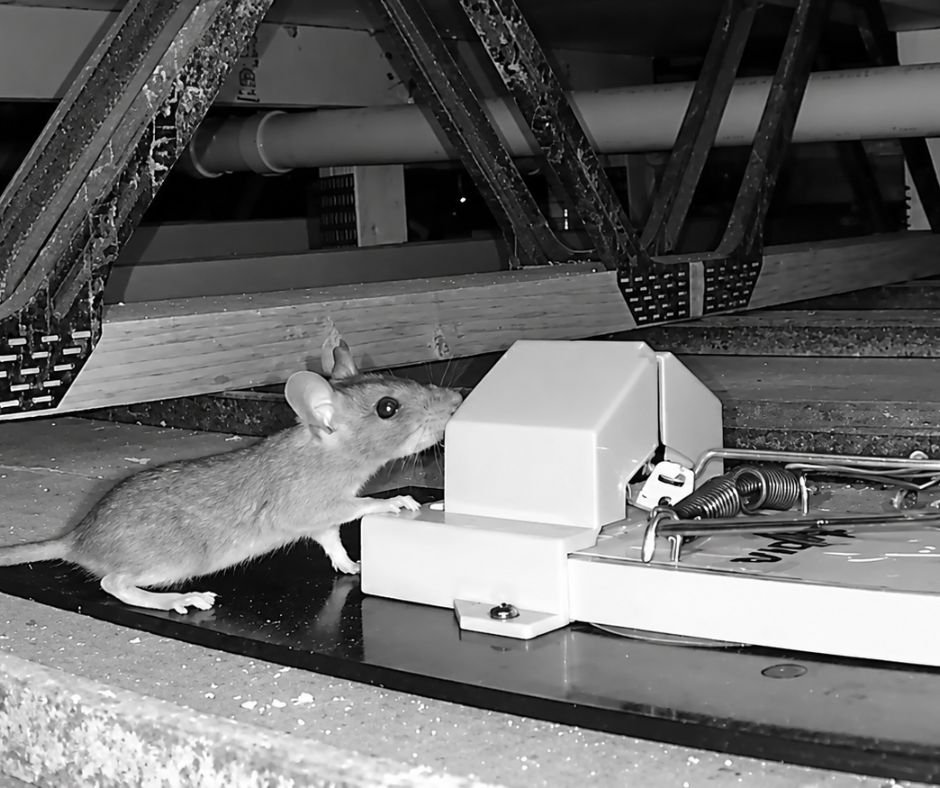
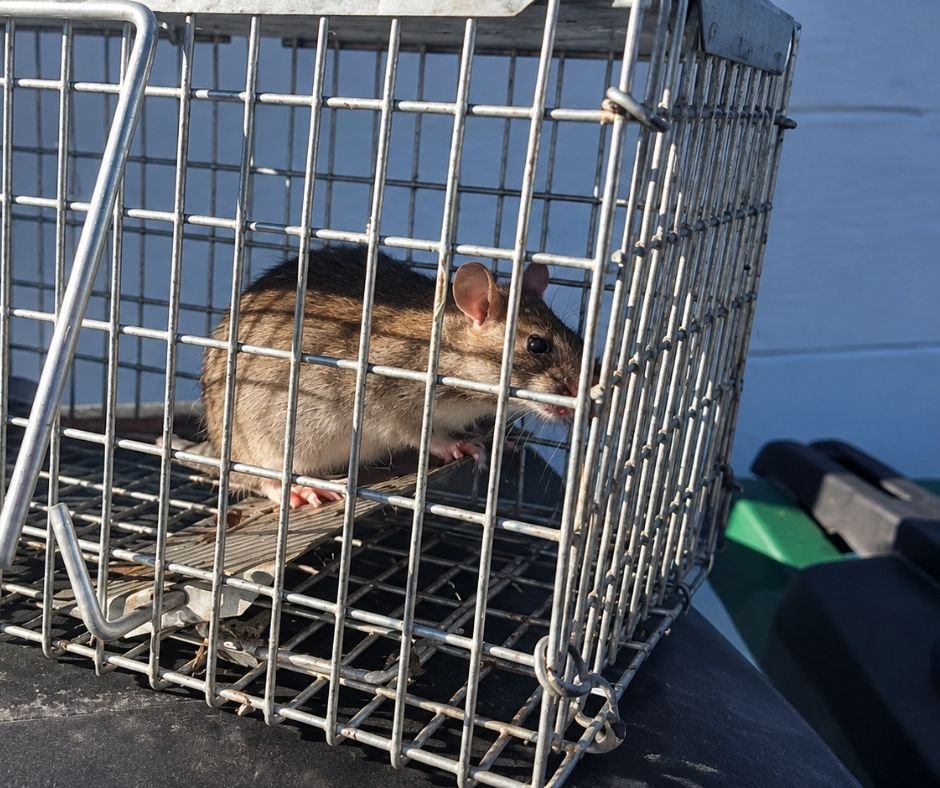
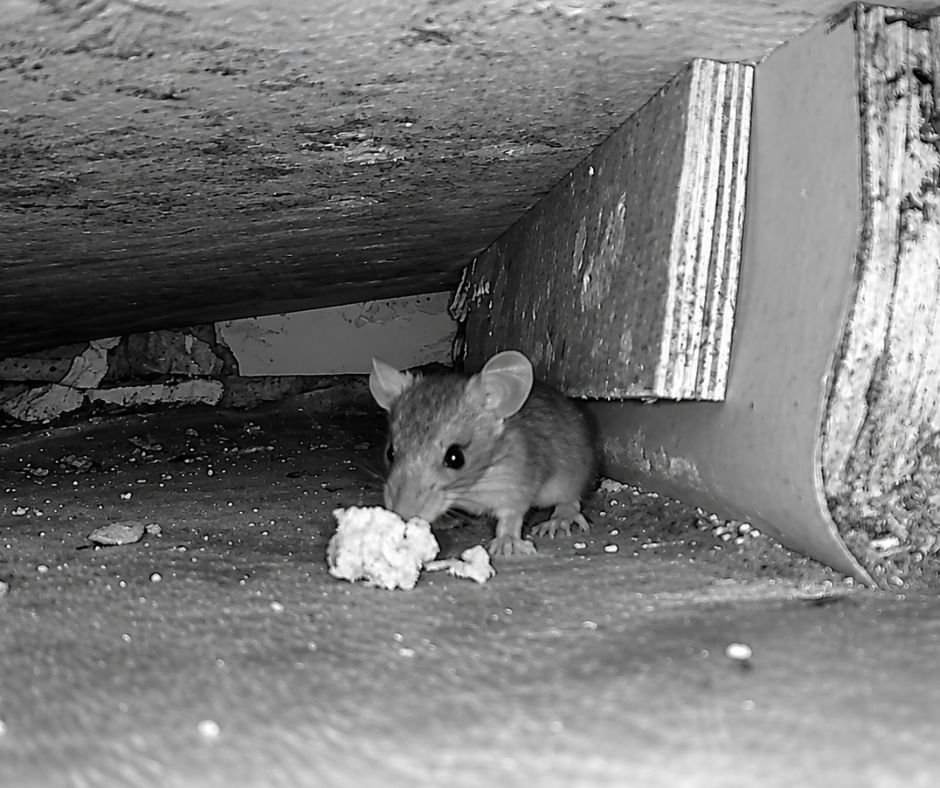
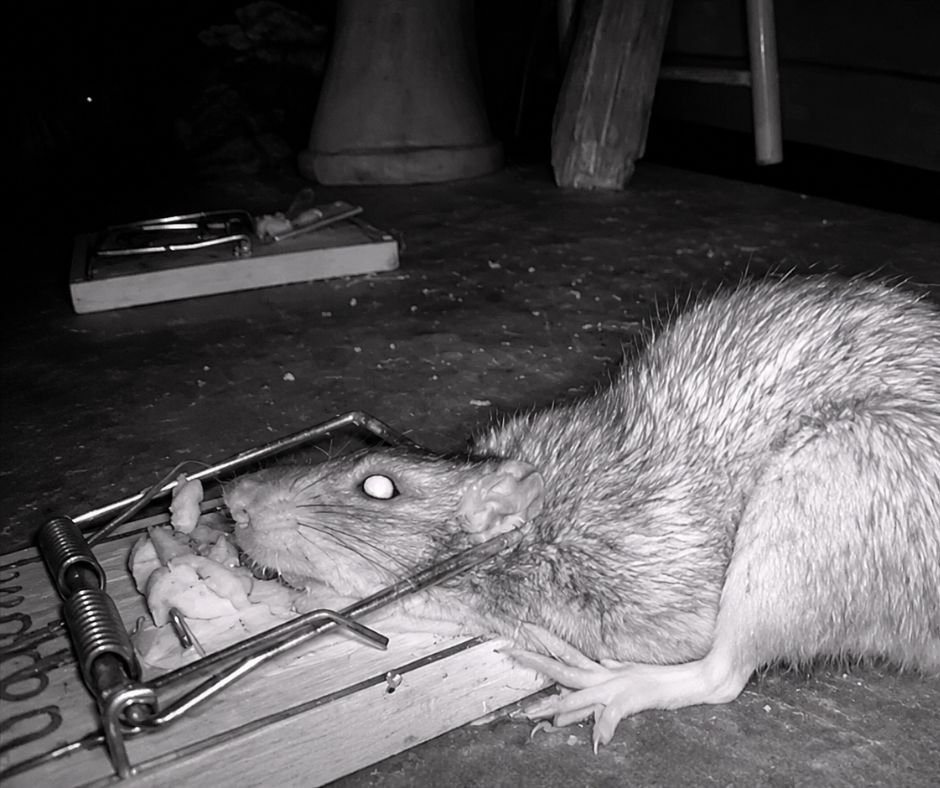
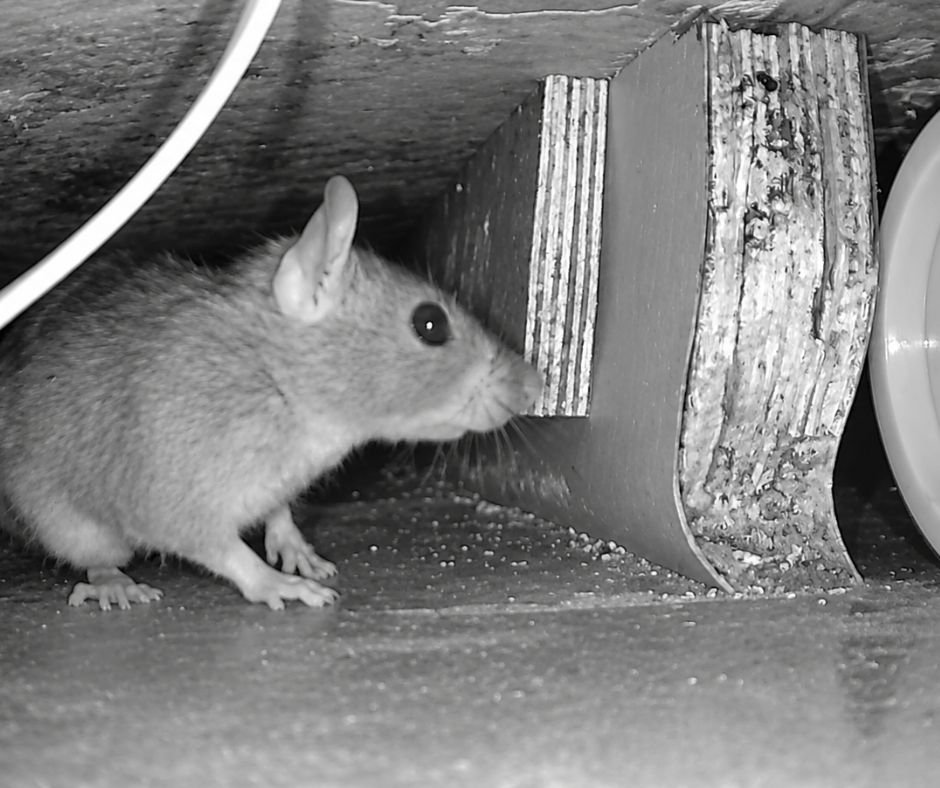
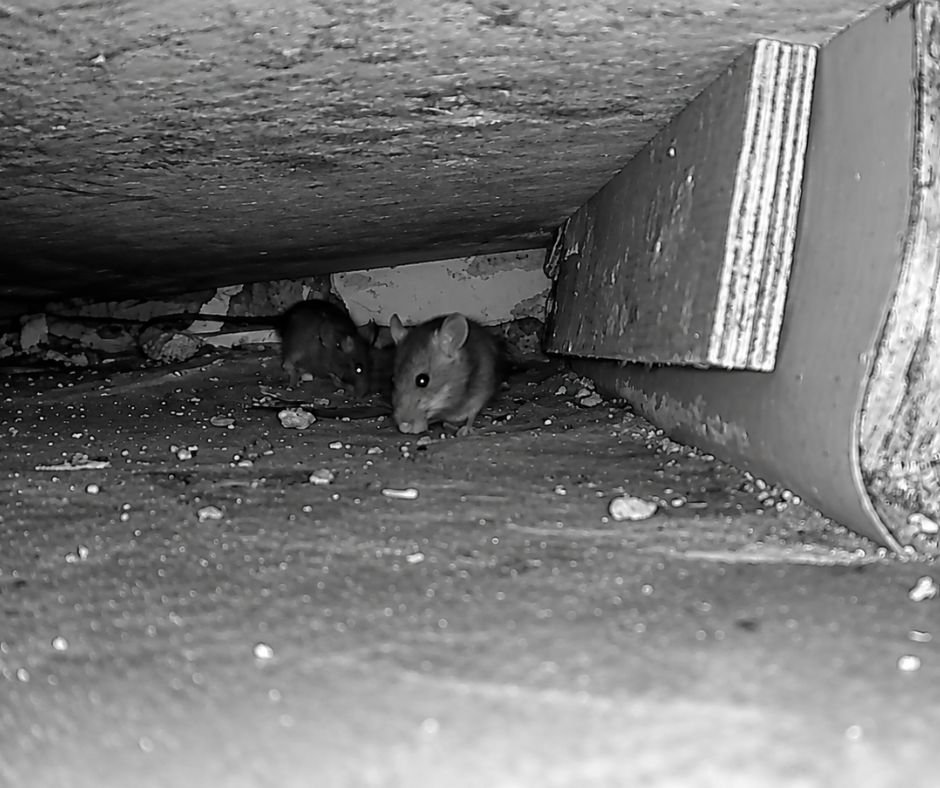
New homes in sections like Matanzas Woods often sit next to wooded lots that are being cleared. The rats living there look for new cover, and small builder gaps around pipes, cables and garage doors let them in. Sealing those gaps with metal is the fix.
Palm Coast and Flagler County
Rodent Control and Rat Removal in Palm Coast, FL
Palm Coast was laid out by ITT as one huge planned city, with wooded lots, canals and swales on almost every street. That design is great for living and just as good for rats. We find how they reach your house, close it off with metal and trap the ones already inside.
Quick answer
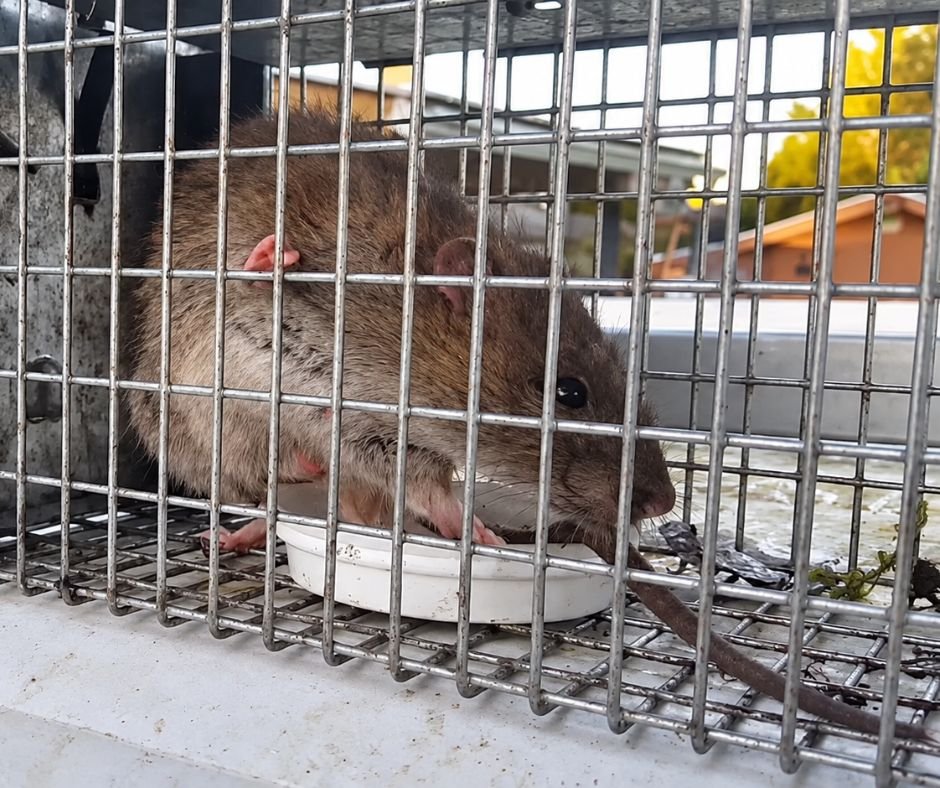
In Palm Coast, rats usually live outside first, in the woods, the swale or along a canal bank, and then move into the attic or garage. Lasting rodent control in Palm Coast means sealing the house, not just setting traps.
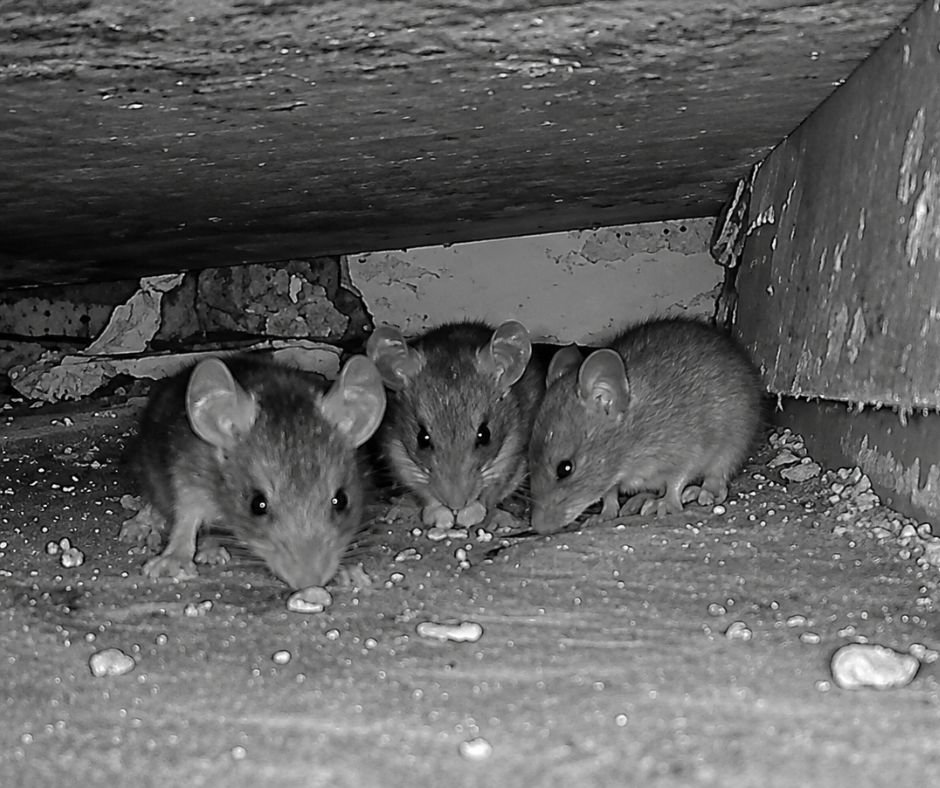
Most homes here are block and stucco on lots that back up to trees, a vacant lot, a freshwater canal or a saltwater canal. Roof rats (Rattus rattus) run the tree limbs and power lines to the roofline. Norway rats (Rattus norvegicus) and house mice (Mus musculus) come in at ground level, often through garage door corners and pipe gaps.
We inspect the whole property, show you the entry points with photos, and give you a written plan and price. Nothing starts until you approve it.
- County
- Flagler County
- Population
- 89,258 in 2020, about 106,729 in 2024
- Founded
- Planned by ITT starting in 1969, a city since December 31, 1999
- Water
- Intracoastal Waterway on the east, plus freshwater and saltwater canals
- Main pest
- Roof rats in attics, mice in garages
- ZIP codes
- 32137 and 32164
- Call
- (561) 562-7607, open 24/7
Sources: U.S. Census Bureau 2020 count and 2024 estimate (via FlaglerLive), Wikipedia, Palm Coast, Florida.
The letter on your street sign
Rat Risk in Palm Coast, Section by Section
ITT grouped Palm Coast into lettered sections, and every street in a section starts with the same letter. If you live on a P street, you are in the P section. Each section has its own mix of woods, water and lot types, which changes where rodents come from.
| Section | Neighborhood | What surrounds the homes | What we check first |
|---|---|---|---|
| C and F | Palm Harbor, east side | Some of the original canal neighborhoods near the Intracoastal, with docks and seawalls | Norway rats along seawalls, dock storage, garage door seals, AC line openings |
| B | Indian Trails, north of Palm Coast Parkway | Shady wooded lots, some homes on lakes and freshwater canals | Roof rats using tree limbs, soffit gaps, gable vents |
| L | Matanzas Woods, north end near Matanzas Woods Parkway | Still growing, with new homes next to vacant wooded lots | Builder gaps around pipes and cables, rodents pushed out by lot clearing |
| P | Pine Grove and Belle Terre | Wooded streets near the Pine Grove Waterway | Roof rats on the roofline, mice in the garage |
| W | Pine Lakes | Freshwater canals and green space between streets | Canal bank burrows, sheds, pool equipment and the swale culvert |
| E | Cypress Knoll | Golf course edges and older trees | Tile roof edges, ridge caps, palms touching the house |
| R, S and U | Lehigh Woods and Seminole Woods, south side | Large wooded areas and many empty lots | Attic entry from overhanging trees, mice in garages and wall voids |
| K, Z and LL | Quail Hollow, west edge | Rural feel near US 1, woods on many sides | Outbuildings, feed and storage areas, ground level gaps |
Section letters and names: AskFlagler, “Why Palm Coast streets start with the same letter,” and AskFlagler neighborhood guides. Entry points are what we look for on Palm Coast homes; every property gets a full inspection.
The ditch out front
1,200 Miles of Swales, and Rats Use Them Like Hallways
Palm Coast drains through a pyramid of canals, ditches and swales. The city says it has over 1,200 miles of swales, the shallow grass channels along the road in front of most homes. Tall grass, piled clippings and a clogged driveway culvert give rats and mice cover right next to your garage door.
Under Municipal Code 24-159, the property owner is in charge of the swale and driveway culvert. The city regrades swales on a rotation, but the day to day care is yours. Keeping the swale short and the culvert open takes away a hiding spot and a path to the house.
Swale question or a culvert that will not drain? Call Palm Coast Stormwater and Engineering at (386) 986-2360 or open a swale case through palmcoast.gov/connect.
Swale care that also helps with rodents
- Mow the swale so grass stays short.
- Keep both ends of the driveway culvert clear of dirt, leaves and grass.
- Blow clippings back onto the lawn, not into the swale.
- Pull limbs, trash and leaf piles out of the swale bottom.
- Do not fill in the swale or pipe it, which the city asks owners not to do.
- Store yard debris away from the garage until pickup.
Sources: City of Palm Coast, Swales page; Palm Coast Observer, “Palm Coast has 950 outstanding swale maintenance requests” (January 2024).
Living on the water
Freshwater Canal or Saltwater Canal, the Rat Problem Changes
Palm Coast has about 23 miles of saltwater canals, and the city manages 58 miles of freshwater canals. A canal lot is a beautiful place to live. It also gives rodents a steady supply of water and cover at the back of the yard.
Saltwater side
Seawalls, docks and boat storage
On the east side, near the Intracoastal Waterway, Norway rats dig under slabs and along the back of seawalls. They nest in boat storage, under decks and behind stacked gear. Fish cleaning stations and bait left on the dock bring them in fast.
- Seal gaps where the seawall meets the patio or slab
- Keep bait, fish scraps and pet food off the dock
- Raise stored items off the ground
Freshwater side
Grassy banks and pool enclosures
Freshwater canals in sections like Pine Lakes and Indian Trails have grassy or wooded banks. Rodents use the tall growth at the waterline and move toward pool cages, sheds and the AC pad. The city lowers canal levels for maintenance or before big rain, which can push animals up the bank.
- Check the pool cage screen and door sweep
- Look for burrows under sheds and AC pads
- Keep fallen fruit and bird seed picked up
Sources: Wikipedia, Palm Coast, Florida (saltwater canal miles); City of Palm Coast, Canals page (58 miles of freshwater canals, canal levels).
Services available in Palm Coast
Rat and Mouse Removal Services in Palm Coast
Most Palm Coast jobs combine a few of these: an inspection, sealing, trapping and cleanup. Choose a service to learn more, or call and we will tell you what your property needs.
Residential Rodent ControlAttic, garage and canal-lot rat removal for Palm Coast homes, from Palm Harbor to Grand Haven.Learn More →
Commercial Rodent ControlScheduled service with written visit logs for restaurants and shops around Palm Coast Town Center and European Village.Learn More →
Rodent RemovalTraps placed on the paths rats use and checked on return visits until the activity stops.Learn More →
Dead Rodent RemovalBad smell in a wall or ceiling? We find and remove the dead rodent, then clean and deodorize the area.Learn More →
Rodent CleanupRemoval of droppings, urine and nests from attics and garages, with advice on insulation replacement.Learn More →
Rodent ExterminatorEPA and FDACS certified technicians who use traps indoors and follow product labels around kids and pets.Learn More →
Rodent ExclusionWe seal soffits, roof vents, pipe gaps and garage corners with metal and mortar so rats cannot get back in.Learn More →
Rodent Feces RemovalCareful cleanup of droppings with disinfectant, never sweeping or vacuuming, which can spread germs.Learn More →
Rodent ProofingDoor sweeps, vent screens, seawall landscaping trims and roof-edge sealing for Palm Coast homes.Learn More →
Lots, woods and new roofs
A Fast Growing City Built Around Empty Lots
ITT plotted far more lots than it built on, and many were sold to out of state buyers sight unseen. Decades later, a lot of Palm Coast streets still have wooded empty lots between homes. Now those lots are being cleared and built on quickly, and the rodents living there move next door.
1969
ITT starts building
The planned city was laid out in lettered sections, not in order on the map.
89,258
2020 census
Up from about 32,700 people in 2000.
106,729
July 2024 estimate
Palm Coast passed Deltona as the biggest city in its metro area in 2023.
21.7%
Flagler County growth
From 2020 to 2025, with most of it in Palm Coast.
Sources: AskFlagler (ITT lot history); Wikipedia, Palm Coast, Florida; FlaglerLive, Flagler Census 2025 report; Daytona Beach News-Journal (May 2023), as cited by Wikipedia.
What is in the attic?
Rat, Mouse or Squirrel? Sorting Out the Noises
Wooded Palm Coast lots also bring gray squirrels and flying squirrels into attics. The treatment is different for each, so we confirm what you have before we set anything.
| Animal | When you hear it | What you find | Common way in |
|---|---|---|---|
| Roof rat (Rattus rattus) | Night, quick running and scratching | Dark droppings about 1/2 inch long, greasy rub marks on beams | Tree limbs to the roof, soffit and fascia gaps, gable vents |
| Norway rat (Rattus norvegicus) | Night, mostly in the garage or under the house | Burrows near slabs and seawalls, larger blunt droppings | Garage door corners, gaps under doors, pipe openings at ground level |
| House mouse (Mus musculus) | Night, soft scratching in walls and cabinets | Tiny droppings about 1/8 inch, chewed boxes and pet food bags | Gaps as small as a dime around pipes, cables and weep areas |
| Gray squirrel | Morning and late afternoon, heavy thumping | Chewed wood at the roofline, leaf nests | Holes chewed at roof corners and soffit returns |
| Flying squirrel | Night, light gliding and rolling sounds | Small piles of droppings in one spot | Small gaps at the roofline near trees |
Rodent species and signs: UF/IFAS Extension, Roof Rats (UW120). Squirrels are handled differently from rats and mice, so we tell you which one you have before any work starts.
Our process
Rat Removal in Palm Coast, Start to Finish
Most Palm Coast homes take about 2 to 3 weeks from first visit to final check. A big colony or a lot of openings can take longer.
- Visit 1
Yard to attic
We walk the swale, the canal bank or tree line, the roofline and the attic, and photo every gap. You get the plan and price.
- After approval
Close it with metal
Openings get sheet metal, 1/4 inch hardware cloth or concrete. Foam alone is not used, since rats chew through it.
- Week 1 to 2
Trap inside
Snap traps go on the runways we find inside, checked and moved on each visit.
- Week 2 to 3
Clean and disinfect
Droppings, nests and soiled insulation are removed the CDC way, wet down and wiped, never swept.
- Last visit
Check for new activity
We confirm nothing new is getting in before the job is closed.
After the wind
Hurricanes, Downed Limbs and Rats on the Move
Flagler County has taken major damage from Floyd in 1999, Jeanne in 2004, Matthew in 2016, Irma in 2017, and Ian and Nicole in 2022. After a storm, Palm Coast streets fill with limb piles in the swale, and roofs can lose shingles, tiles or soffit panels.
Those debris piles make fast shelter for rats, and a loose soffit panel is an open door to the attic. After any big storm, walk the roofline and look for gaps before the rats find them. If you hear something new in the ceiling, call us early.
What does not fix a Palm Coast rat problem
- Poison in the attic. Rats often die in the walls and the smell can last weeks.
- Ultrasonic plug-ins. UF/IFAS reports no proof they keep rats away.
- Foam in the gaps. Rats and mice chew right through it.
- Trapping without sealing. More rats from the woods or canal just move in.
- Leaving storm debris by the house. It becomes a nest within days.
Sources: Wikipedia, Palm Coast, Florida (storm history); UF/IFAS Extension, Roof Rats (UW120).
Rules and local help
Palm Coast Contacts and Florida Rules
If the problem is coming from a neighbor’s property or an empty lot, the city has ways to report it. These are the ones homeowners ask us about most.
Code issues
Report a property
Palm Coast Code Enforcement takes cases online through “Submit a Code Violation” or at (386) 986-3764. Florida law requires your name and address on a complaint.
Vacant lots
Dangerous trees next door
Dead, dying or hazardous trees on a vacant lot go through an Urban Forestry case with the city.
Licensing
FDACS and Chapter 482
Pest control companies in Florida are licensed by the Florida Department of Agriculture and Consumer Services under Chapter 482. Our team is EPA and FDACS certified.
Cleanup
Do not sweep droppings
The CDC says to wear gloves, spray droppings with disinfectant or 1 part bleach to 9 parts water, wait 5 minutes and wipe with paper towels.
Sources: City of Palm Coast, Code Enforcement page; Florida Statutes Chapter 482; CDC, cleaning up after rodents.
Primary Palm Coast response zone
Palm Coast service coverage
Is your ZIP on the route?
Palm Coast has 4 main ZIP codes. We cover the whole city and Flagler County. Call if you do not see yours.
32135321373214232164
Areas we serve
Check my address →
Palm Harbor · Indian Trails · Seminole Woods · Cypress Knoll · Matanzas Woods · Pine Lakes · Grand Haven · Lehigh Woods · Quail Hollow · The Hammock
Palm Coast rodent FAQ
Palm Coast Rat and Mouse Questions
From Palm Harbor to Seminole Woods, these are the questions we hear most. Call if yours is not here.
Call (561) 562-7607 →It helps. Canal sections like Palm Harbor see more Norway rats near seawalls and docks. Wooded sections like Indian Trails, Lehigh Woods and Seminole Woods see more roof rats coming off the trees. We still inspect the whole home either way.
Rats and mice hide in tall swale grass, clippings and clogged culverts, then travel to the garage. The owner is responsible for the swale and driveway culvert under city code, so keep it mowed and clear. For drainage problems call Stormwater and Engineering at (386) 986-2360.
Rats may always be near the water, but they do not have to be in your house. Sealing the seawall and slab gaps, the garage and the roofline, and keeping bait and fish scraps off the dock, keeps them outside.
Seal first, then trap. Find every opening a rat or mouse can fit through, close it with metal, hardware cloth or concrete, trap the ones inside and clean up after them. Poison alone or traps alone usually fail here because new rats keep coming from the woods and canals.
You can file a case with Palm Coast Code Enforcement online or at (386) 986-3764. Dead or hazardous trees on a vacant lot go through an Urban Forestry case. Meanwhile, sealing your own house is the best protection.
Yes. Storm debris piles give rats quick shelter, and loose soffit panels or roof damage open the attic. Move debris away from the house and check the roofline once it is safe. Call us if you hear new noises at night.
Yes. We cover every Palm Coast section, from Palm Harbor and Pine Lakes to Belle Terre, Cypress Knoll and Quail Hollow, plus nearby Flagler County areas like Bunnell, Flagler Beach and the Hammock.
Palm Coast dispatch is ready
Rats in Your Palm Coast Home or Business?
Call now. We will inspect the property, show you where rodents are getting in, and seal it so they stay out.
Request Palm Coast service
Give us a call. We’ll handle the next step.
Call us, tell us what you are seeing and where you are located, and our team will confirm the right appointment type and timing.
Serving Palm CoastPalm Coast, Florida(561) 562-7607Open 24 hours · 7 days a week