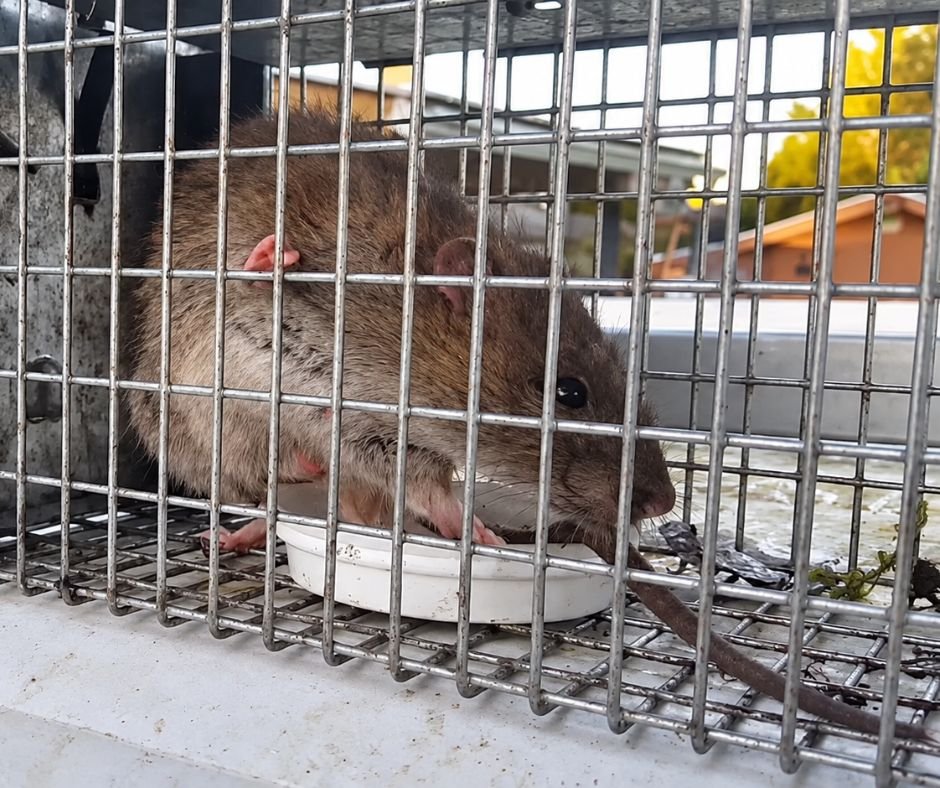
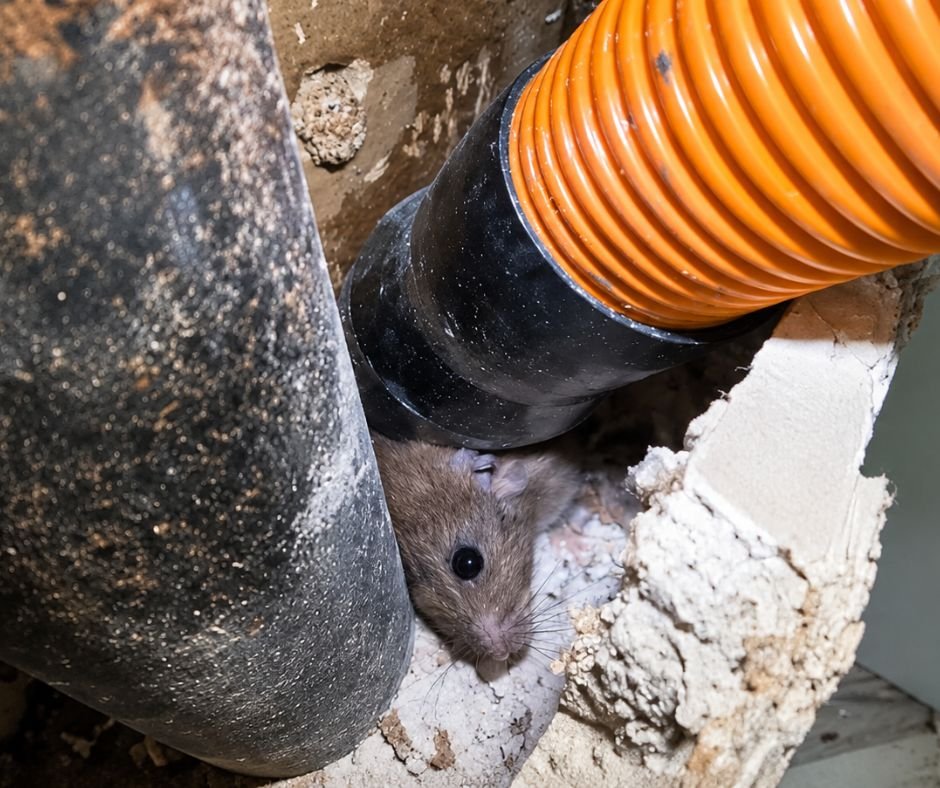
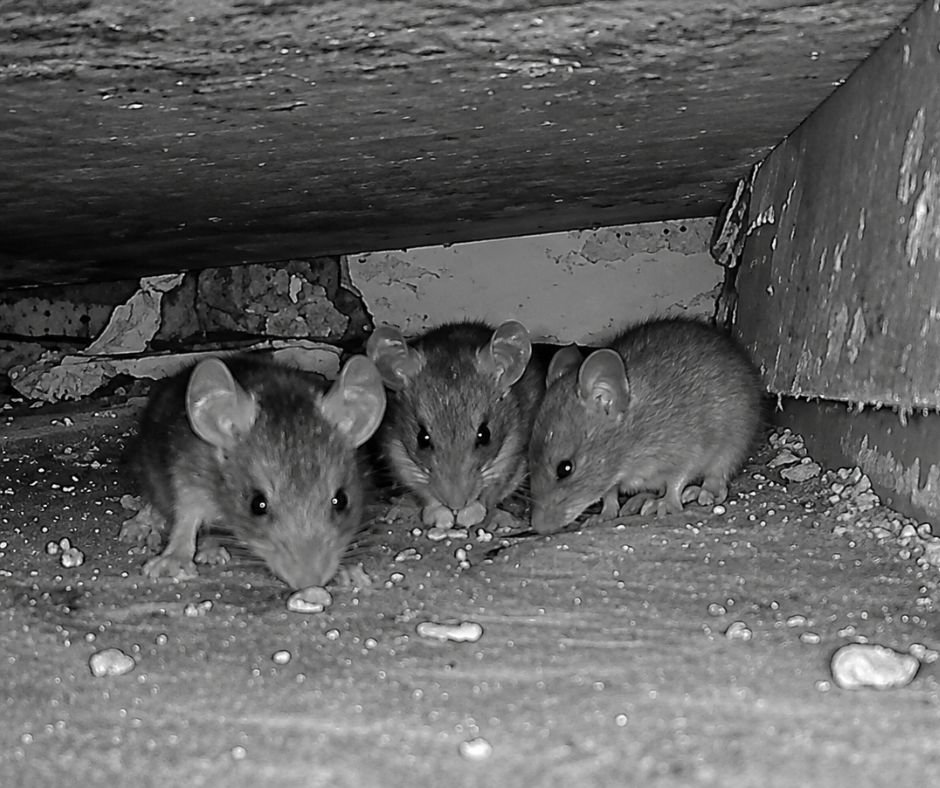
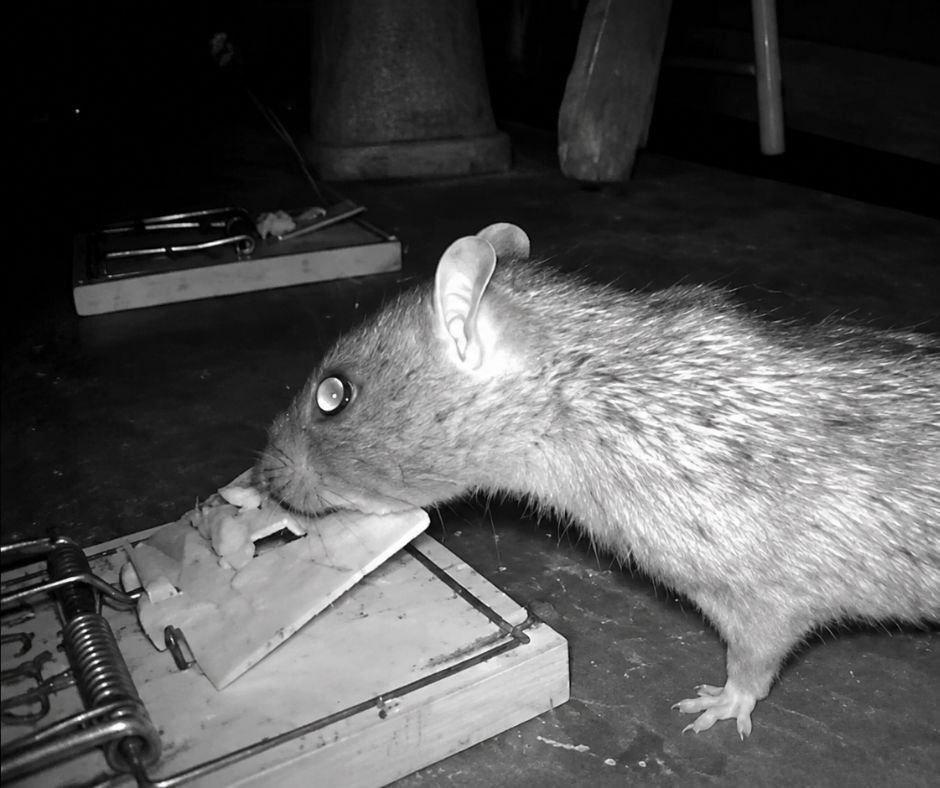
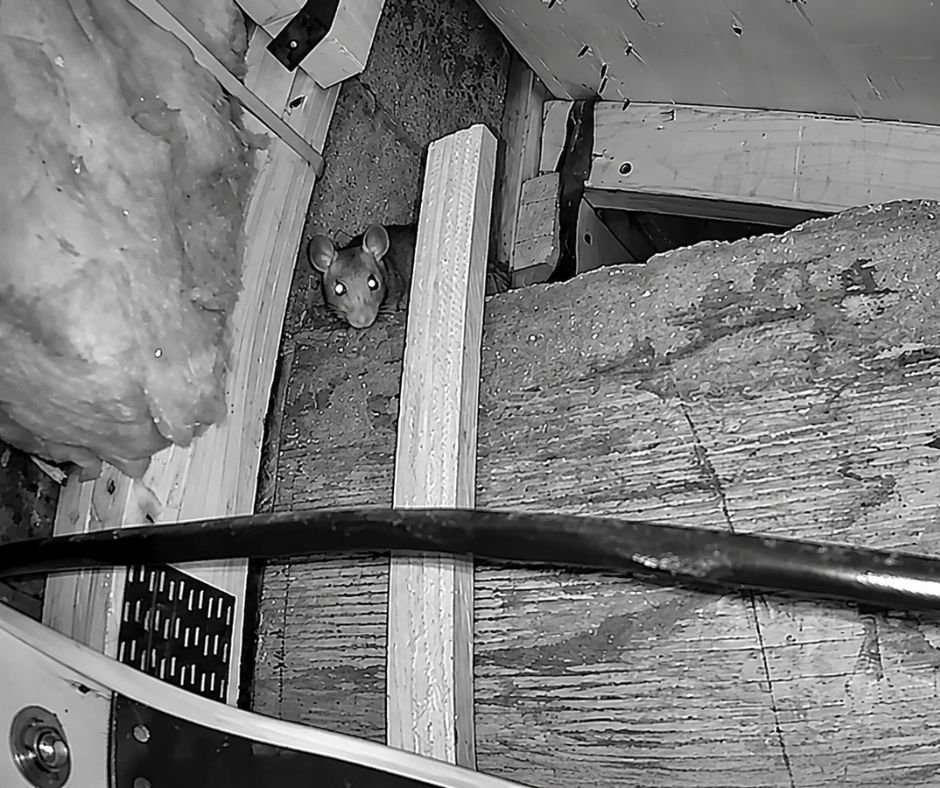
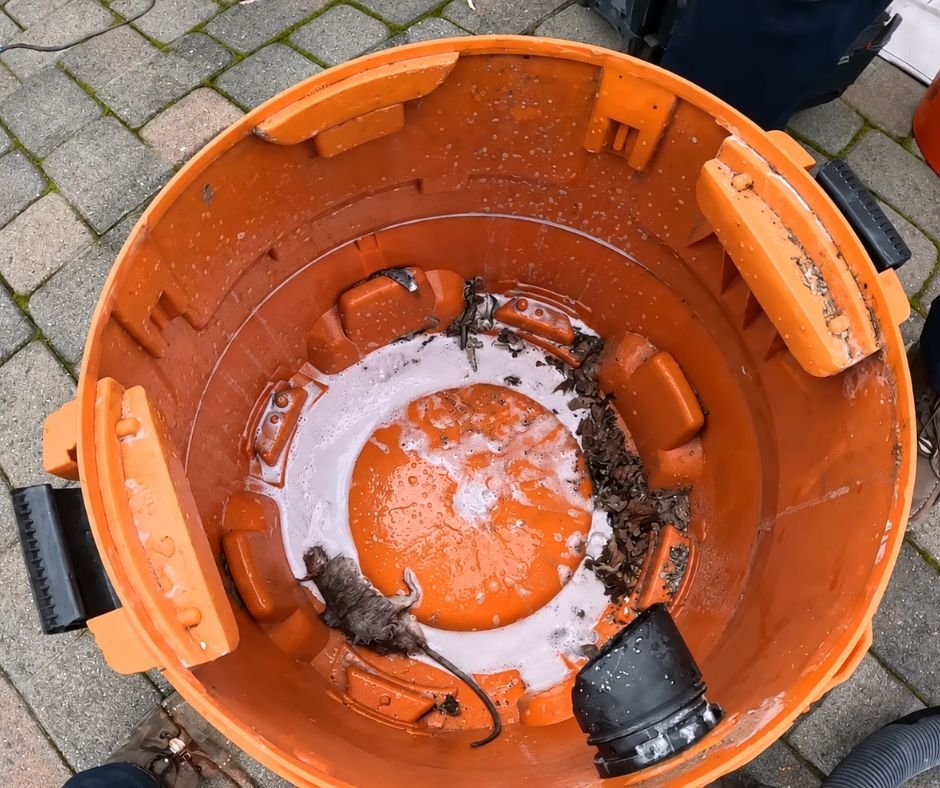
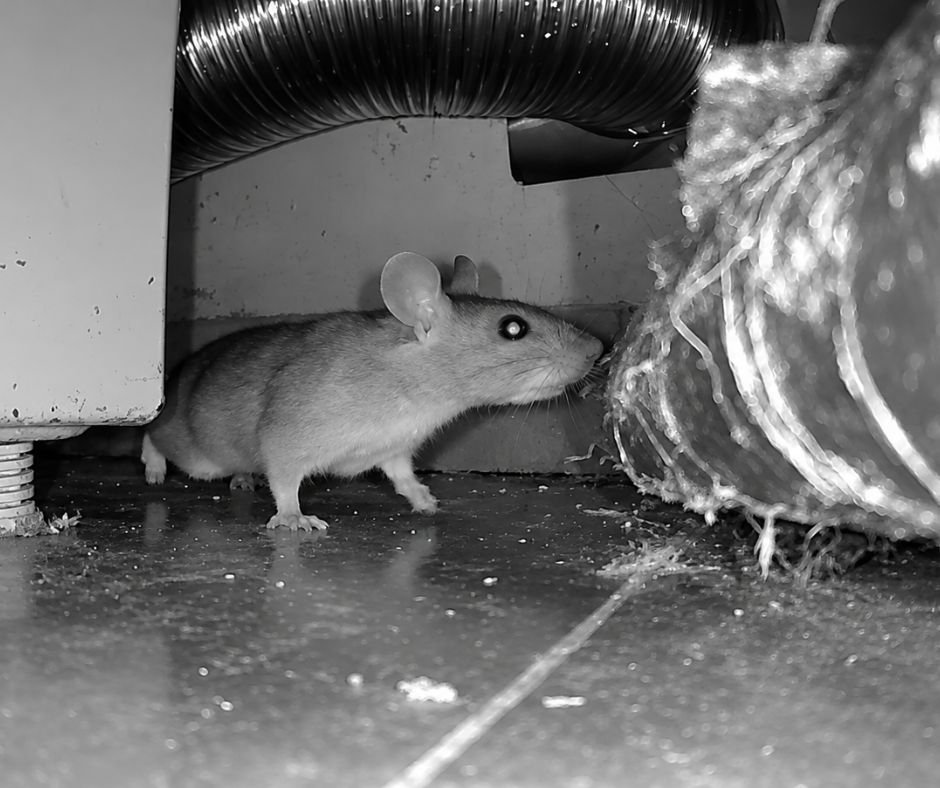
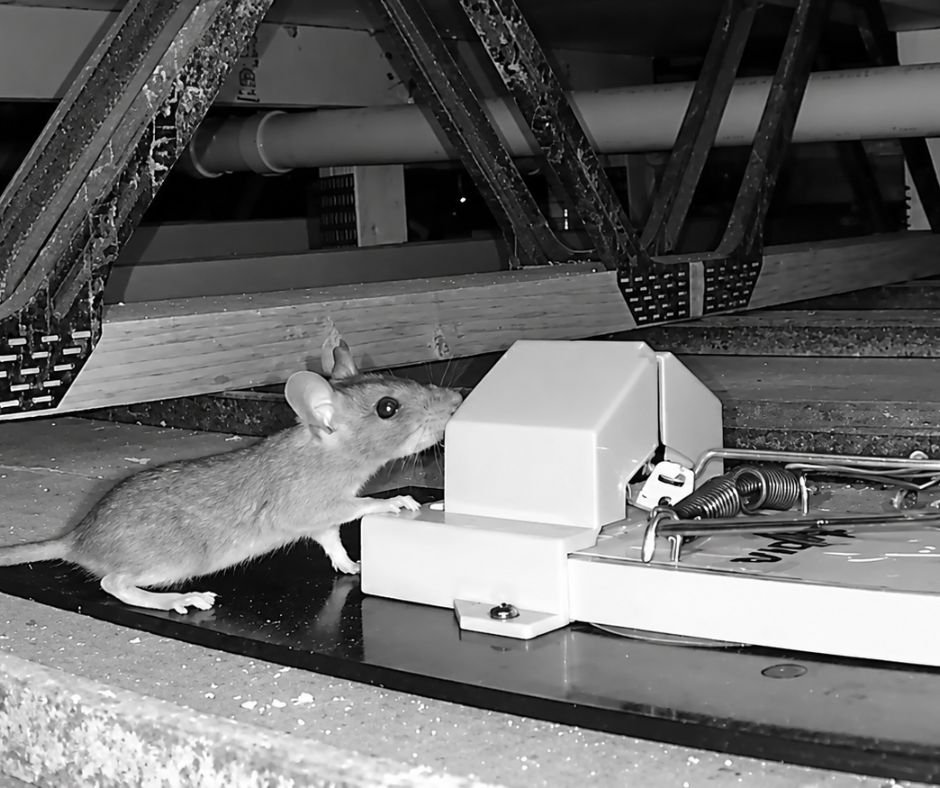
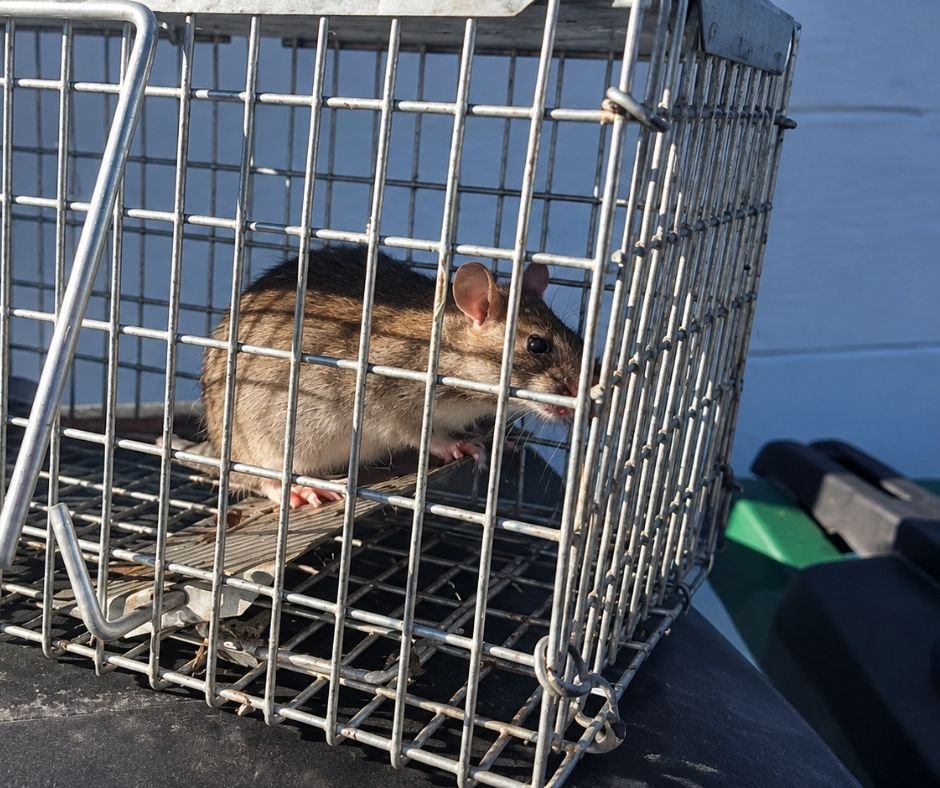
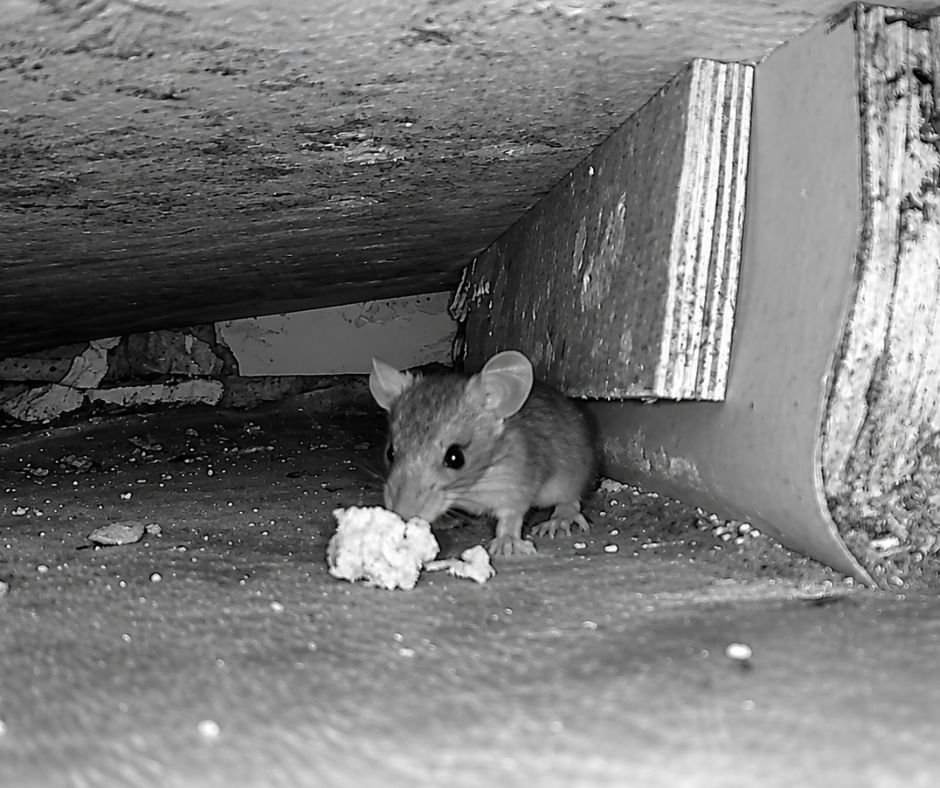
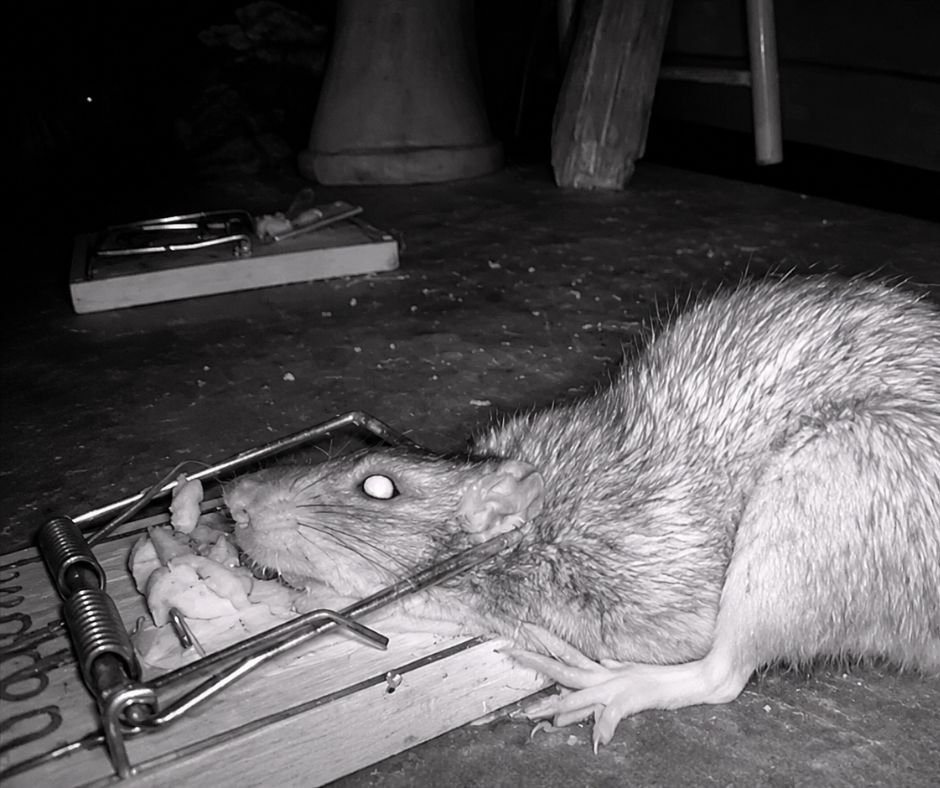
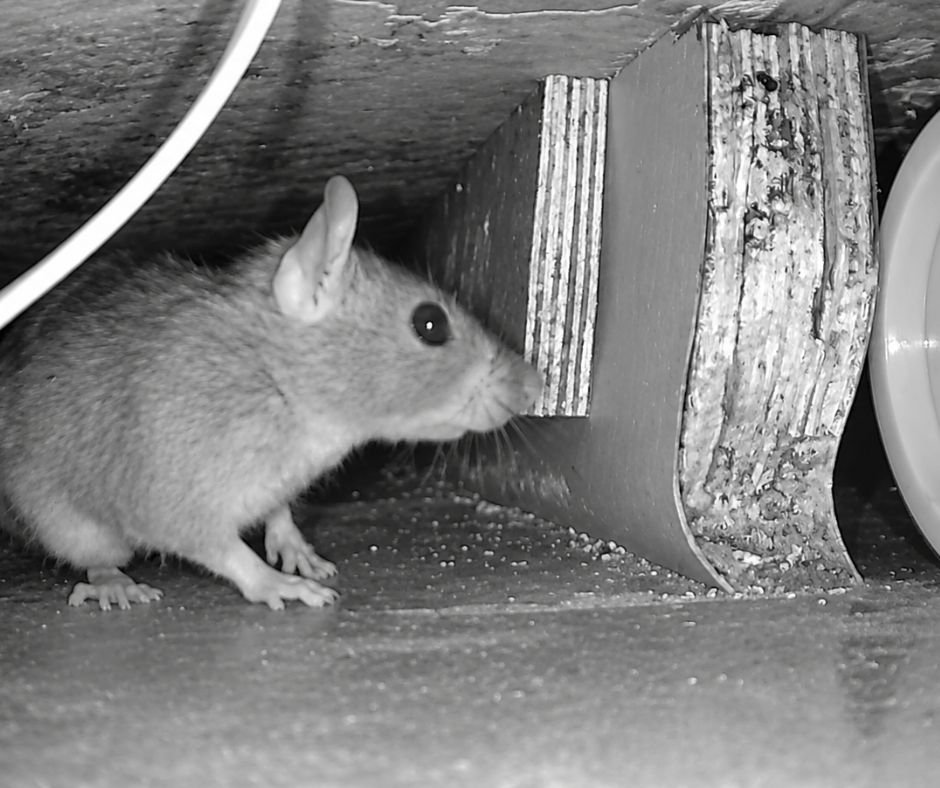
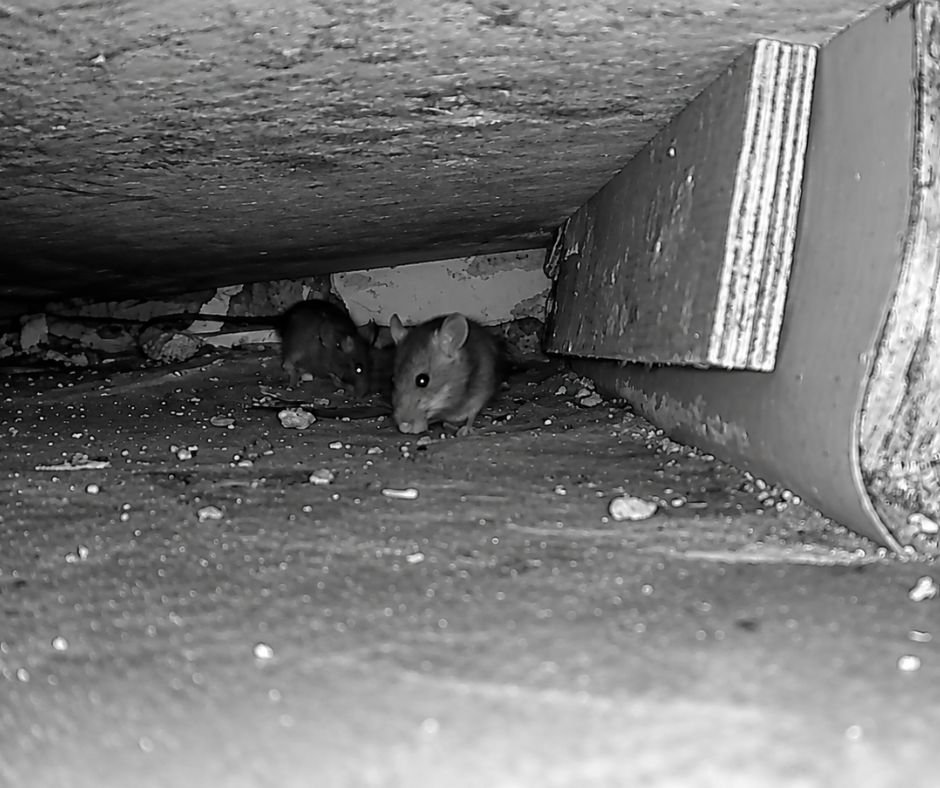
Mostly roof rats, which climb and live in attics, trees and roof spaces. Norway rats live on the ground near lakes, seawalls, sheds and dumpsters. House mice get into kitchens, pantries and garages, especially in newer homes.
Orlando and Orange County
Rodent Control and Rat Removal in Orlando, FL
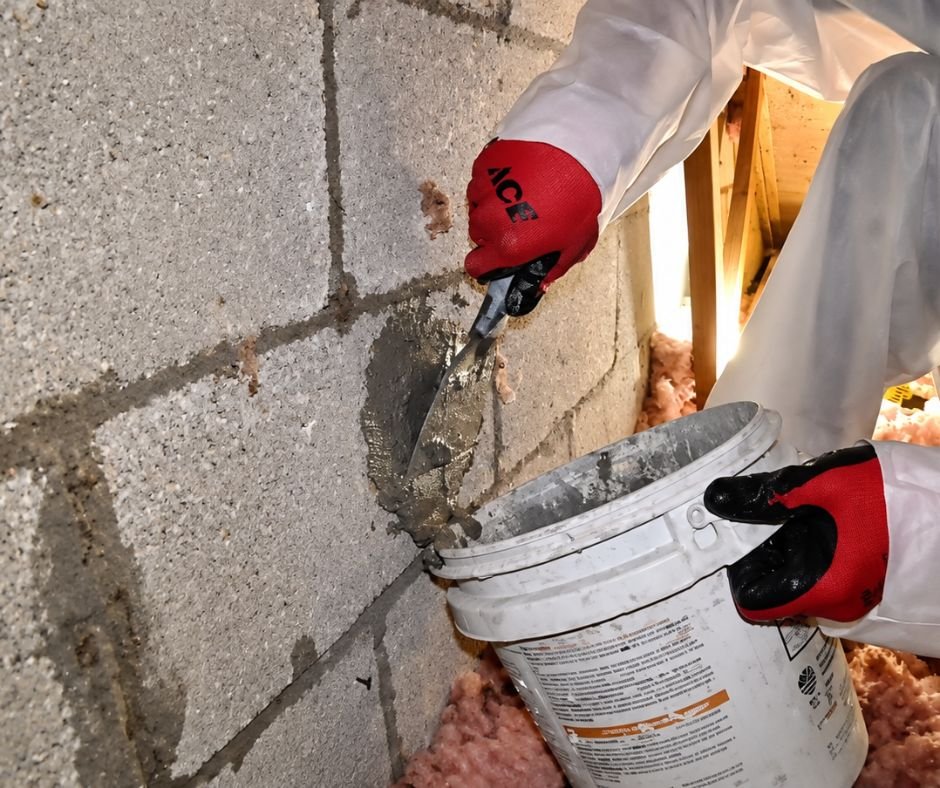
Roof rats in a College Park attic. Norway rats under a dock on Lake Conway. Mice in a Lake Nona pantry. Each one gets in a different way, so we find the way in, seal it with metal, trap what is inside and come back until the activity stops.
The short answer
Most Orlando rat problems are roof rats coming in from trees and power lines, and traps alone will not fix them. The openings have to be sealed first.
Orlando has warm weather all year, more than 100 lakes, old oak canopies in the core neighborhoods and backyard citrus almost everywhere. That gives rats food, water and a road to your roof. Roof rats breed all year in Florida, so a few rats in the spring can be a colony by fall.
Our fix has 3 parts: seal every gap a rat or mouse can fit through, trap the rodents already inside, and clean up what they left behind. Nothing starts until you see the plan and approve it.
- City
- Orlando, county seat of Orange County
- Population
- 307,573 (2020 census)
- Main rodent
- Roof rat (Rattus rattus), mostly in attics
- Also common
- Norway rats near lakes and dumpsters, house mice in kitchens
- Busy season
- All year, with breeding peaks in spring and fall
- Typical job
- Inspection, sealing, 1 to 2 weeks of trapping, cleanup
- Call
- (561) 562-7607, 24/7
Orlando, area by area
Where Rats Get In, by Orlando Neighborhood
A 1920s bungalow in College Park and a 2020 block home in Lake Nona fail in different places. This is what we usually find in each part of the city, so you know where to look first.
| Area | Typical homes | Rodent we see most | Where they get in |
|---|---|---|---|
| College Park, Delaney Park, Lake Eola Heights, Thornton Park | 1920s to 1950s wood frame and brick bungalows under big live oaks | Roof rats in the attic | Original gable and soffit vents with no screens, gaps where the roofline meets the wall, oak limbs over the roof |
| Lakefront streets on Lake Conway, Lake Ivanhoe and Lake Underhill | Homes with docks, seawalls, boathouses and sheds | Norway rats on the ground | Burrows along seawalls and under slabs, sheds and boat storage, garage door corners |
| Baldwin Park and Audubon Park | Newer homes on old lots, mixed with mid-century houses | Roof rats and house mice | Garage door seals, AC line and dryer vent openings, palms and vines touching the roof |
| International Drive and the tourist corridor | Hotels, timeshares, restaurants and multi-family buildings | Norway rats and mice | Loading doors, dumpster areas, shared wall chases and utility runs between units |
| Lake Nona, Horizon West and other new builds | Stucco on block with concrete tile roofs | House mice and roof rats | Tile roof edges and ridge caps, gaps around pipes and cables, construction sites nearby pushing rodents out |
Based on the homes and buildings we inspect around Orlando. Every property is different, so we check the whole house, not just these spots.
Why it gets worse fast
Roof Rat Numbers Every Orlando Homeowner Should Know
Waiting a few months feels harmless. These numbers from the University of Florida show why it is not. Roof rats breed all year in Florida, so a small problem grows quickly.
5-8
Pups per litter
Each litter is born after about 3 weeks.
4-5
Litters a year
One female can have 4 or 5 litters in a single year.
3-4mo
To breed
Young rats can breed at 3 to 4 months old.
150yd
Travel for food
Roof rats travel up to 150 yards from the nest to eat and drink.
Source: UF/IFAS Extension, Roof Rats publication UW120.
Warning signs
How to Tell You Have Rats, Not Squirrels
Orlando homes also get squirrels, raccoons and opossums. Rats leave a different set of clues. If you see 2 or more of these, call for an inspection.
Night
Noise after dark
Quick scratching or running in the ceiling a few hours after sunset. Squirrels are loud in the morning, rats at night.
Yard
Hollowed citrus
An orange or grapefruit with a hole about the size of a quarter and the inside eaten out is a classic roof rat sign, most often from September to March.
Attic
Dark, pointed droppings
Roof rat droppings are black and about 1/4 to 1/2 inch long. Mouse droppings are much smaller, about 1/8 inch.
Walls
Greasy rub marks
Dark smears along beams, pipes and the top of walls where rats run the same path every night.
Garage
Chewed lines and boxes
Gnawed AC insulation, irrigation lines, wiring, pet food bags and cardboard in the garage.
Pets
Dogs and cats on alert
Pets staring at one spot on the wall or ceiling, or pawing under the dishwasher or fridge.
What happens after you call
How Long Rat Removal Takes in Orlando
Most Orlando homes are done in about 2 to 3 weeks. A large colony, a big attic or a building with many units can take longer. Here is the usual order.
- Day 1
Inspection
Roof, attic, walls, garage and yard. We show you photos of every entry point and give you the plan and price.
- Day 1 to 2
Seal
Gaps closed with sheet metal, 1/4 inch hardware cloth, mesh or concrete. Not foam, which rats chew through.
- Week 1 to 2
Trap
Traps set on the paths rats use inside, checked on return visits and moved if needed.
- Week 2 to 3
Clean
Droppings and nests removed with disinfectant, never swept or vacuumed. We tell you if insulation needs replacing.
- Follow-up
Confirm
We come back to check that no new activity shows up before we close the job.
Cost in Orlando
What Rat Removal Costs in Orlando
Every job is priced after the inspection, because the cost depends on how many openings there are and where the rats are living. To give you a fair idea, here are typical Orlando market prices published by Angi.
The biggest cost driver is sealing. A home with 4 small gaps costs far less than an older bungalow with open vents along the whole roofline. Attics and crawl spaces also take more labor than a garage.
You get a written plan and price before any work starts. No surprise add-ons.
Typical Orlando price ranges
- Average job
- About $788, most between $417 and $1,180
- Small problem
- $200 to $1,000
- Medium problem
- $600 to $1,400
- Sealing entry points
- $400 to $1,200
- Follow-up visits
- $100 to $300 each
Source: Angi, rat exterminator cost in Orlando, FL. These are market averages, not our quote.
What does not work
- Ultrasonic plug-ins. UF/IFAS says there is no evidence they work on rats.
- Mothballs, peppermint and pepper. No repellent is registered for roof rats.
- Spray foam in the gaps. Rats chew right through it.
- Poison in the attic. Rats often die inside the walls and cause a strong smell for weeks.
- Counting on the cat. Cats and dogs rarely stop adult roof rats.
What does work
- Sealing every gap over 1/4 inch with metal, mesh or concrete.
- Trimming oak limbs, palms and vines so they do not touch the roof or power lines.
- Picking up fallen citrus and storing pet food and bird seed in sealed bins.
- Snap traps placed on the rat’s path and checked on a schedule.
- Outdoor bait only in locked, tamper-resistant stations, away from kids and pets.
Hotels, restaurants and rentals
Rodent Control for Orlando Businesses
Orlando has one of the busiest hotel and restaurant markets in the country, and rodents follow food. On International Drive, near the Orange County Convention Center and downtown, we treat a building as one connected system. Rats move through shared walls, ceiling spaces and utility runs, so sealing one unit while the next one stays open does not last.
Restaurants in Florida are inspected by the state, so we leave a written log after every visit that you can show an inspector.
Commercial service includes
- Scheduled visits with written service logs
- Exterior bait stations in locked boxes, mapped and numbered
- Door sweeps and seals on loading and back doors
- Dumpster area and grease trap checks
- Building-wide sealing plans for hotels, timeshares and apartments
Services available in Orlando
Rat and Mouse Removal Services in Orlando
Most Orlando jobs combine a few of these: an inspection, sealing, trapping and cleanup. Choose a service to learn more, or call and we will tell you what your property needs.
Residential Rodent ControlAttic and garage rat removal for Orlando homes, from 1920s bungalows in College Park to new construction in Lake Nona.Learn More →
Commercial Rodent ControlScheduled service with written visit logs for hotels, restaurants and shops along International Drive and near the Orange County Convention Center.Learn More →
Rodent RemovalTraps placed on the paths rats use and checked on return visits until the activity stops.Learn More →
Dead Rodent RemovalBad smell in a wall or ceiling? We find and remove the dead rodent, then clean and deodorize the area.Learn More →
Rodent CleanupRemoval of droppings, urine and nests from attics and garages, with advice on insulation replacement.Learn More →
Rodent ExterminatorEPA and FDACS certified technicians who use traps indoors and follow product labels around kids and pets.Learn More →
Rodent ExclusionWe seal soffits, roof vents, pipe gaps and garage corners with metal and mortar so rats cannot get back in.Learn More →
Rodent Feces RemovalCareful cleanup of droppings with disinfectant, never sweeping or vacuuming, which can spread germs.Learn More →
Rodent ProofingDoor sweeps, vent screens, roof edge sealing and tree trimming advice for Orlando homes.Learn More →
Rules and resources
Orlando and Florida Rules That Matter
A few rules help you pick the right company and deal with a rat problem coming from next door.
State license
Check the FDACS license
Pest control companies in Florida are licensed by the Florida Department of Agriculture and Consumer Services under Chapter 482, Florida Statutes. Ask for the license number and look it up before work starts.
City code
Messy lot next door?
The City of Orlando does not allow a heavy buildup of overgrowth, garbage or unsanitary materials on a lot. Owners get 15 days to clean up. You can report a property online or call Code Enforcement at 407.246.2686.
Health
Clean up the safe way
The CDC says not to sweep or vacuum droppings. Air the area out, wear gloves, spray with disinfectant or 1 part bleach to 9 parts water, wait 5 minutes and wipe up with paper towels.
Primary Orlando response zone
Orlando service coverage
Is your ZIP on the route?
Orlando has dozens of ZIP codes. These are the ones we serve most, but we cover the whole city and Orange County. Call if you do not see yours.
3280132803328043280632808328093281232817328193282132822328253282832835
Areas we serve
Check my address →
Downtown Orlando · Thornton Park · Lake Eola Heights · College Park · Baldwin Park · Dr. Phillips · International Drive · Lake Nona · Horizon West · Pine Hills · Union Park
Orlando rodent control FAQ
Questions Orlando Homeowners Ask Us
Have a question that is not here? Call and talk to our team.
Call (561) 562-7607 →Most homes take about 2 to 3 weeks: sealing in the first day or two, then 1 to 2 weeks of trapping and a follow-up check. Big attics, large colonies and apartment buildings can take longer.
Angi reports an Orlando average of about $788, with most jobs between $417 and $1,180. Your price depends on how many entry points need sealing and where the rats are. We give you a written price after the inspection, before any work starts.
It usually comes down to openings. An unscreened attic vent, a gap at the roofline or an oak limb touching your roof is enough. Your neighbor may have the same rats in the yard but no easy way in.
If the fruit has a round hole about the size of a quarter and is hollowed out, it is almost always a roof rat. Pick up fallen fruit, harvest ripe fruit early and keep branches away from the roof.
Yes. We set up scheduled service with written logs, locked bait stations outside and a sealing plan for the whole building, since rats move between units through shared walls and ceilings.
Inside the home we rely on sealing and traps placed where kids and pets cannot reach. Any outdoor bait goes in locked, tamper-resistant stations and follows the product label.
Yes. We cover all of Orange County, including Dr. Phillips, Pine Hills, Union Park and Horizon West, plus nearby cities like Winter Park, Ocoee and Apopka.
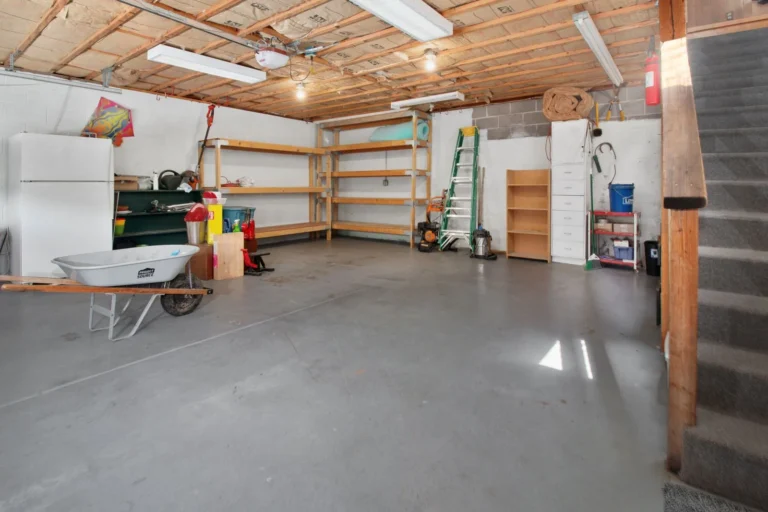
Orlando dispatch is ready
Rats in Your Orlando Home or Business?
Call now. We will inspect the property, show you where rodents are getting in, and seal it so they stay out.
Request Orlando service
Give us a call. We’ll handle the next step.
Call us, tell us what you are seeing and where you are located, and our team will confirm the right appointment type and timing.
Serving OrlandoOrlando, Florida(561) 562-7607Open 24 hours · 7 days a week