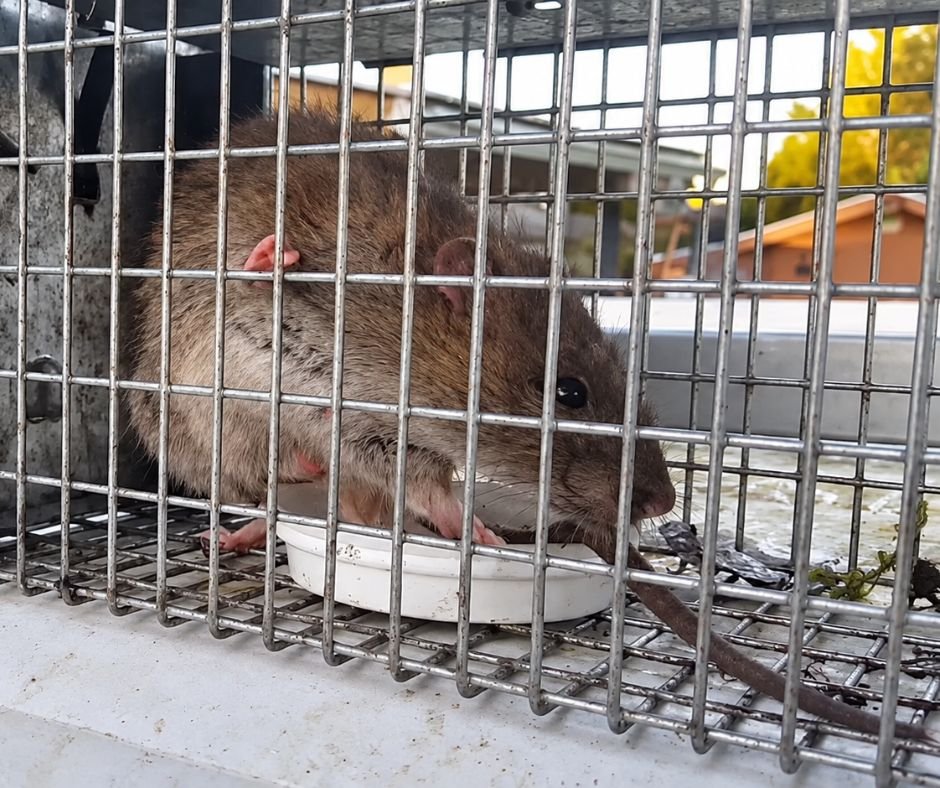
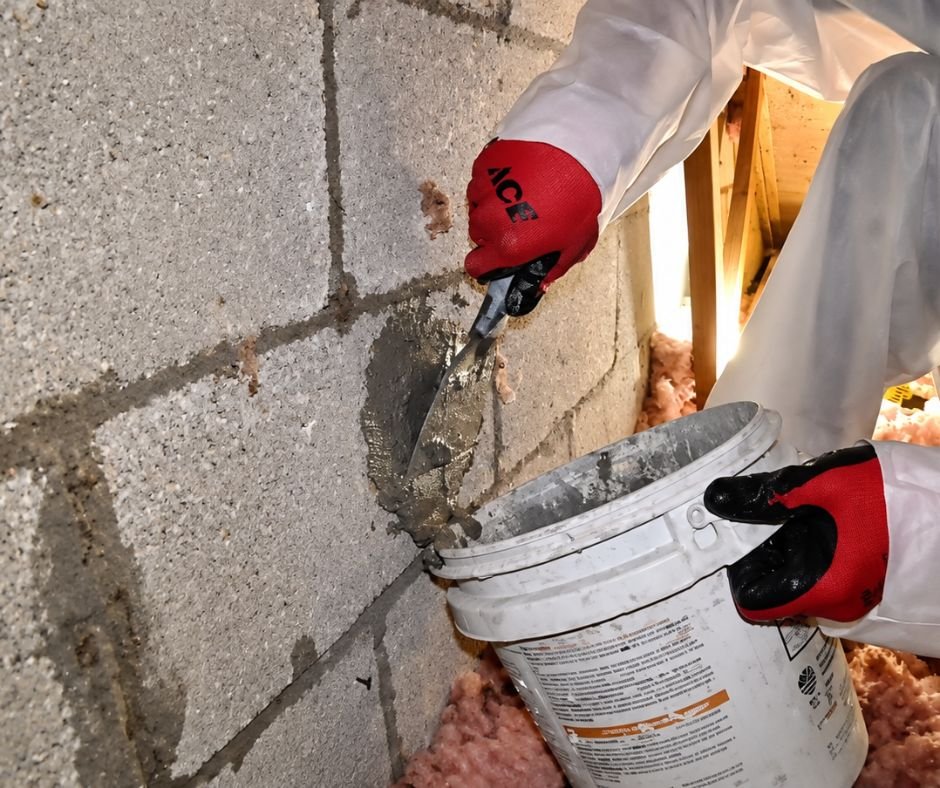
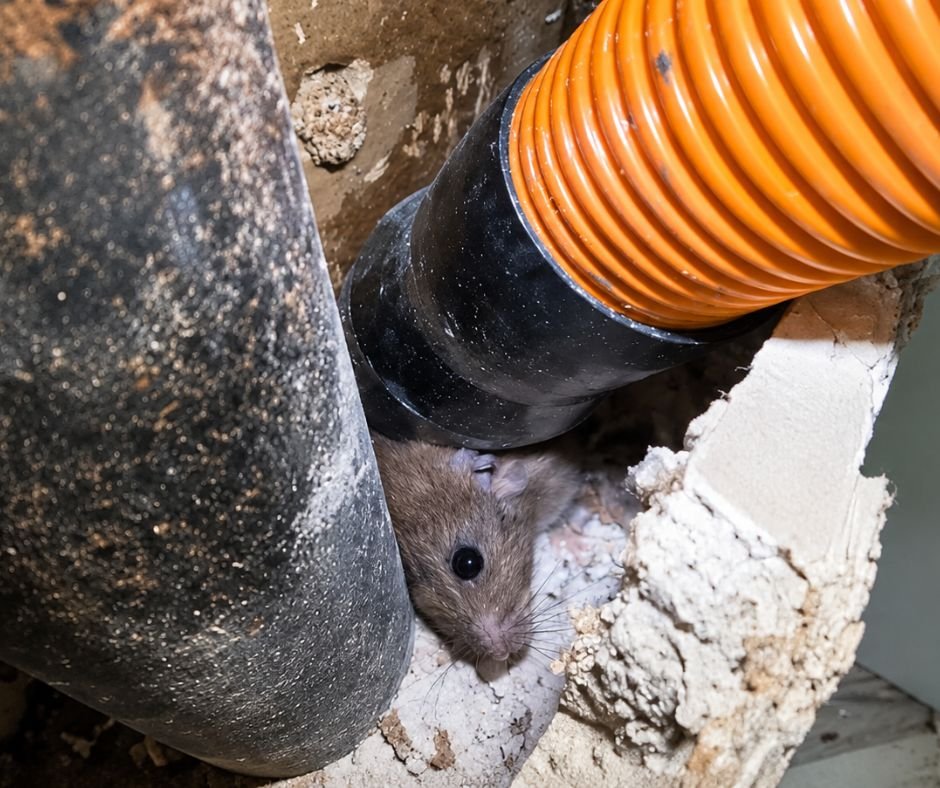
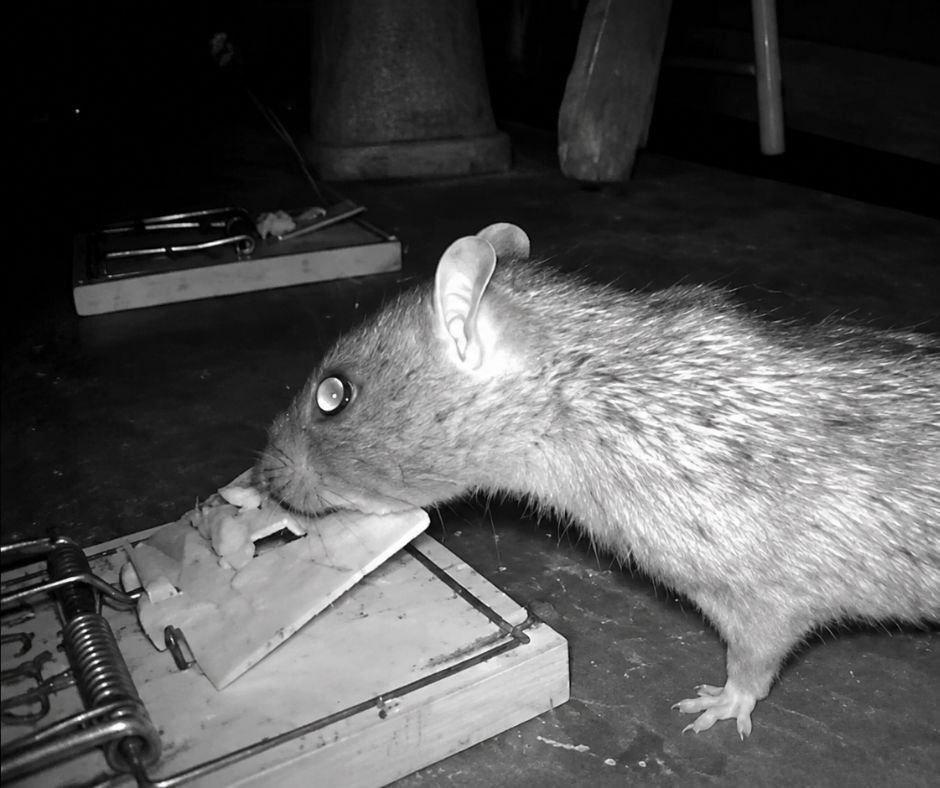
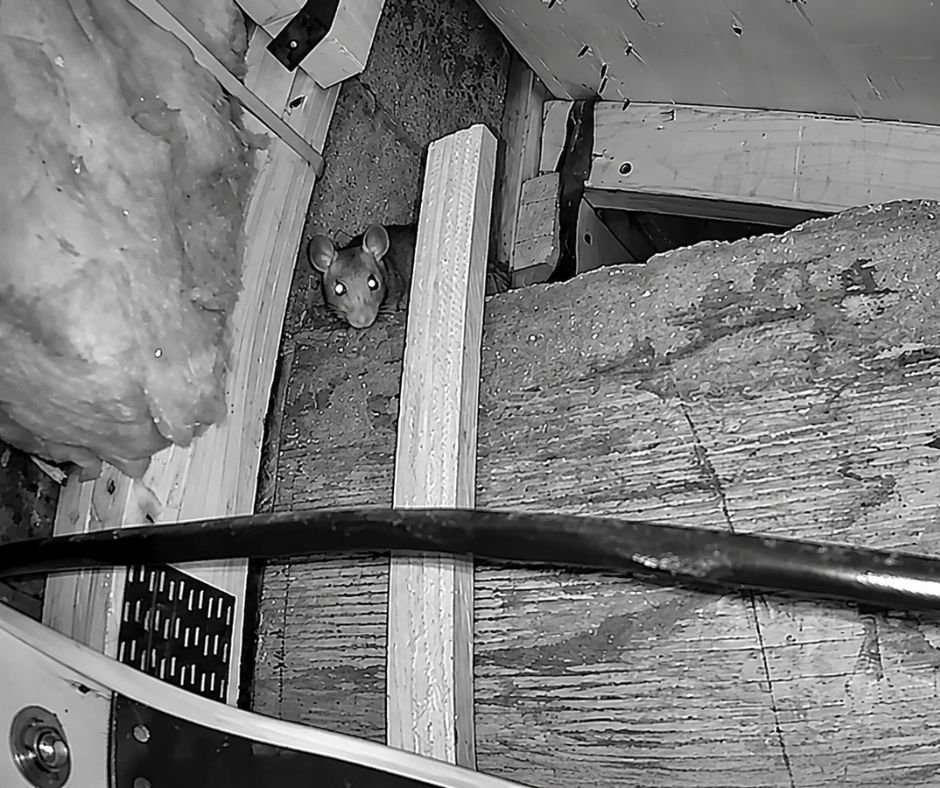
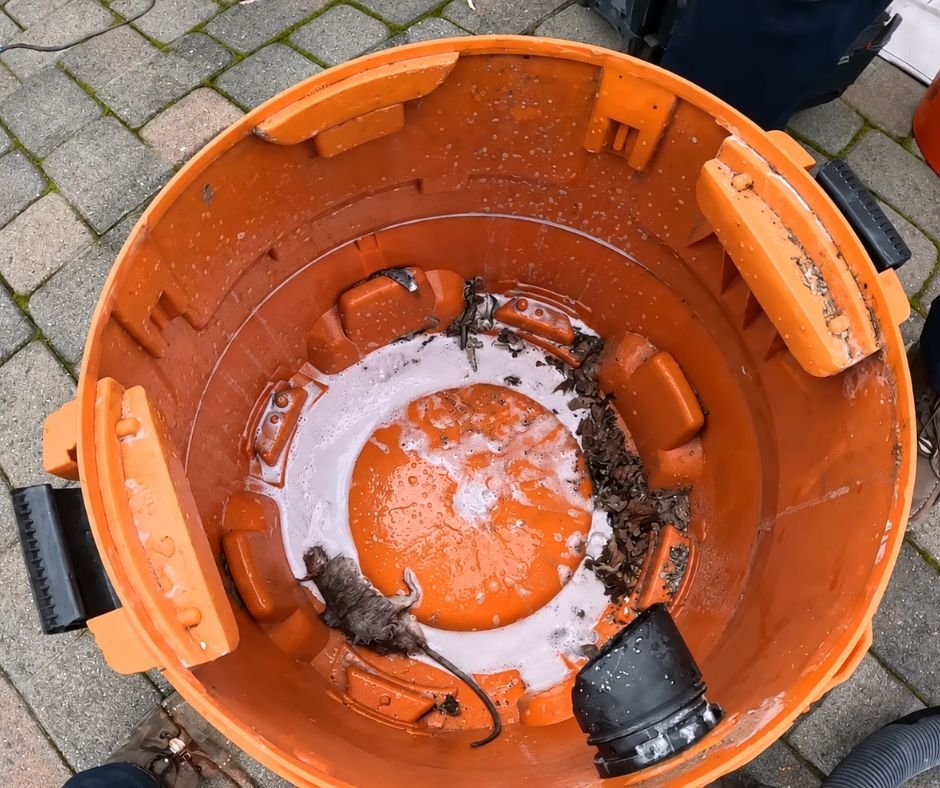
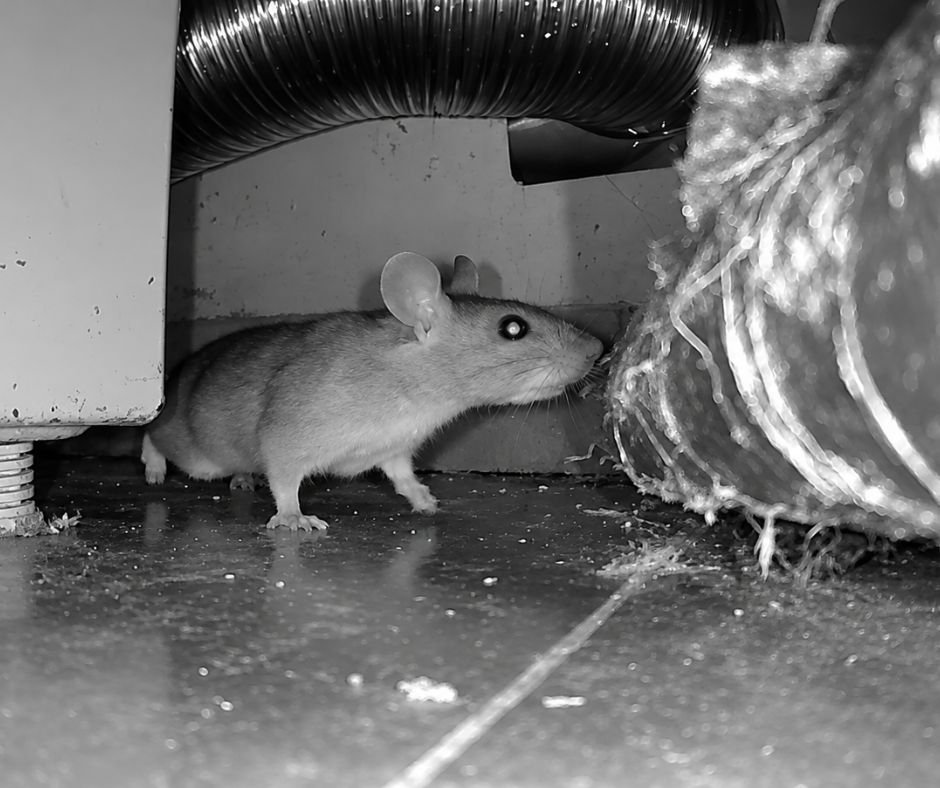
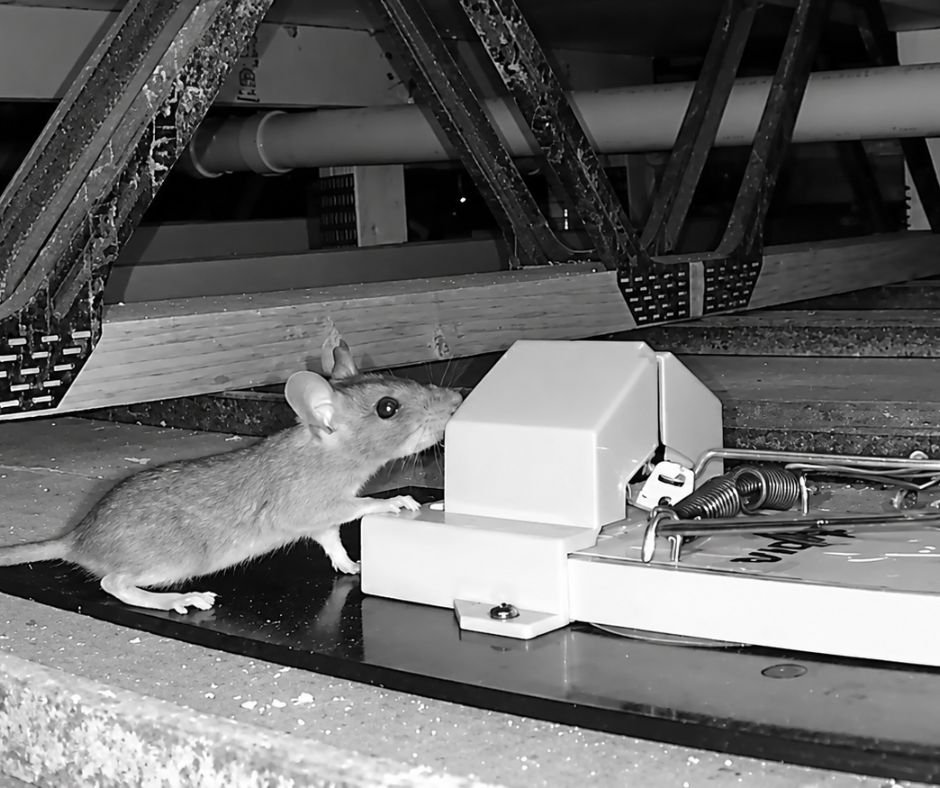
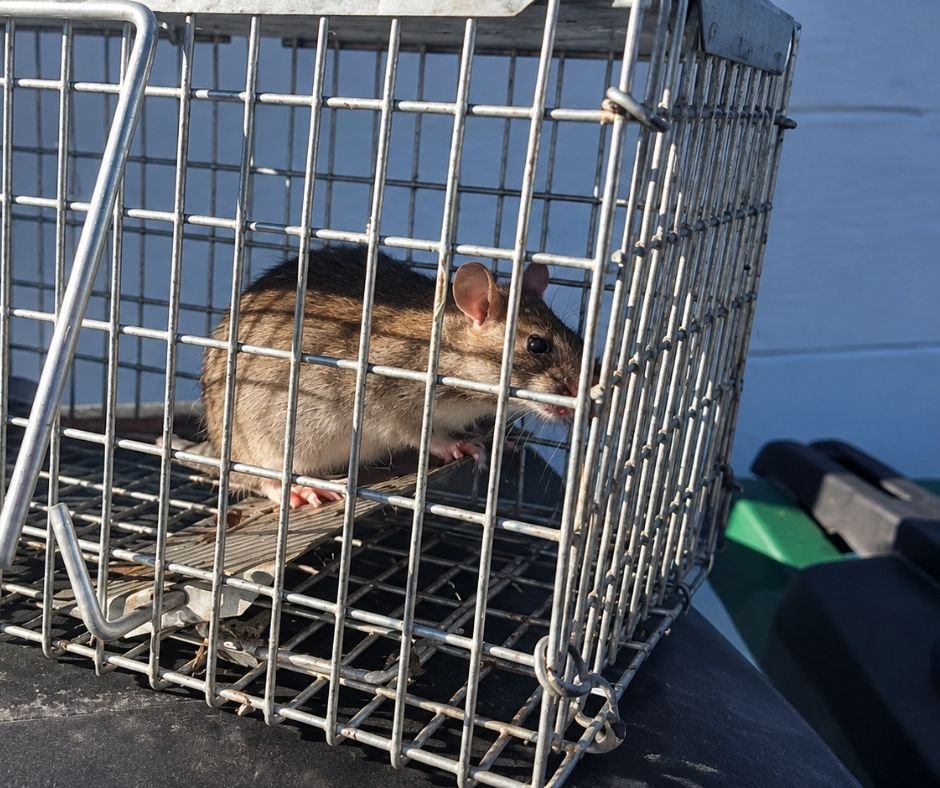
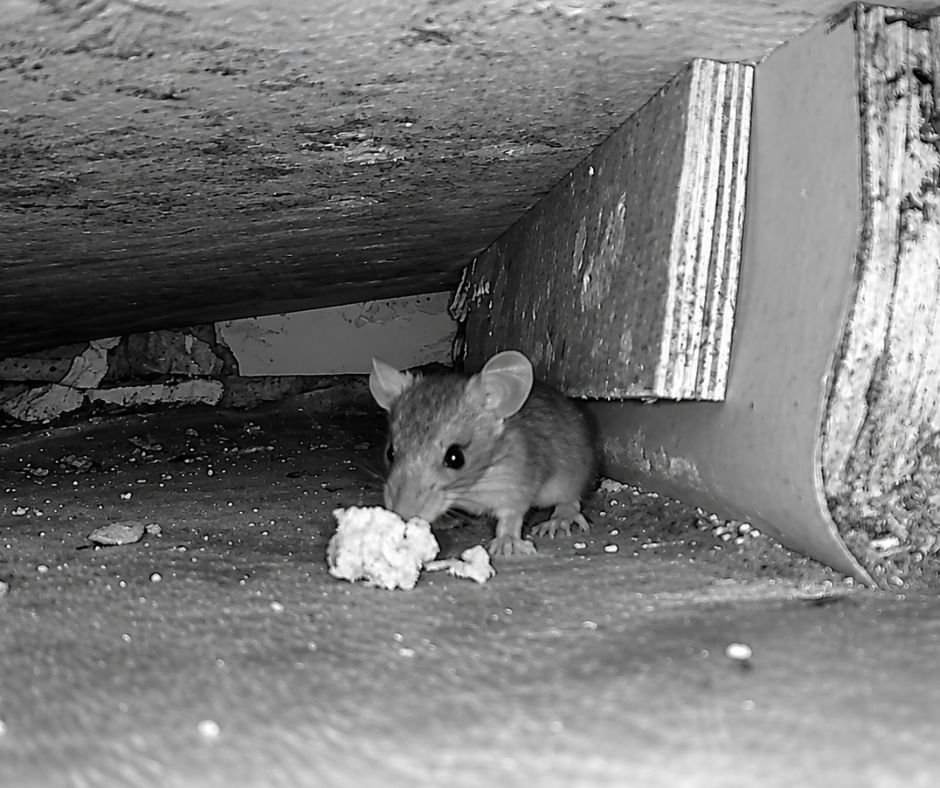
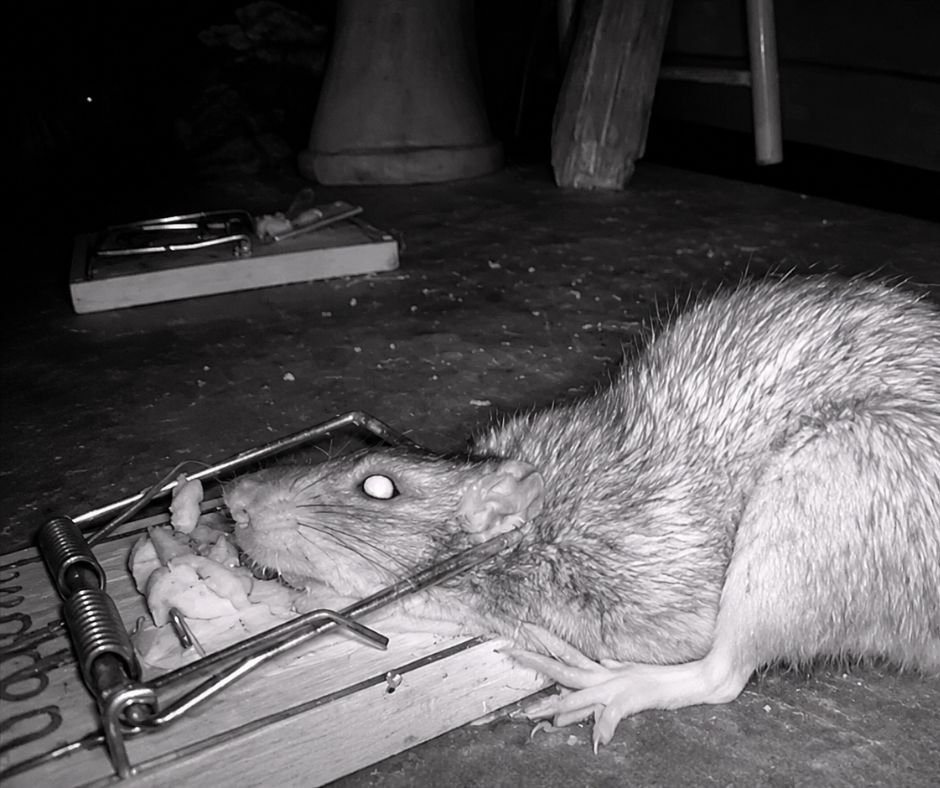
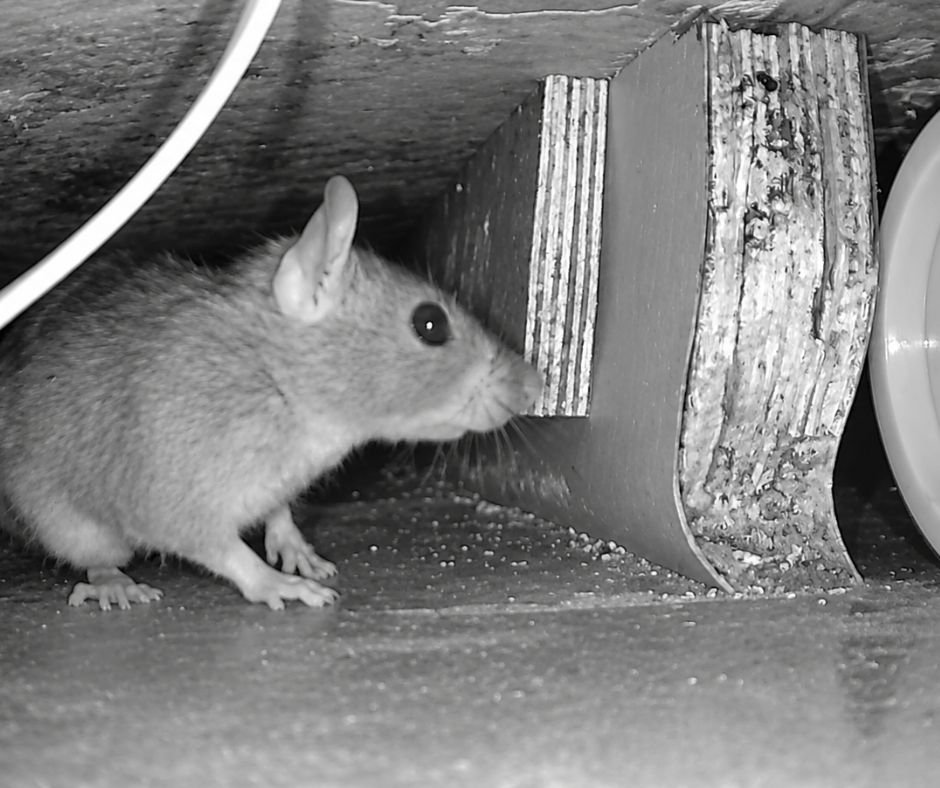
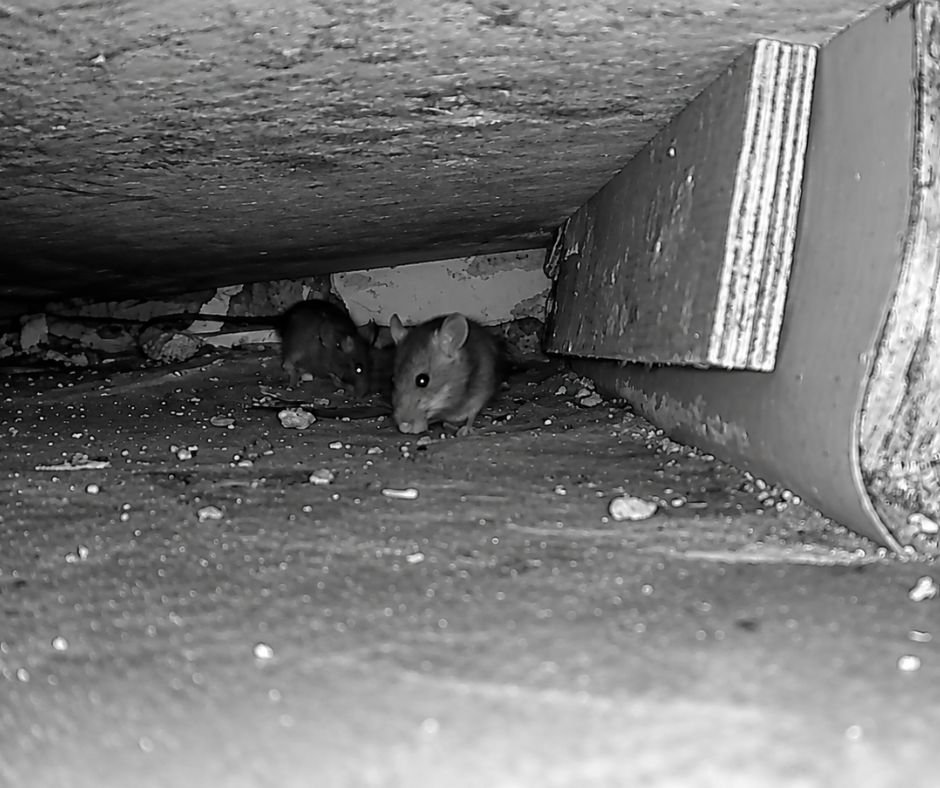
New homes often have small gaps at tile roof edges, AC line sets, plumbing and garage doors. Land clearing nearby pushes rodents out of brush and fields, and they find those gaps quickly. Sealing them with metal and hardware cloth usually solves it.
Port St. Lucie and St. Lucie County
Rodent Control and Rat Removal in Port St. Lucie, FL
Port St. Lucie is the fastest growing big city in the country, and every cleared lot and new subdivision moves rodents around. We find how rats and mice are getting into your block home, seal the openings with metal, trap the ones inside and come back to make sure they are gone.
A Treasure Coast city on a grid
Why Rats Find Port St. Lucie Homes So Easily
Port St. Lucie was laid out by the General Development Corporation starting in 1958, on land along the North Fork of the St. Lucie River. The city was platted with about 80,000 lots, many sold for $995 at $10 down and $10 a month. Decades later, homes sit next to empty lots, drainage canals run behind backyards and new neighborhoods keep going up west of I-95 in places like Tradition and St. Lucie West.
That mix is good for rodents. Brush on vacant lots gives them cover, canal banks give them water and nest sites, and construction keeps pushing them out of fields and into the nearest garage or attic.
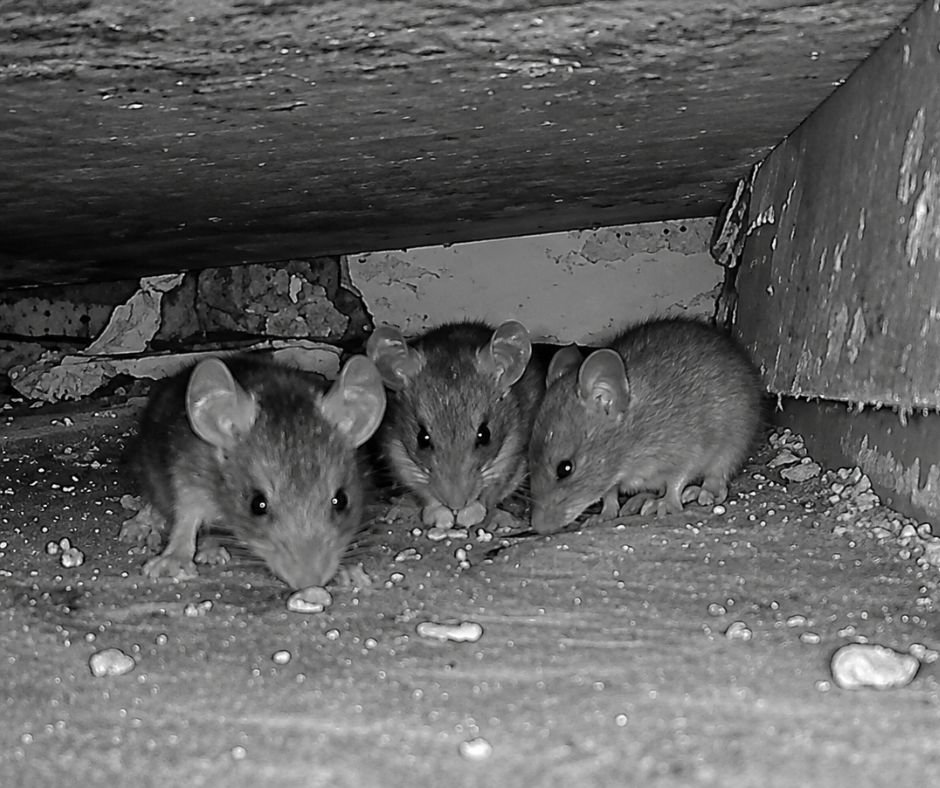
The main problem here is the roof rat (Rattus rattus). House mice (Mus musculus) are common in garages and kitchens too, especially in newer homes. Our residential rodent control starts with an inspection of the roof, soffits, attic, garage and yard. You see the plan and price first, and nothing starts until you approve it.
Port St. Lucie at a glance
- County
- St. Lucie County, on the Treasure Coast
- Population
- 204,851 (2020 census), about 268,062 by 2025
- Incorporated
- April 27, 1961
- River
- North Fork of the St. Lucie River runs through the city
- Rain
- About 53.5 inches a year, humid subtropical climate
- Main rodent
- Roof rat, with house mice in garages and kitchens
- Call
- (561) 562-7607, 24/7
Source: Wikipedia, Port St. Lucie, Florida; Florida Backroads Travel, Port St. Lucie history.
Growth and rodents
A City That Keeps Building, and Rodents That Keep Moving
When land is cleared, the rats and mice living in the brush, palms and fields do not disappear. They move to the closest shelter, and that is often a garage, shed or attic on the next street. These Census numbers show how much ground is changing in Port St. Lucie.
29.6%
5 year growth
Population growth from 2020 to 2025, the highest among the largest US cities. The national rate was 3.1%.
5yrs
In a row at number 1
Port St. Lucie led the largest US cities in population growth for the 5th year in a row.
61,274
New residents
People added in 5 years. Each new home means new lots cleared and new trash, pet food and landscaping.
84%
Of county growth
Port St. Lucie made up 84% of St. Lucie County’s population increase.
Source: MIAMI REALTORS analysis of U.S. Census Bureau Vintage 2025 population estimates, May 15, 2026.
Only in a fast growing city
New Construction and Rodents: 2 Problems We See Every Week
In Port St. Lucie, construction causes rodent calls in 2 ways. The lot next door gets cleared, or you move into a brand new home that was never sealed tight. Both are fixable.
Older GDC streets
The empty lot next door was just cleared
Many original lots sat empty for years under palmetto, pines and tall grass. When a builder clears one, the rodents living there look for new cover right away. Homes on either side often hear the first noises in the attic or find droppings in the garage within days.
- Close the garage door and check the bottom seal
- Move pet food, bird seed and grass seed into sealed bins
- Pull stored items off the floor and away from walls
- Have the roofline and soffits checked before rats move in
Tradition, St. Lucie West, Southern Grove
A new home with builder gaps
New stucco on block homes look tight, but they often have small openings: gaps at concrete tile roof edges and ridge caps, open spaces around AC line sets and plumbing, unscreened gable vents and loose garage door seals. With lots still being cleared nearby, rodents find those gaps fast.
- Tile roof edges closed with metal or bird stop
- Pipe and cable openings sealed with hardware cloth and sealant
- Garage door sweeps and side seals replaced
- Dryer and bath vents fitted with proper covers
Southern Grove covers 3,605 acres along I-95 and Becker Road and is part of the 8,200 acre Tradition area. Source: City of Port St. Lucie, Southern Grove fact sheet.
Canals, swales and culverts
Rodent Control in Port St. Lucie for Canal Lots
The city’s drainage system has about 200 miles of canals, about 1,200 miles of swales and more than 6,000 culverts. Larger waterways like the C-24 Canal and the E-8 Canal, plus Hogpen Slough and the Elkcam Basin, run through neighborhoods. Many homes back up to water.
UF/IFAS notes that roof rats usually nest up high, but they will also nest in burrows in canal banks, under sidewalks and under stacked materials. A canal behind the fence gives them water, cover in the grass and a quiet path along the bank to your yard.
Swales and driveway culverts are part of the picture too. Under city code, the strip from the edge of the pavement to your property line, including the swale and the driveway culvert, is the owner’s job to keep up. A culvert packed with leaves and debris is a dry, hidden spot for rodents.
Do not put loose rat poison along a canal bank. Any outdoor bait should go in locked, tamper-resistant bait stations placed by a licensed pro and used by the label.
Canal lot checklist
- Keep grass along the canal side of the fence mowed
- Do not stack lumber, pavers or pots against the fence or house
- Keep driveway culverts and swales clear of leaves and debris
- Close gaps under sheds and screen rooms with hardware cloth
- Check pool pump and AC pads for burrows at the edges
- Store boat and fishing gear off the ground
Source: CBS12, PSL stormwater report, Oct 7, 2026; City of Port St. Lucie, Swale Liner and Driveway Culverts (Code Sec. 41.08); UF/IFAS Extension, Roof Rats UW120.
Our process
How We Clear Rats Out of a Port St. Lucie Block Home
Most homes here are concrete block with stucco and a tile or shingle roof. The walls are hard to chew, so rats and mice come in at the roof, the vents and the garage. That is where we spend most of our time.
- First visit
Look at everything
Roofline, soffits, tile edges, vents, attic, garage, screen room, shed and the canal or lot behind you. You get photos of each entry point, a written plan and a price.
- After approval
Seal it with metal
We close openings with sheet metal, hardware cloth, mesh and concrete. This is rodent exclusion, and it is what keeps new rats from replacing the old ones.
- Next 1 to 2 weeks
Trap the ones inside
Snap traps go on the runways where we see rub marks and droppings. We check them on return visits and move them if the rats change paths.
- Once activity stops
Clean the attic or garage
Nests, droppings and urine stained material are removed and the area is disinfected. See our rodent cleanup service for details.
- Follow-up
Check again
We come back to confirm there is no new activity before we close the job.
Services available in Port St. Lucie
Rat and Mouse Removal Services in Port St. Lucie
Most Port St. Lucie jobs combine a few of these: an inspection, sealing, trapping and cleanup. Choose a service to learn more, or call and we will tell you what your property needs.
Residential Rodent ControlAttic, garage and canal-yard rat removal for Port St. Lucie homes, from original 1970s block construction to new builds in Tradition.Learn More →
Commercial Rodent ControlScheduled service with written visit logs for shops and restaurants along US-1, Port St. Lucie Boulevard and St. Lucie West Boulevard.Learn More →
Rodent RemovalTraps placed on the paths rats use along canal banks, garages and attics, then checked on return visits until the activity stops.Learn More →
Dead Rodent RemovalBad smell in a wall or ceiling? We find and remove it, then clean and deodorize the area.Learn More →
By the age of your home
Where Rodents Get In, Based on When Your Home Was Built
Port St. Lucie grew in waves. The age of your house tells us a lot about where to look first.
| Era | Where you see it | Common weak spots | What we usually do |
|---|---|---|---|
| 1960s to 1980s GDC homes | Older streets east of I-95, near the North Fork and the US 1 corridor | Worn soffit vents, gaps at the fascia, old garage door seals, mature oaks and palms over the roof | Replace or screen vents, seal the roofline, trim limbs back from the roof |
| 1990s to 2000s infill | St. Lucie West and homes built on scattered original lots | Shingle roof returns, plumbing and AC openings, screen room base gaps, pool equipment areas | Seal roof returns and pipe openings, close screen room bases with hardware cloth |
| 2006 and newer | Tradition, Southern Grove and new subdivisions west of I-95 | Concrete tile roof edges and ridge caps, unfinished line set chases, nearby land clearing | Close tile openings, seal line sets, check garage seals |
| Shops and restaurants | US 1, Port St. Lucie Boulevard and Tradition Parkway | Back doors, dumpster pads, shared walls in strip centers | Locked exterior bait stations, door sweeps, service logs through commercial rodent control |
Era dates based on Wikipedia, Port St. Lucie, Florida (GDC from 1958, St. Lucie West from the early 1990s, Tradition from 2006). Every home is different, so we inspect the whole property.
City and state rules
Port St. Lucie Rules That Help Keep Rodents Away
Rodents follow trash, clutter and tall grass. These city and state rules give you a way to deal with a problem property and to pick a licensed company.
Code Compliance
Grass under 12 inches
On improved property, grass must be kept mowed below 12 inches. Junk, trash and debris cannot be left in the yard. Report a property to Code Compliance at 772-871-5010 or through the 1PSL app.
Solid Waste
Carts out after 6 p.m.
Garbage goes in bags inside the black cart with the lid closed. Carts go out no earlier than 6 p.m. the night before and come back in the night of pickup.
Yard and bulk
Know the limits
Yard waste is picked up weekly, up to 4 cubic yards. Bulk waste is picked up monthly, up to 2 cubic yards. Do not leave piles out for weeks, since rats nest in them.
FDACS
Check the license
Pest control in Florida is licensed by the Florida Department of Agriculture and Consumer Services under Chapter 482, Florida Statutes. Ask any company for its license number.
Source: City of Port St. Lucie, Common Code Violations brochure; City of Port St. Lucie, Office of Solid Waste; Florida Statutes Chapter 482.
Cost in Port St. Lucie
The price depends on how many openings your home has. Sealing is usually the biggest part of the job.
HomeAdvisor reports that Port St. Lucie homeowners pay about $200 to $600 on average for rodent exclusion, which is the sealing of entry points. Trapping, cleanup and repairs are separate from that number. These are market averages, not our quote.
We price every job after the inspection. You get a written plan and price, and no work starts until you approve it. If a rat dies in a wall or attic, we also offer dead rodent removal.
- Exclusion, PSL average
- About $200 to $600 (HomeAdvisor)
- Biggest cost driver
- Number and type of entry points
- Adds time
- Large attics, tile roofs, screen rooms, sheds
- Our quote
- Written, after inspection, before any work
- Certified
- EPA and FDACS certified team
Source: HomeAdvisor, Rodent Pest Control Services in Port St. Lucie, FL. Market average, not our price.
Know your rat
Palm Skirts, Storm Debris and Other Roof Rat Hideouts
Roof rats are climbers. They travel on power lines, branches and vines, and they nest above the ground whenever they can. Here is what to look for around a Port St. Lucie yard.
Palms
Old frond skirts
UF/IFAS lists the dead frond skirts on palms as a common roof rat nest. Trim dead fronds, especially on palms close to the roof or screen room.
Storms
Debris piles after a storm
Port St. Lucie was hit by Hurricanes Frances and Jeanne in 2004 and Wilma in 2005. Branches and debris left in piles after a storm give rats cover, so get piles to the curb on schedule.
Birds
Quaker parrot nests
UF/IFAS says roof rats will even move into Quaker parrot nests. Big stick nests in palms near your home are worth a look.
Size
12 to 14 inches long
An adult roof rat is about 12 to 14 inches including a tail that is longer than its head and body. It weighs about 5 to 10 ounces.
Droppings
Black and banana shaped
Roof rat droppings are about 1/4 to 1/2 inch long. Do not sweep or vacuum them. Spray with disinfectant first, then wipe up.
Fruit
Hollowed fruit
Citrus, papaya and mangos with a round hole the size of a quarter and the inside eaten out are a roof rat sign. They travel up to 150 yards for food.
Source: UF/IFAS Extension, Roof Rats UW120; Wikipedia, Port St. Lucie, Florida; CDC, cleaning up after rodents.
Primary Port St. Lucie response zone
Port St. Lucie service coverage
Is your ZIP on the route?
Port St. Lucie spans 8 ZIP codes across St. Lucie County. These are the ones we serve most, but we cover the whole city. Call if you do not see yours.
3495234953349833498434985349863498734988
Areas we serve
Check my address →
Tradition · St. Lucie West · PGA Village · Sandpiper Bay · Torino · Southbend Lakes · Floresta · Riverview · Newport Isles · Canal Pointe · Hidden Oaks
Port St. Lucie rodent FAQ
Port St. Lucie Rat and Mouse Questions
These are the questions we hear most from homeowners in St. Lucie West, Tradition and the older parts of the city. Still not sure? Give us a call.
Call (561) 562-7607 →They can. UF/IFAS notes roof rats will nest in burrows in canal banks, even though they prefer to nest up high. Keep the canal side of your yard mowed, do not stack materials against the fence and close the gaps under sheds and screen rooms.
Under Port St. Lucie code, the property owner maintains the area from the edge of the pavement to the property line, including the swale and driveway culvert. Keeping them clear of leaves and debris helps drainage and takes away a hiding spot for rodents.
It is very common. Rodents that lived in the brush look for new cover right away. Keep the garage closed, store food in sealed bins and have your roofline and soffits checked so they have no way in.
HomeAdvisor reports Port St. Lucie homeowners pay about $200 to $600 on average for rodent exclusion. That is a market average, not our quote. Your price depends on how many openings need sealing and where the rodents are, and we give it to you in writing before any work.
Call the City of Port St. Lucie Code Compliance Division at 772-871-5010 or use the 1PSL app. Grass on improved property must be kept below 12 inches, and junk, trash and debris cannot be left in the yard.
Yes. UF/IFAS lists old palm frond skirts as a common roof rat nest site. Trim dead fronds and keep palms and other branches from touching the roof, gutters or screen enclosure.
Yes. We cover the whole city, from the older streets along the North Fork of the St. Lucie River to St. Lucie West, Tradition and Southern Grove, plus the nearby cities listed below. We are open 24/7.
Outside Port St. Lucie?
Nearby Cities We Serve
Port St. Lucie dispatch is ready
Rats in Your Port St. Lucie Home or Business?
Call now. We will inspect the property, show you where rodents are getting in, and seal it so they stay out.
Request Port St. Lucie service
Give us a call. We’ll handle the next step.
Call us, tell us what you are seeing and where you are located, and our team will confirm the right appointment type and timing.
Serving Port St. LuciePort St. Lucie, Florida(561) 562-7607Open 24 hours · 7 days a week