Running in the ceiling at night
Roof rats are active after dark and travel through attics and soffits above bedrooms.
Rats in the barn, mice in the feed room, or scratching in the attic of your acreage home? Florida Rodent Control Pros removes rats and mice from homes, barns and outbuildings across Jupiter Farms, the rural, well and septic community west of Indiantown Road in Palm Beach County. We find how they get in, seal it, and remove the rodents already inside.
Rodent problem right now? Our team is taking calls in Jupiter Farms.
Call (561) 562-7607Jupiter Farms is a 15 square mile agriculture residential community west of Florida’s Turnpike on Indiantown Road, in unincorporated Palm Beach County. Most lots run on well water and septic systems, many properties keep horses or livestock, and the area has no municipal sidewalks or storm drains like the neighborhoods closer to the coast. That combination of feed, barns, open land and rural infrastructure gives rodents far more ways in than a typical subdivision home.
On acreage properties, rats and mice nest in hay storage, feed rooms, tack rooms and stacked firewood before moving into the house itself. Norway rats burrow along fence lines, drainage ditches and canal banks, while roof rats travel through oak and pine canopy and drop onto roofs and into attics. We treat the barn, the shed and the house as one property, not three separate jobs.
Older homes on well and septic systems often have gaps around the well casing, septic cleanout and crawl space skirting that never get sealed. Newer block homes built on larger lots still lose ground to rodents through garage doors, gaps under sliding doors and open eaves. Every property here is different, so we inspect the whole parcel, not just the house.
Most Jupiter Farms jobs combine a few of these: an inspection of the house and outbuildings, sealing, trapping and cleanup. Choose a service to learn more, or call and we will tell you what your property needs.
Roof rats are active after dark and travel through attics and soffits above bedrooms.
Feed bags, hay bales and grain bins draw mice and rats even when the house itself looks clean.
Gnawed feed sacks, chewed irrigation lines or damaged wiring in a shed or barn point to an active nest nearby.
Norway rats dig burrows along drainage ditches, canal banks and fence lines on larger lots.
A urine or ammonia smell in the attic, garage or tack room usually means an established colony.
Animals often notice rodent activity in a barn or stable well before people do.
The three rodents we handle most often here behave differently depending on whether you have a barn, a canal-adjacent lot or a standard block home.
Climbs trees, fence posts and barn rafters to reach attics, hay lofts and roof voids. The most common rodent we remove from Jupiter Farms homes and barns.
Stays near the ground. Burrows along canal banks, drainage ditches, fence lines and under sheds and feed bins.
Small enough to squeeze through a gap about 1/4 inch wide. Common in feed rooms, tack rooms, garages and kitchens.
Acreage properties have more to check than a standard house, since a barn and a well head sit on the same job as the roof.
A rat can squeeze through a gap about 1/2 inch wide, and a mouse through about 1/4 inch.
Setting traps without sealing the openings only buys time, especially on a property with a barn or open feed storage. We follow the same 5 steps on every job.
We walk the house, barn, shed and yard, and mark every entry point and sign of activity.
Openings are closed with metal flashing, 1/4 inch hardware cloth, mesh and mortar. We do not rely on foam.
Traps go on the paths rats and mice use, including feed rooms and hay storage. We check them on return visits.
Droppings and nests are removed and the area is disinfected. We tell you if insulation needs replacing.
We come back until there are no new signs, then give you simple tips to keep it that way.
The number of visits depends on how many rodents are inside and how many buildings on the property need work. We tell you what to expect after the first inspection.
According to the CDC, rats and mice can spread disease through their droppings, urine, saliva and bites. This matters more on a property with livestock, feed and well water.
Can spread when dust from dried droppings or urine in a barn, shed or attic is stirred up and breathed in.
Spread through water or soil contaminated with rodent urine, a real concern near canals, ditches and wells.
Rodents can contaminate stored feed and grain, which can then affect livestock as well as people.
Spread through bites or scratches, or contact with rodents in barns and feed areas.
Rodents can bring fleas and mites into barns, stalls and homes.
Gnawed wiring in a house, well pump shed or barn is a fire and equipment risk.
A single mouse in the kitchen can sometimes be handled with a few snap traps. Rats in a barn, hay loft or attic are a different job.
The problem with DIY: store-bought traps and bait catch some rodents but leave the openings in the barn siding, well casing or roofline in place, so new rodents move in from the surrounding fields and canals.
Ask a technician →| Situation | DIY | Professional |
|---|---|---|
| One mouse seen once | Snap traps may be enough | Call if it comes back |
| Noises in the attic | Hard to reach and seal safely | Roofline sealing and attic trapping |
| Droppings in the feed room | Feed and grain are hard to protect on your own | Sealed storage plan plus trapping |
| Burrows along a canal or fence line | Burrows are often missed or reopened | Locate and treat active burrows |
| Rodents near well or septic | Risk of contaminating water supply | Sealing done without disturbing the system |
| Chewed wiring in a barn | Fire risk if missed | Find the source and seal it |
From block homes on standard lots to full acreage with a barn, stable or chicken coop, each Jupiter Farms property has its own weak spots. We look at the roofline, attic, garage, well head, septic access and any outbuildings, then seal the openings rodents are using.
Equestrian facilities, boarding barns and small businesses along Indiantown Road need feed and grain protected and a written service record. We schedule recurring visits and document what we find each time.
Jupiter Farms runs from older homesteads on well and septic to newer block homes on smaller cleared lots. The way a property is set up tells us where to look first.
Two of the largest open spaces in Jupiter Farms bring wildlife and rodents close to nearby homes.
This 680 acre county park sits within the Jupiter Farms section of Jupiter and includes a stretch of the Loxahatchee River, a National Wild and Scenic River. Homes near the park’s trails and canoe launches see more Norway rat and rodent activity along the water’s edge.
The county equestrian facility on Jupiter Farms Road has sand and grass riding arenas and trailer parking. Nearby horse properties deal with the same feed storage and stall rodent pressure the facility itself has to manage.
Indiantown Road (County Road 706) is the main route through Jupiter Farms and the location of most of the area’s small businesses, which we also service for commercial rodent control.
South Florida does not get a hard freeze, so rodents stay active in Jupiter Farms all year. Each season shifts where the pressure comes from.
Breeding season picks up. Rats and mice look for dry nesting spots in barns, sheds and attics before summer rain starts.
Daily thunderstorms flood low ground and drainage ditches, pushing Norway rats and field mice out of burrows and toward barns, garages and homes on higher ground.
Hurricane season runs June 1 to November 30. Storm damage to roofs, soffits and barn siding opens new entry points that need checking after any major storm.
Cooler nights send rodents looking for warm, dry shelter, which usually means the attic, garage or barn rather than open fields.
Jupiter Farms is not one kind of property. What we do at a horse barn is different from what we do at a canal-adjacent lot or an older well and septic home.
Stored grain, sweet feed and hay bales draw rats and mice into barns and feed rooms, and from there into the house itself.
Our approach: We inspect feed storage and stalls, seal gaps in barn siding and rooflines, and set traps away from areas horses and pets can reach.
Lots backing up to a canal, drainage ditch or the Riverbend Park trail system see more ground-burrowing Norway rats than lots further from water.
Our approach: We check the bank and fence line for active burrows, then bait and seal ground-level entry points near the house.
Well casings, septic cleanouts and crawl space skirting on older Jupiter Farms homes are common, overlooked entry points.
Our approach: We inspect around the well head and septic access, seal gaps with hardware cloth and metal flashing, and check the crawl space for existing nests.
These steps follow CDC cleanup guidance and help keep your family, pets and livestock safe.
Call (561) 562-7607Jupiter Farms spans ZIP codes 33418 and 33478. We cover the whole community, along Indiantown Road and out toward Riverbend Park and The Acreage. Call if you are not sure your address qualifies.
“They found the gap where rats were getting into our feed room and sealed it the same day. No more chewed feed bags since.”
Ray H.Jupiter Farms, FL
Verified“Professional and knew exactly what to check around our well and septic. Explained everything before starting work.”
Karen M.Jupiter Farms, FL
Verified“We have horses and were worried about bait around the barn. They set everything up safely and the rat noise in the attic stopped within a week.”
Dan P.Jupiter Farms, FL
VerifiedHave a question that is not answered here? Call (561) 562-7607.
Both. On acreage properties we inspect the house, barn, shed and any feed storage as one job, since rodents move freely between them.
We place bait stations and traps in locked, tamper-resistant housing away from areas horses, dogs and cats can reach, and we walk you through exactly where everything is placed.
Rodent burrows and nests near a well head or septic system can be a contamination risk. We seal gaps around well casings and septic access as part of exclusion work.
On acreage properties, rodents are often drawn to feed, hay and grain storage first, then move toward the house looking for shelter. A clean house does not remove the outdoor food source.
Storm damage to roofs, soffits and barn siding creates new entry points. If your property had storm repairs, it is worth having the roofline and outbuildings checked.
The CDC advises not to sweep or vacuum droppings. Air out the area, wear gloves, spray with disinfectant or a bleach solution, let it soak 5 minutes, then wipe up with paper towels. For barns, attics or large amounts, call us.
Pest control businesses in Florida are licensed by the Florida Department of Agriculture and Consumer Services (FDACS). You can look up a license on the FDACS website before you hire anyone.
Yes. We also serve Jupiter, Palm Beach Gardens, North Palm Beach and The Acreage. Call (561) 562-7607 to check your address.
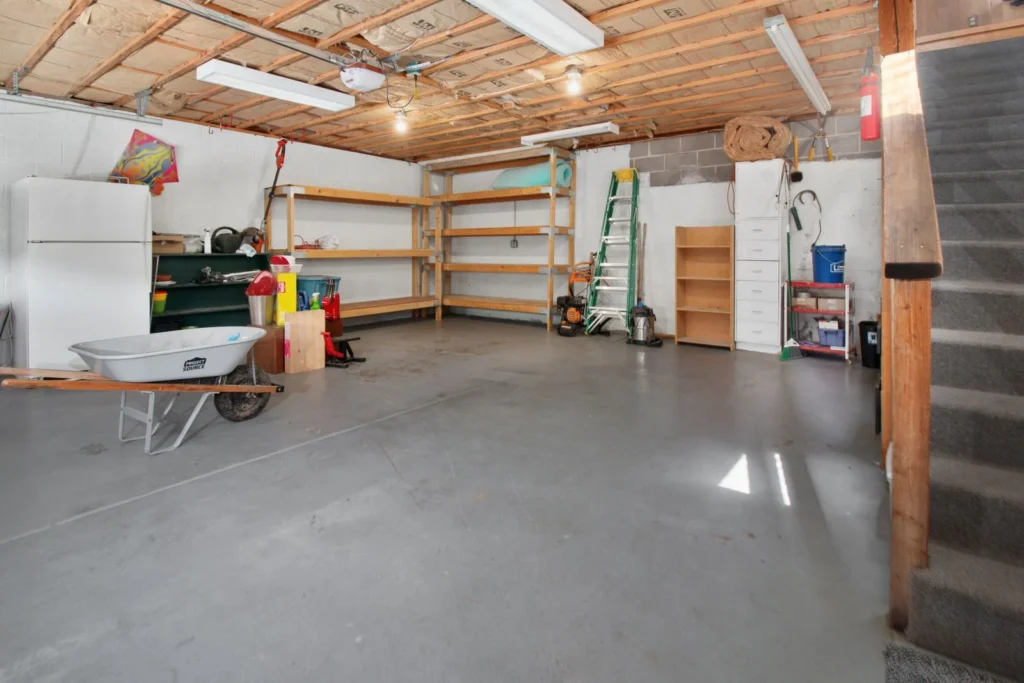
Call now. We will inspect the property, show you where rodents are getting in, and seal it so they stay out.
Call us, tell us what you are seeing and where you are located, and our team will confirm the right appointment type and timing.
These pictures come from our own inspection cameras and job sites: rats caught in traps, mice under cabinets, the entry points we find, and the sealing work that keeps them out.
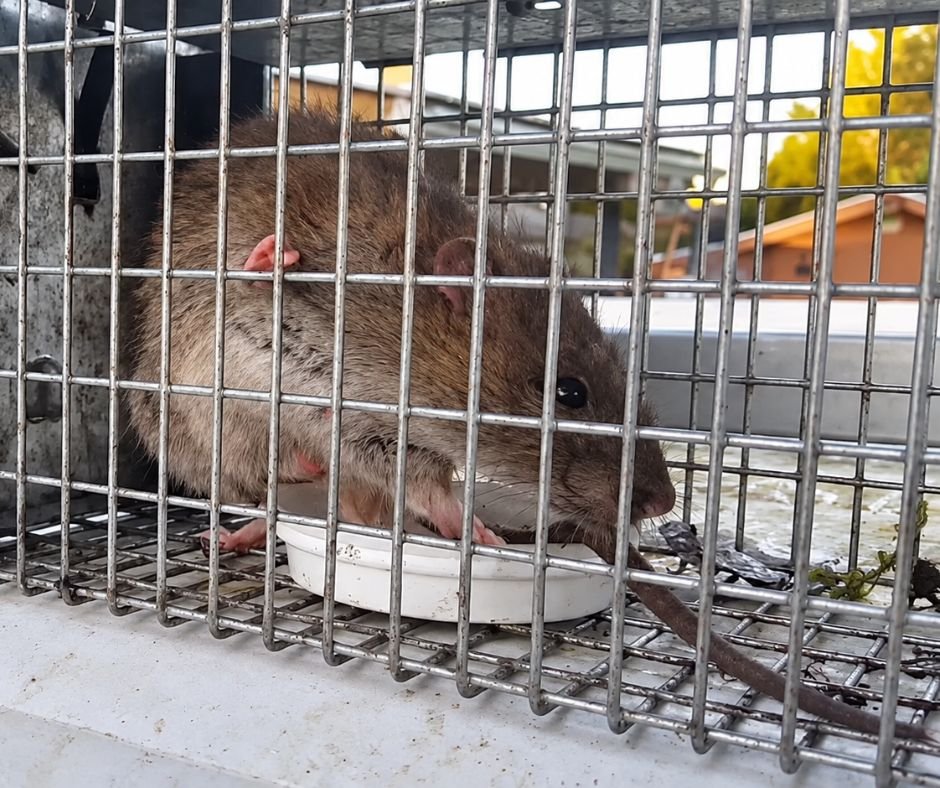 Rat caughtClose-up of a rat caught in a cage trap
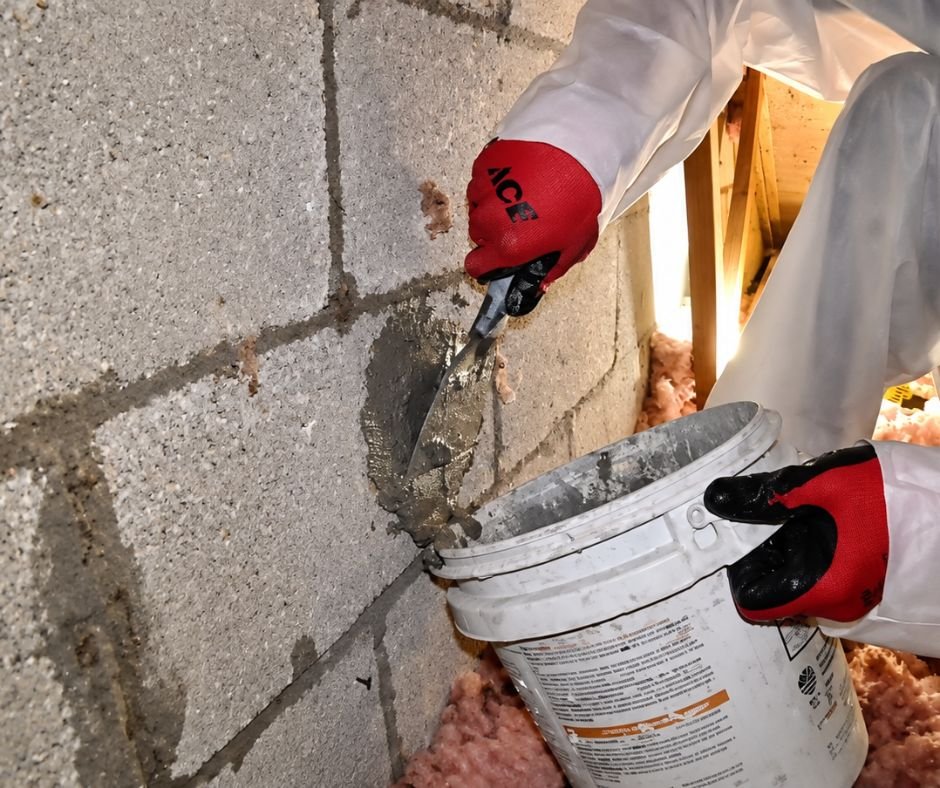 Exclusion workTechnician sealing a block wall gap with mortar
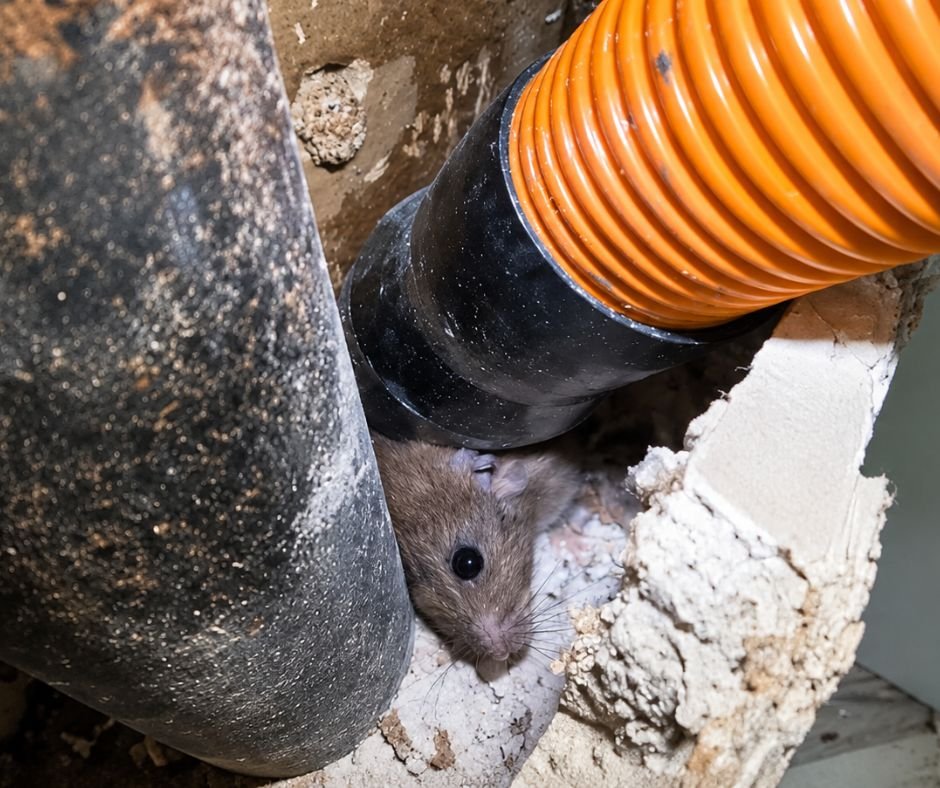 Entry point foundRat squeezing past an unsealed pipe penetration in a wall
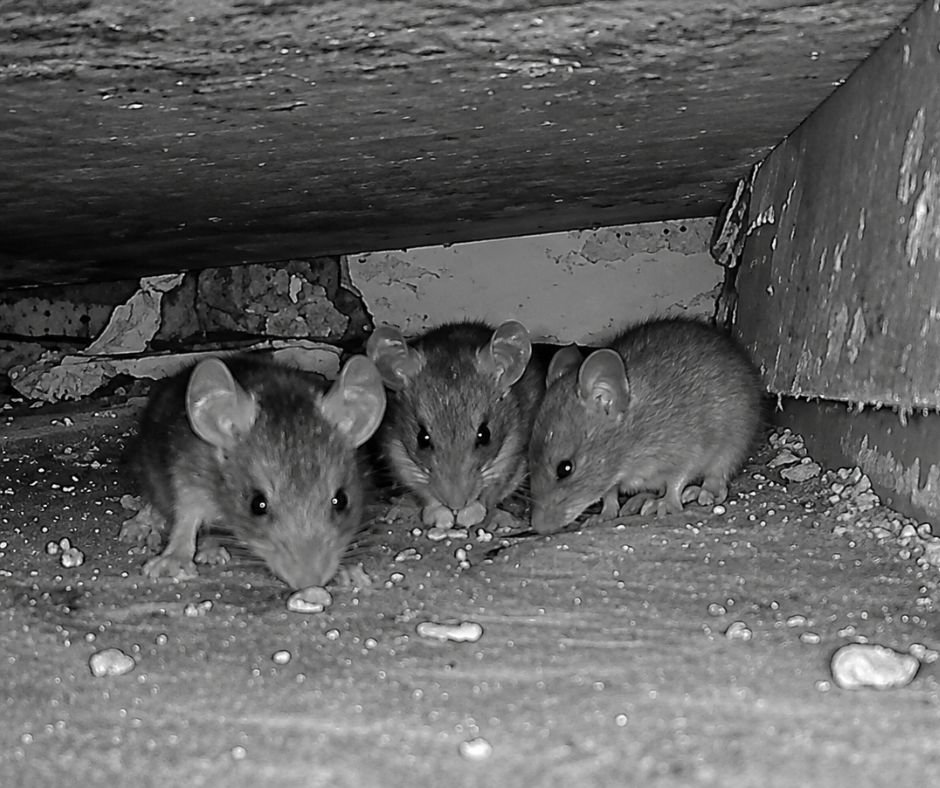 Kitchen inspectionThree mice caught on camera under a cabinet
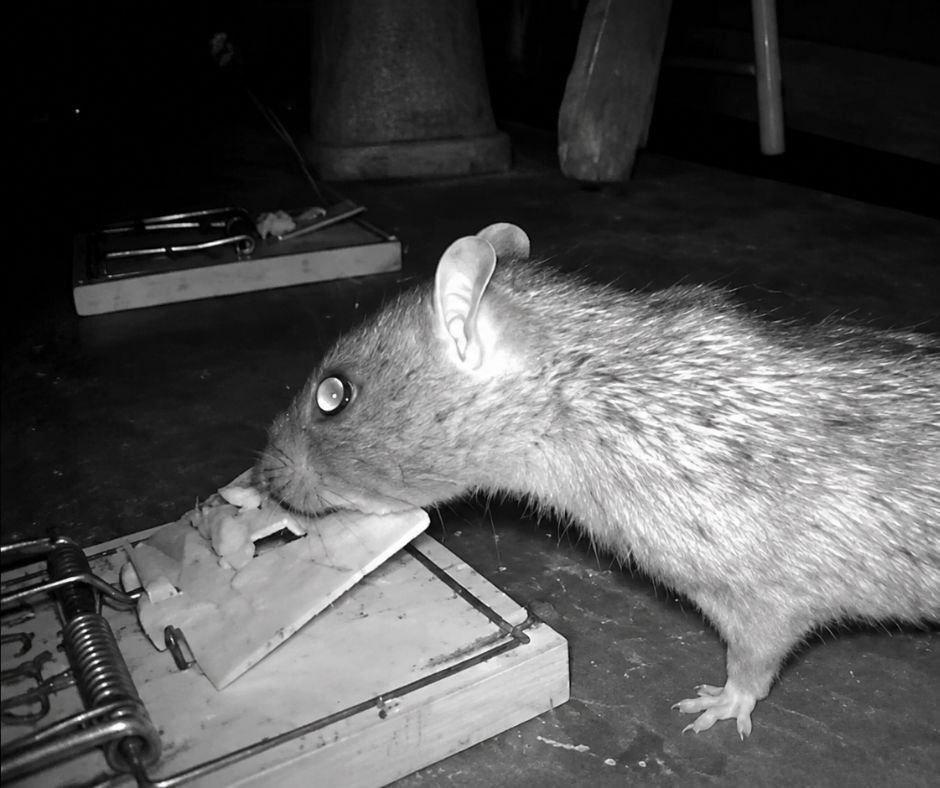 Trap cameraNight camera photo of a rat at a snap trap
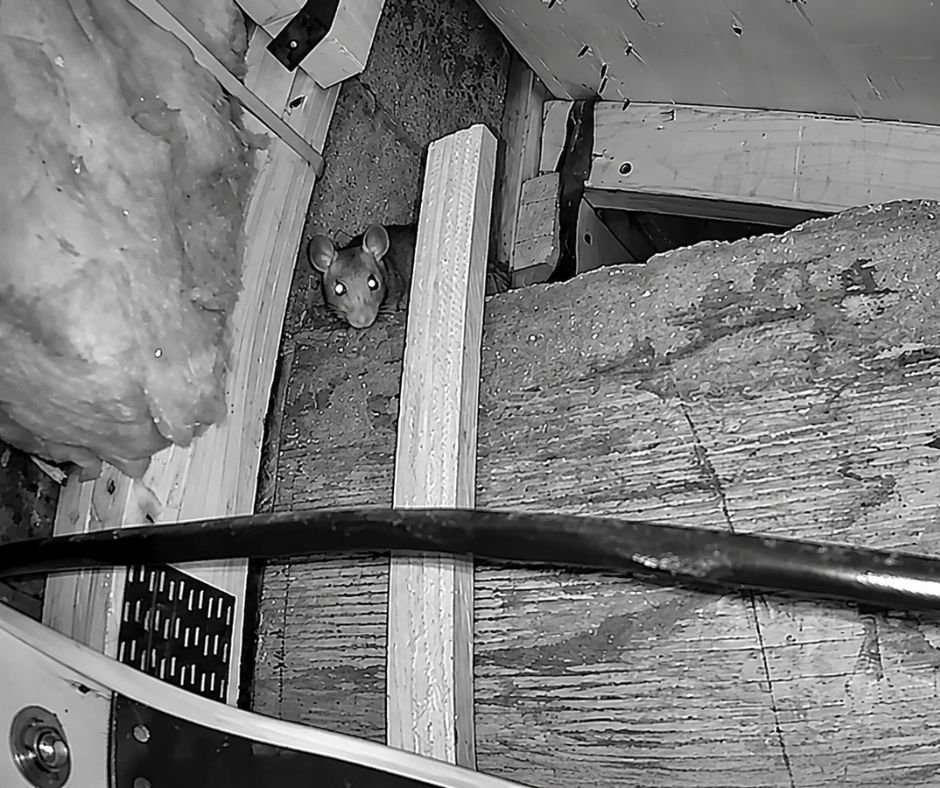 Attic inspectionMouse found near attic insulation
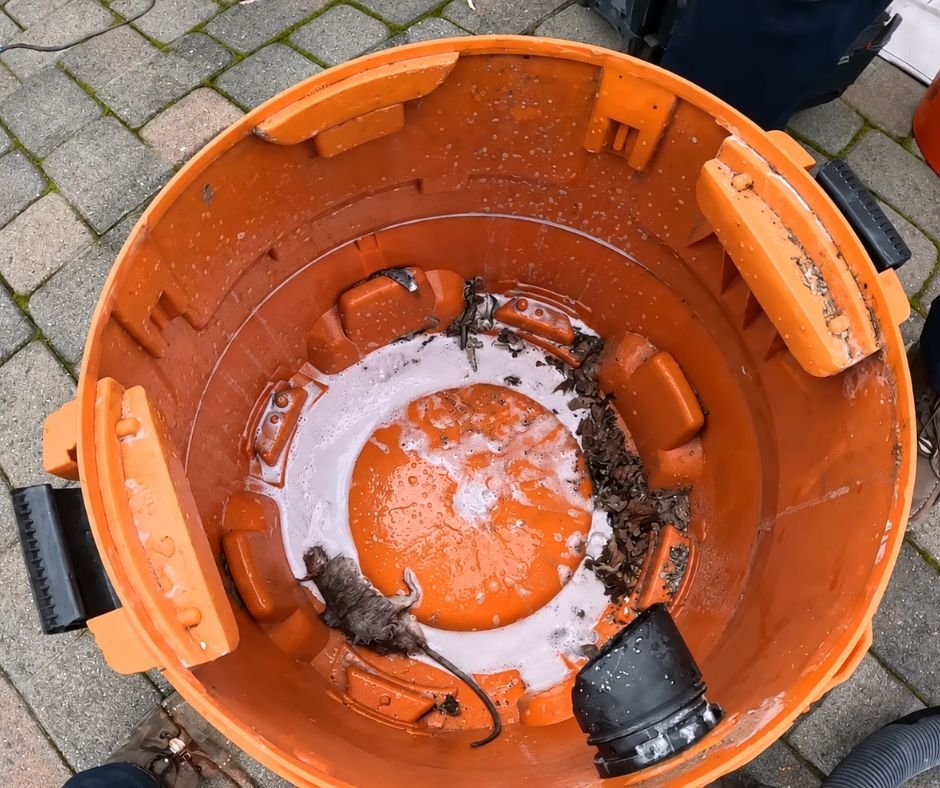 Station checkRat found inside a rodent station during a service check
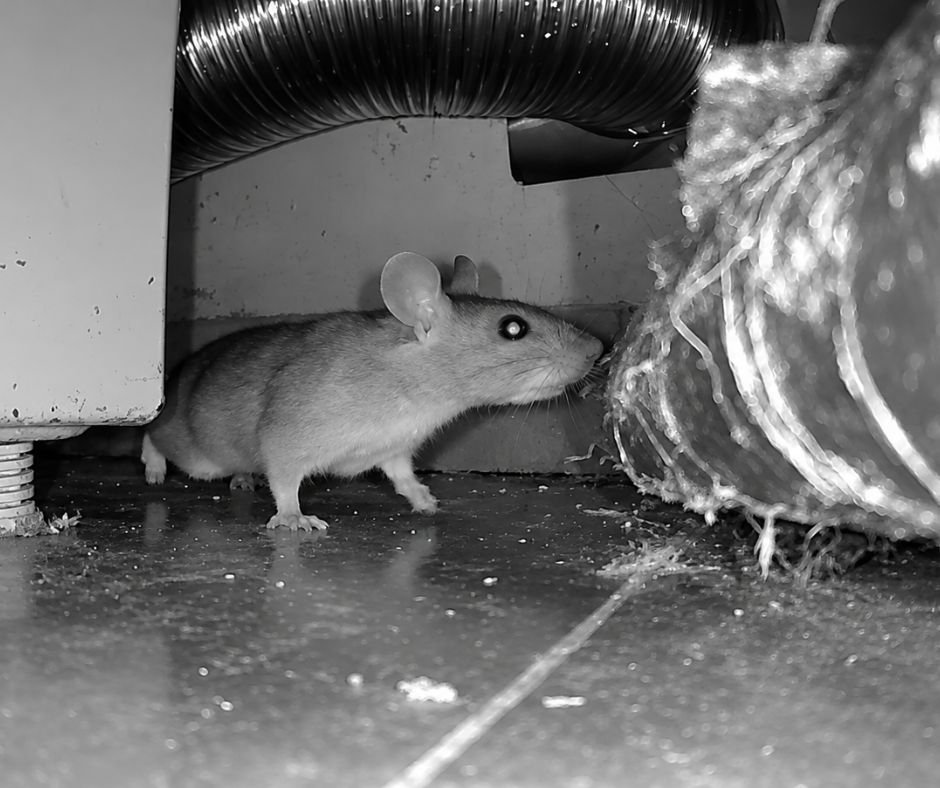 Entry point checkMouse beside a dryer vent duct
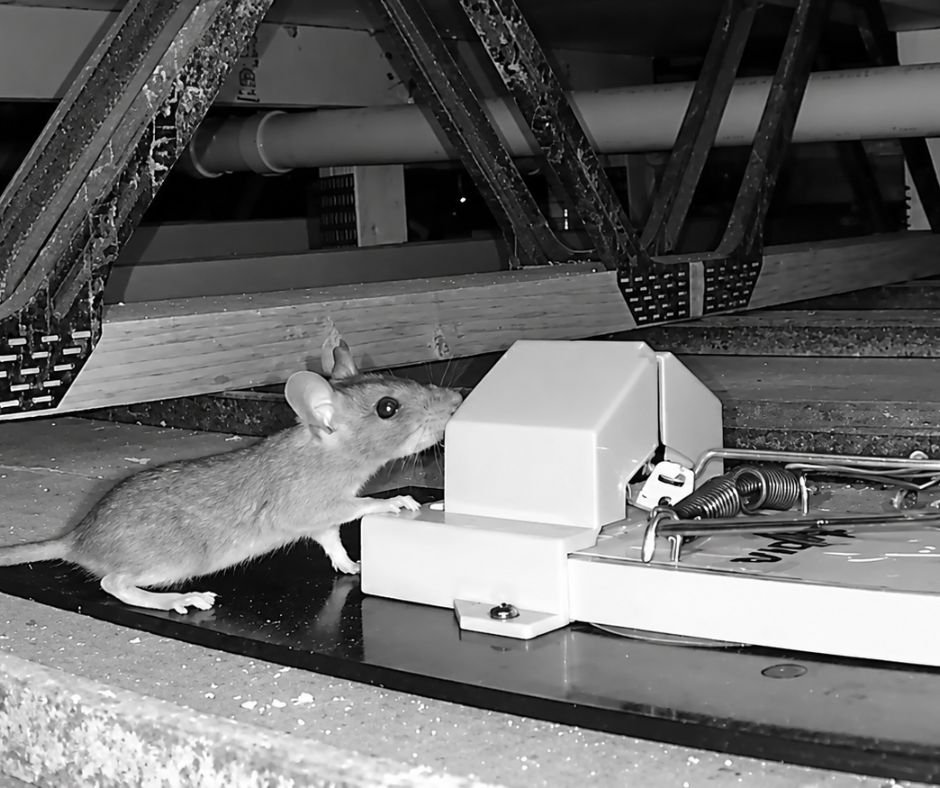 TrappingMouse approaching a trap station near roof trusses
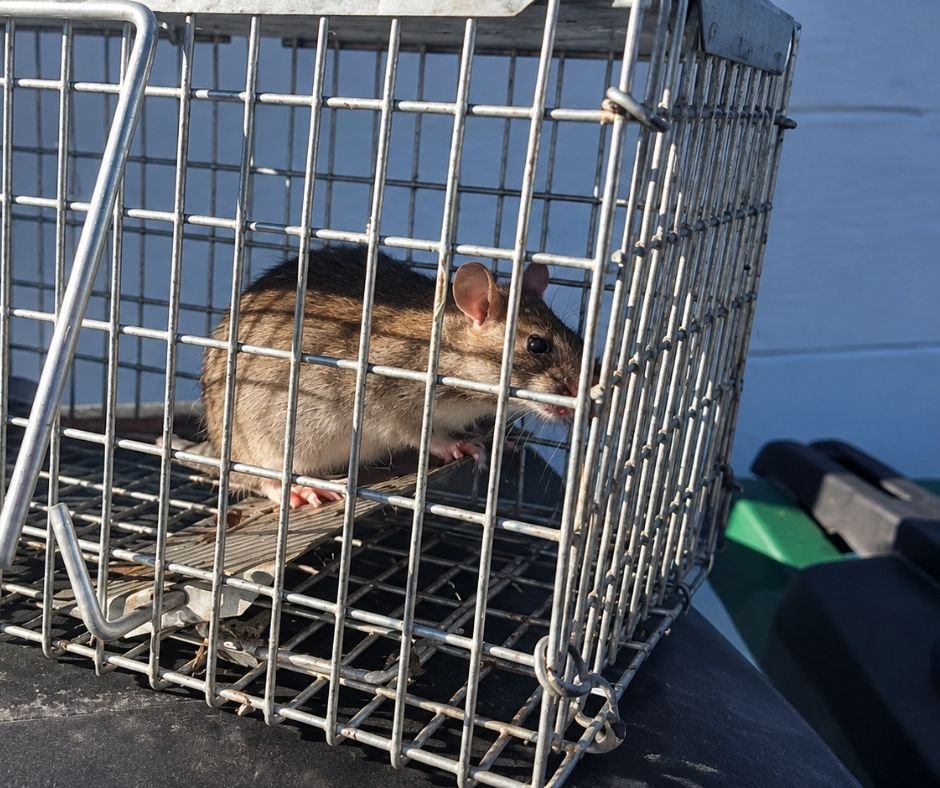 Rat caughtRat caught in a cage trap outside a Florida home
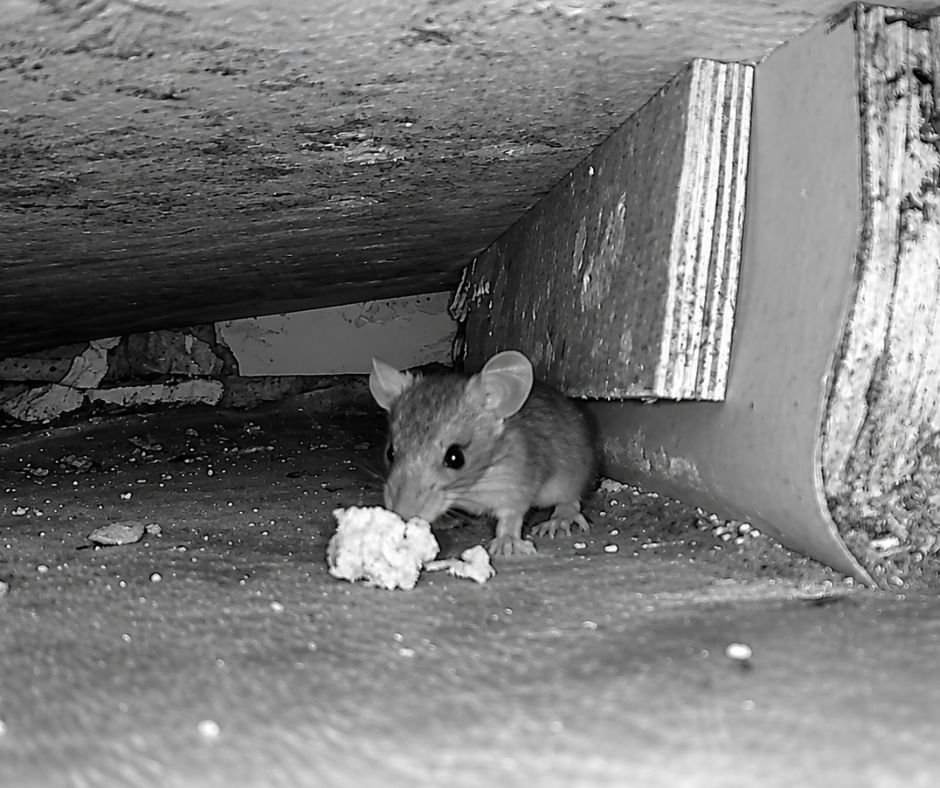 Food source foundMouse feeding on crumbs under a cabinet
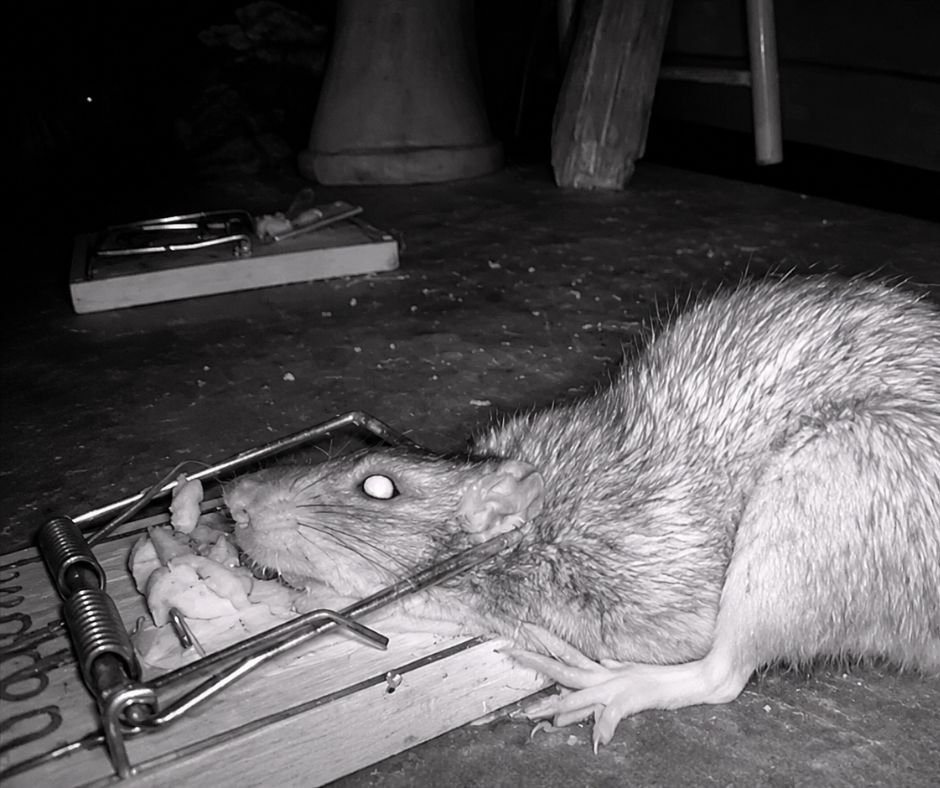 Trap cameraNight camera photo of a rat approaching a baited snap trap
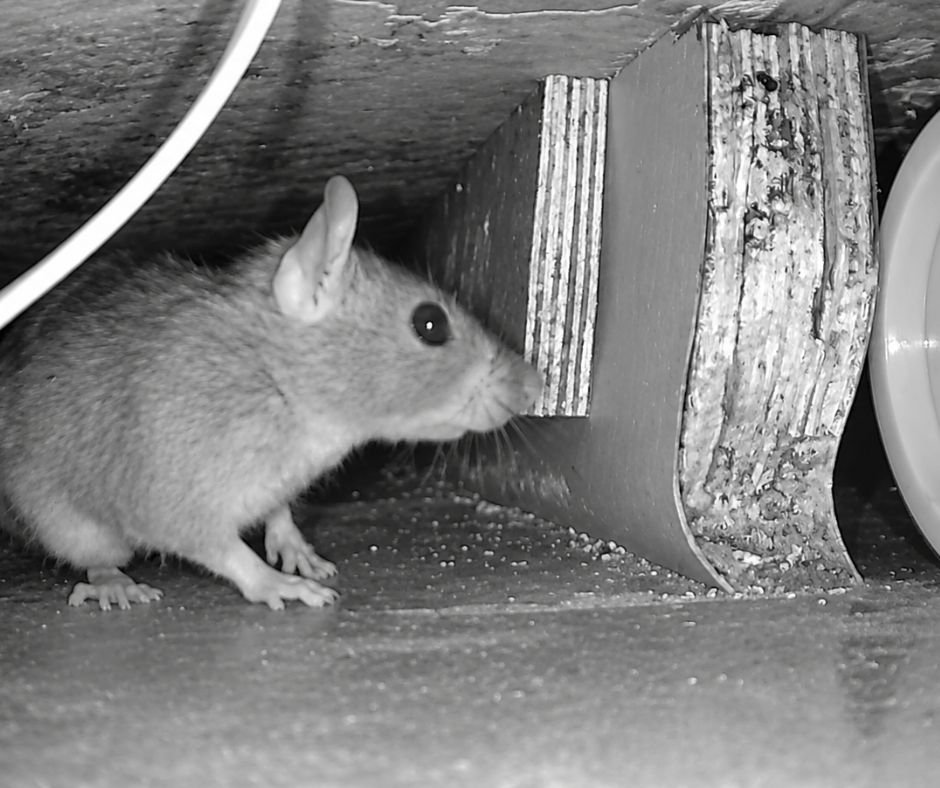 Kitchen inspectionMouse moving along a cabinet base
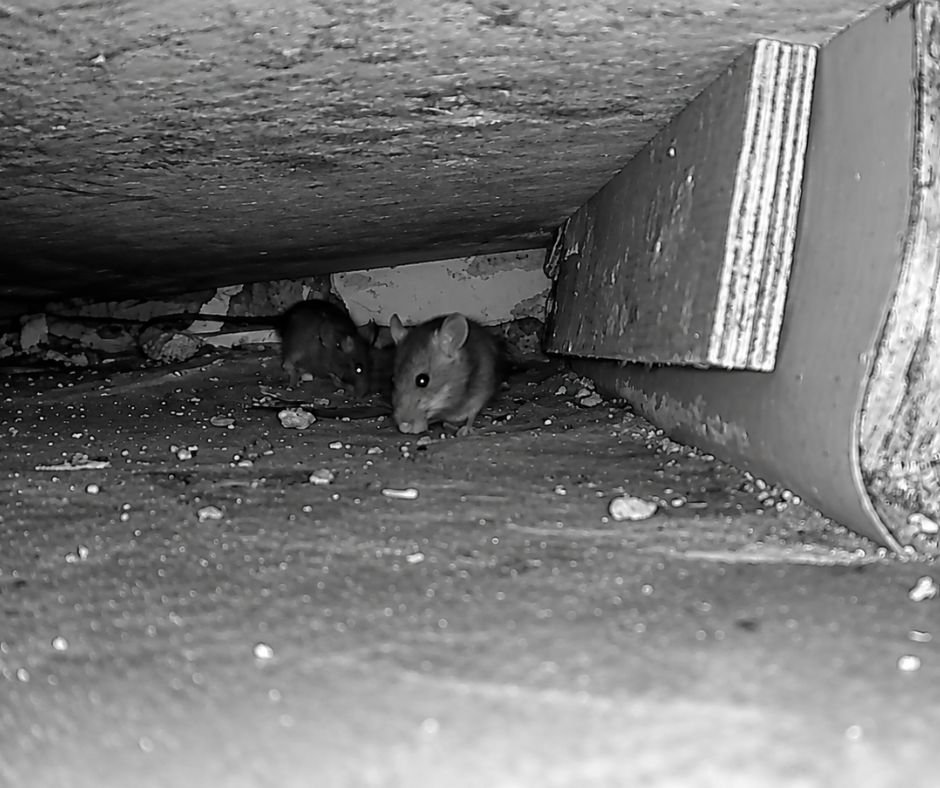 Kitchen inspectionTwo mice under a cabinet, a sign of active activity
Florida, 24 hours a day
Call any time and talk to a local rodent pro. We find how they get in, seal it, remove the ones inside and come back until the activity stops. Homes, rentals and businesses.