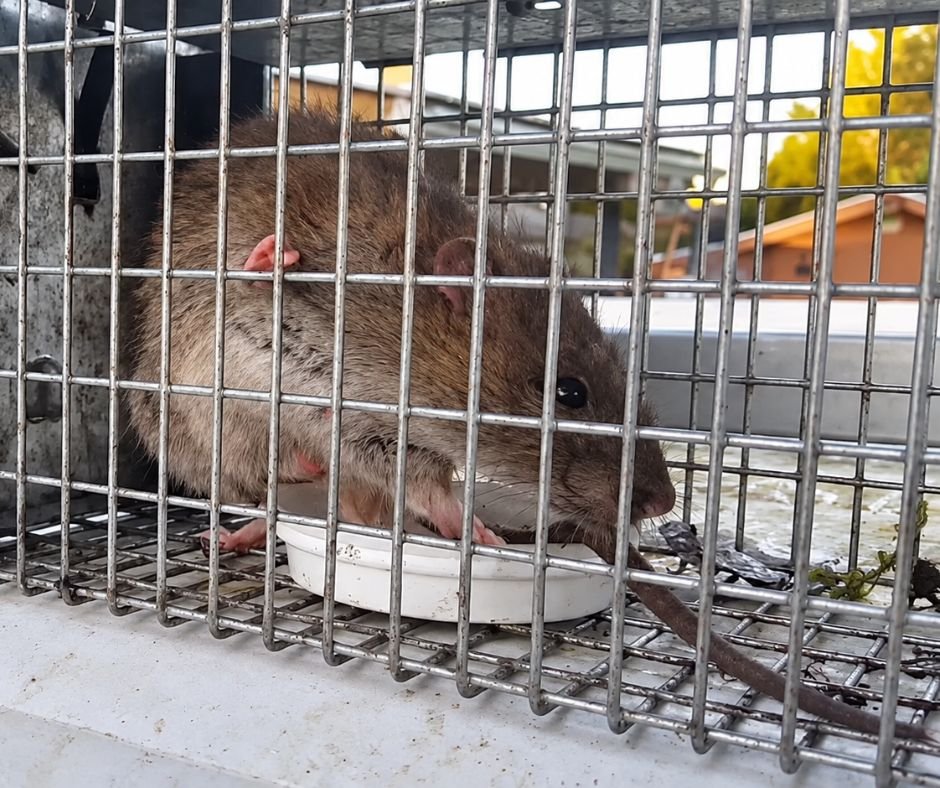
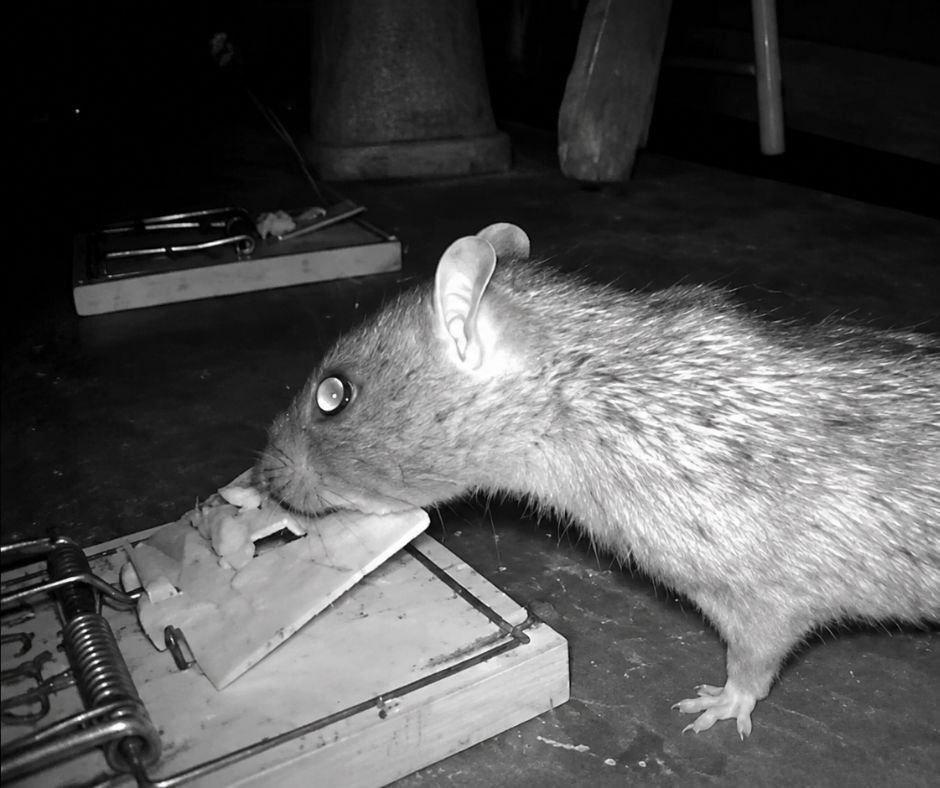
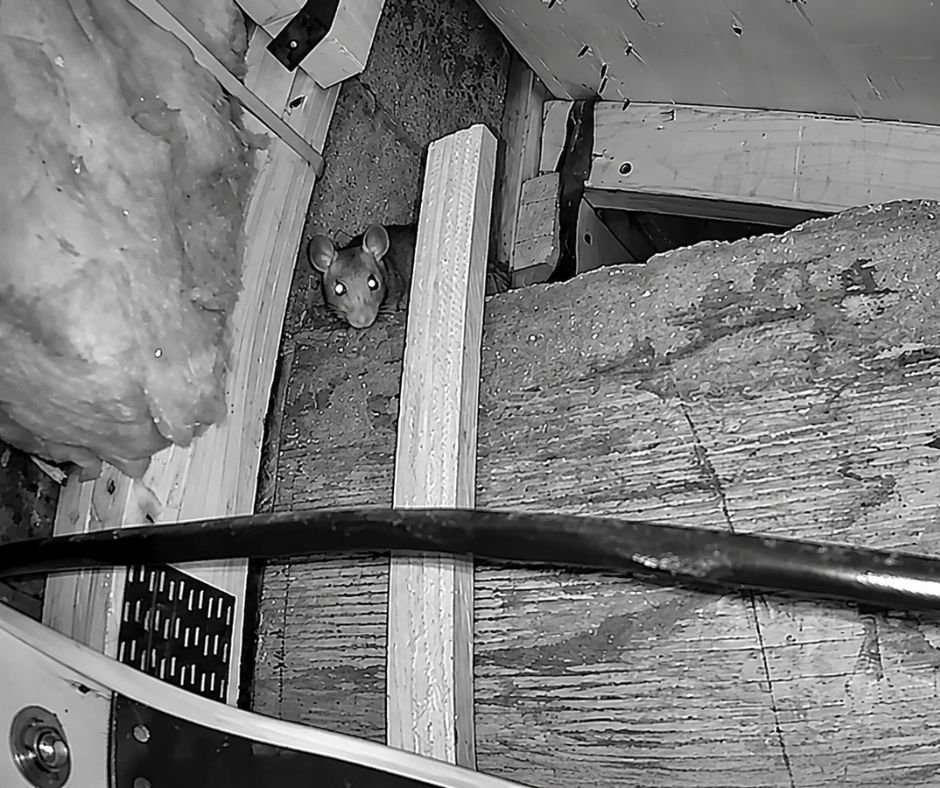
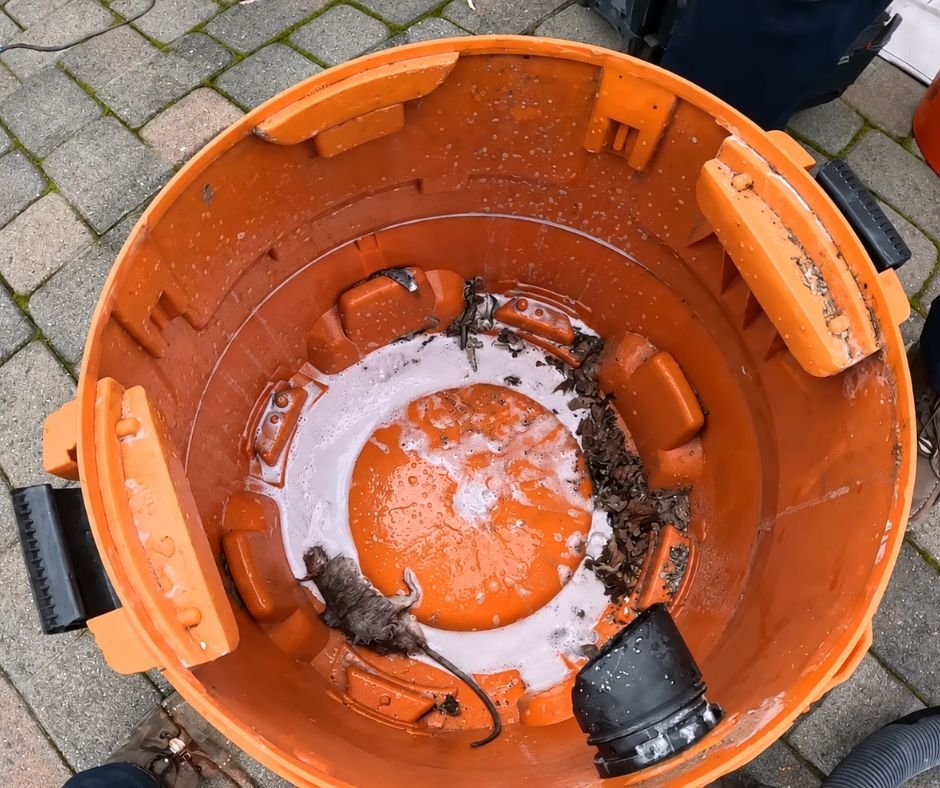
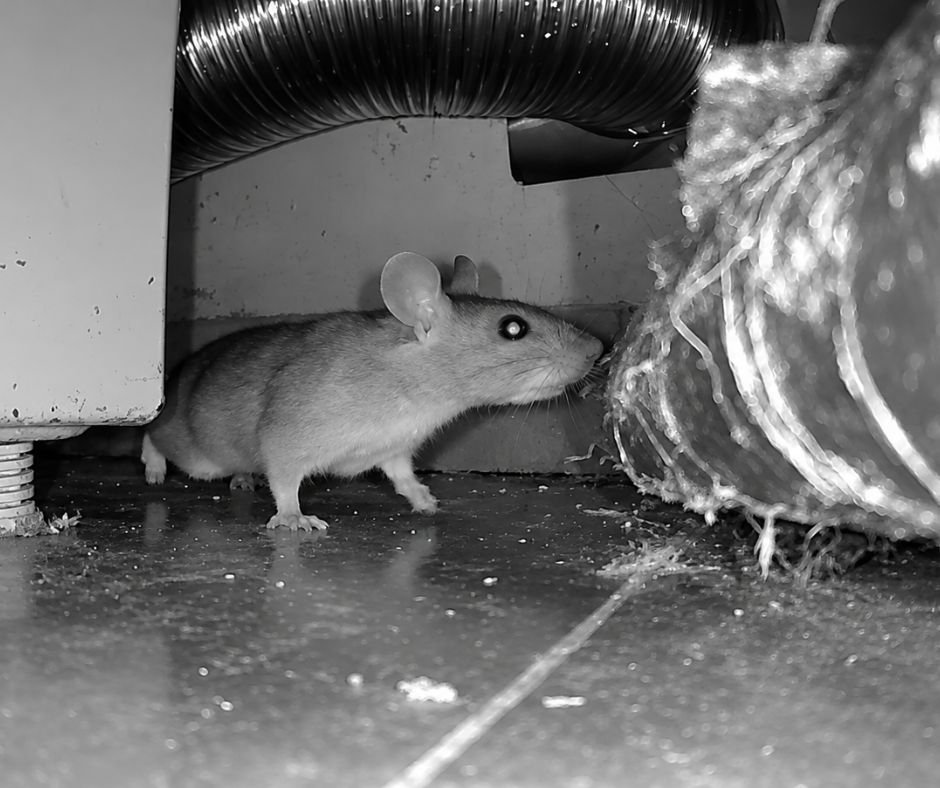
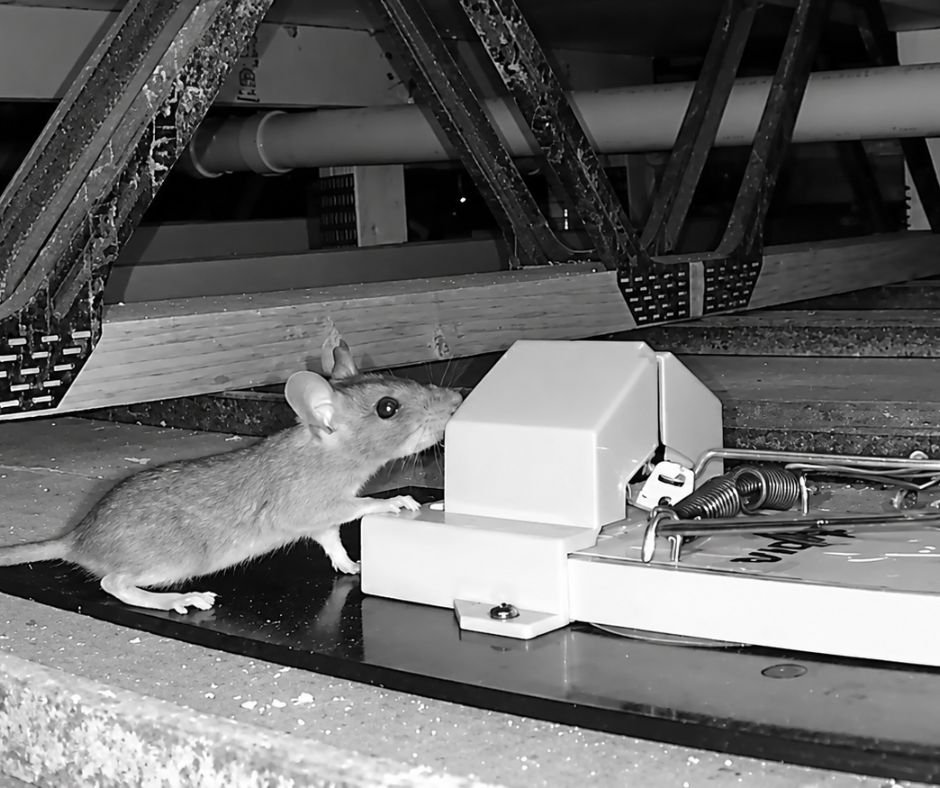
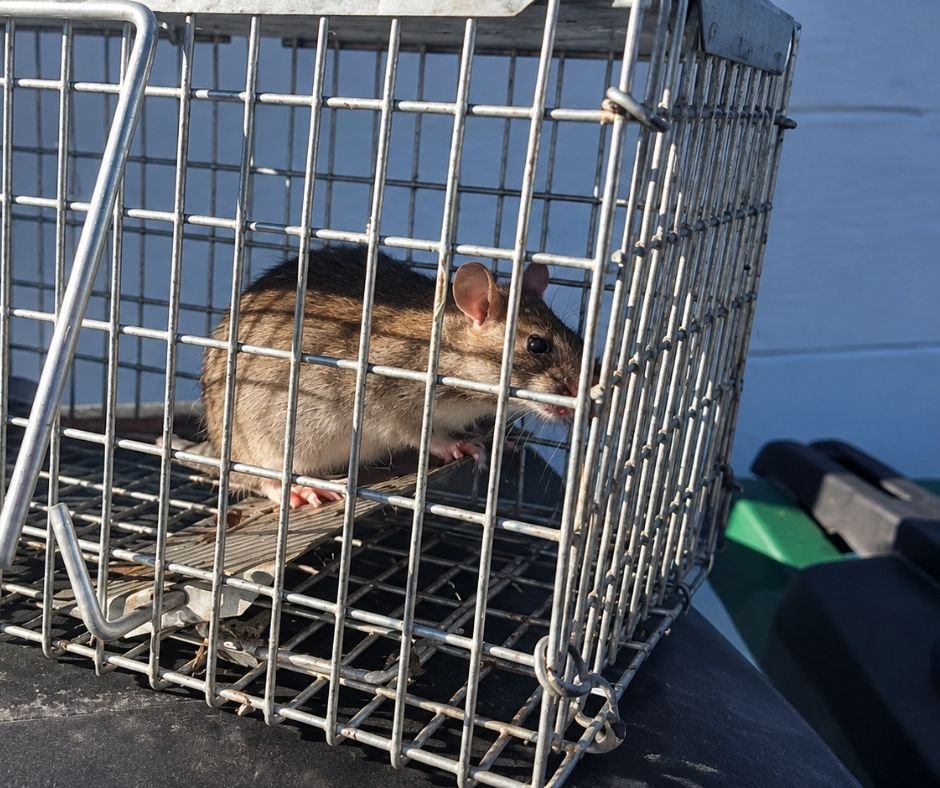
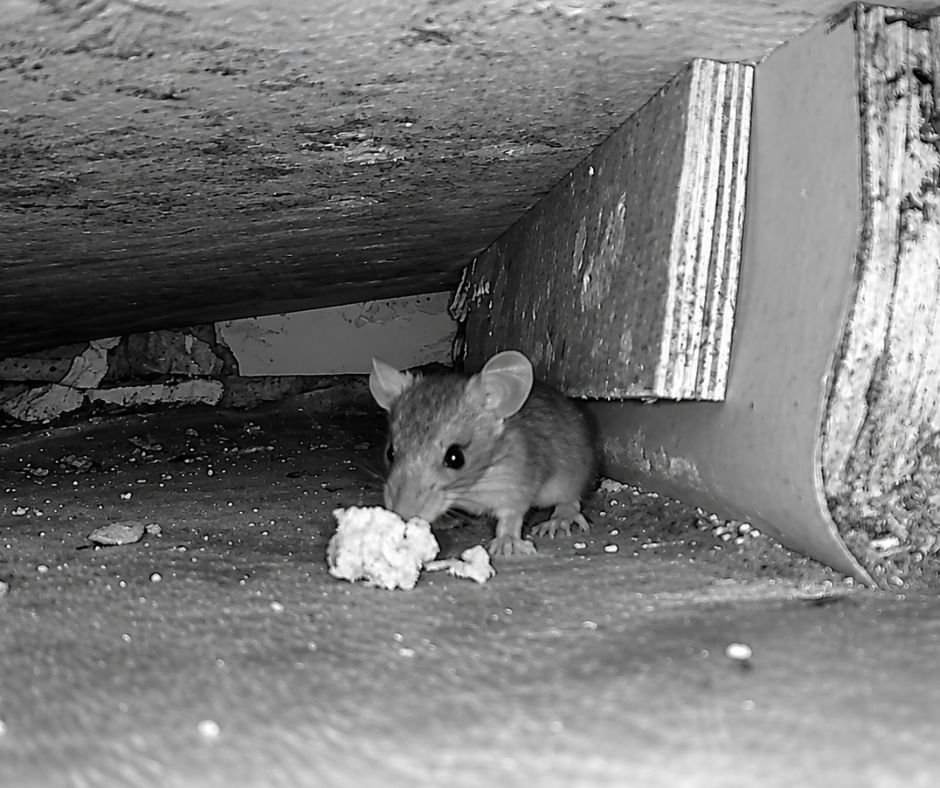
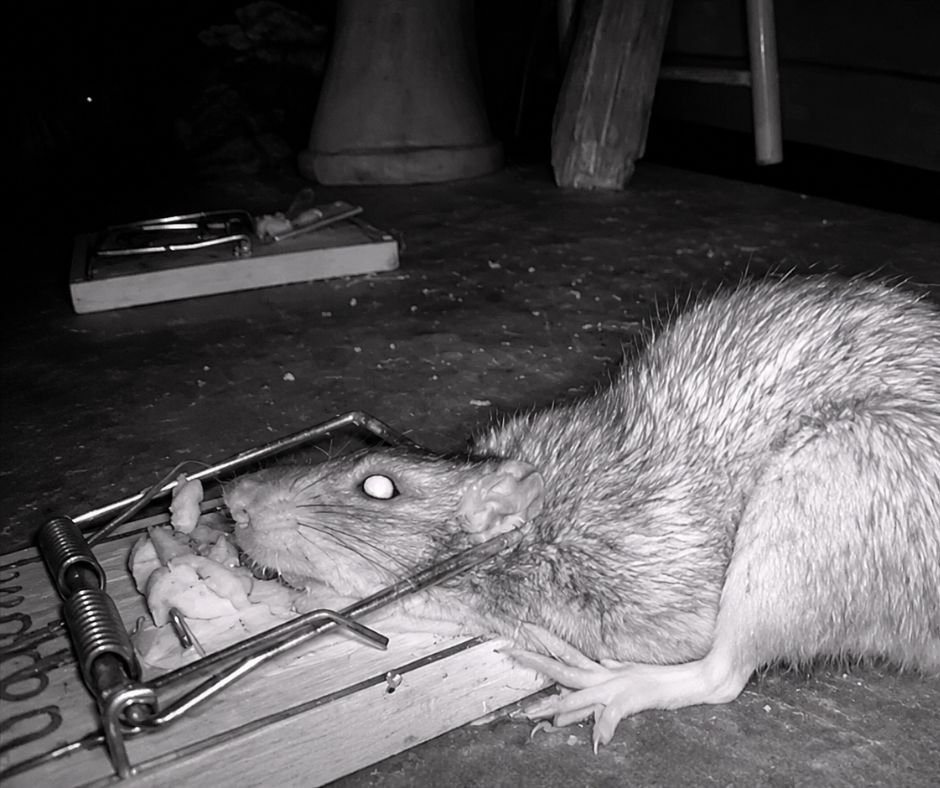
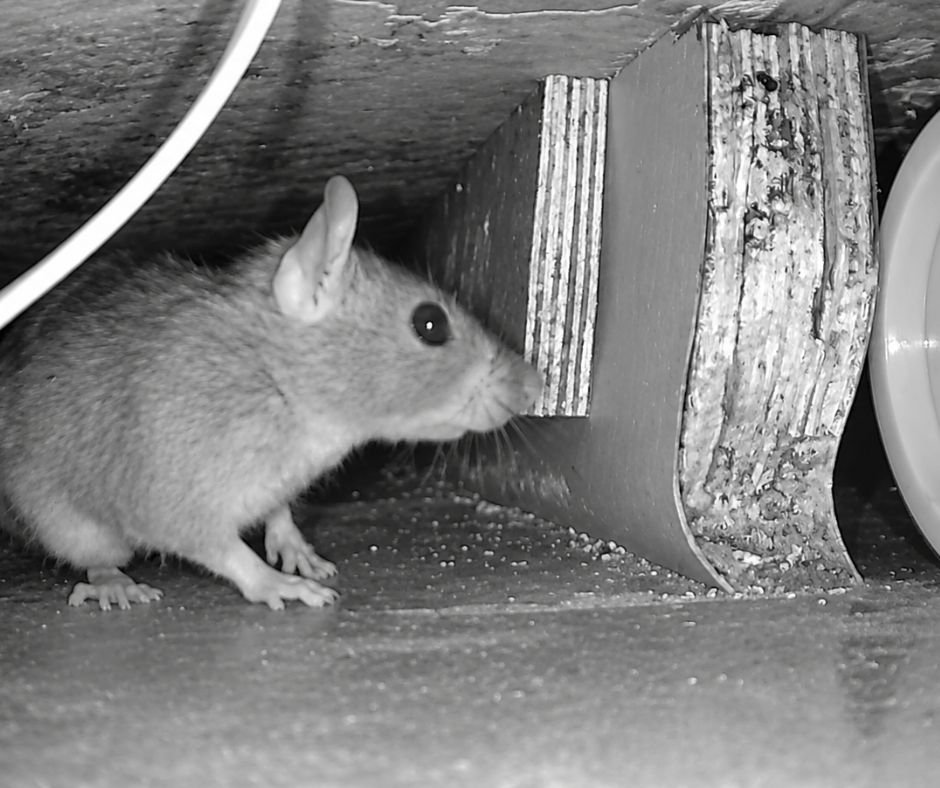
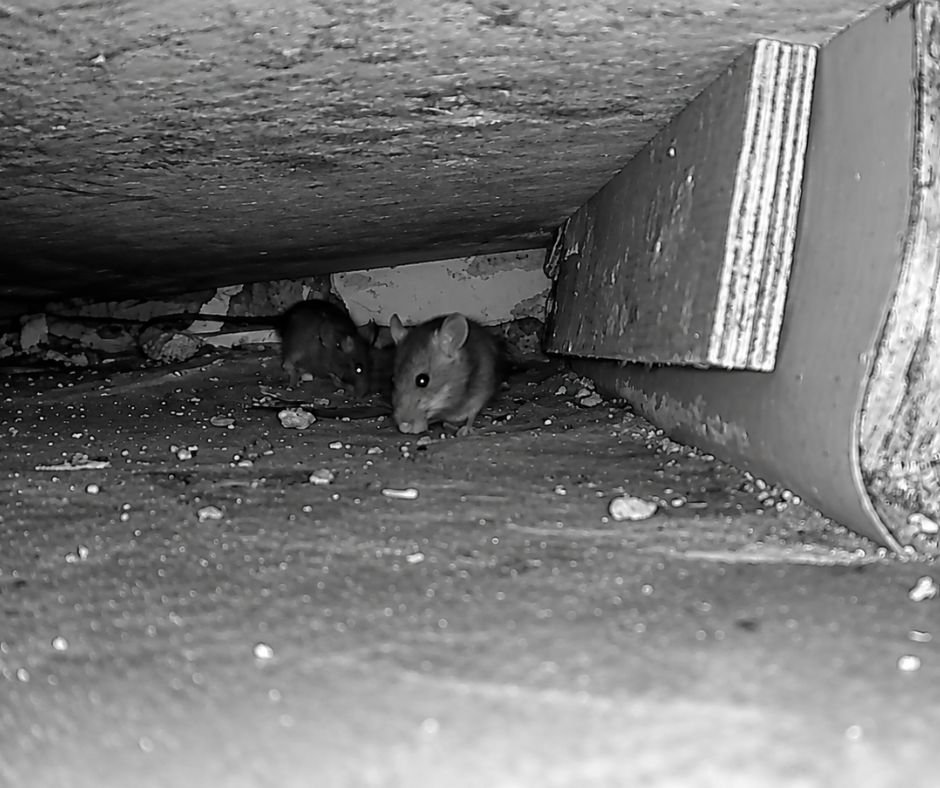
Roof rats are active from dusk to dawn. They leave the attic at night to feed on fruit, seed and pet food, then come back before sunrise. Daytime noise is more likely a squirrel.
Clermont and South Lake County
Rodent Control and Rat Removal in Clermont, FL
Clermont sits on sandy hills between the Chain of Lakes and the old citrus country along US 27. Rats here move from leftover grove trees, lake shores and open land into attics and garages. We find where they get in, close it with metal, trap what is inside and return until it is quiet.
What most Clermont calls turn out to be
Scratching in the attic of a Clermont home is usually a roof rat that climbed in from a tree, a fence line or a tile roof edge. Sealing those gaps is what ends it. Traps only clear out the rats already inside.
Clermont is the largest city in Lake County, and much of it was built on land that grew oranges for decades. Many yards still have a few citrus trees, and the town wraps around lakes like Minneola, Minnehaha and Louisa. Food, water and cover sit side by side, so roof rats (Rattus rattus) do well here all year.
We start with a full inspection, roof to slab. You see the plan and the price first, and nothing starts until you approve it. Then we seal, trap, clean up and come back for follow-up visits.
- County
- Lake County, largest city in the county
- Population
- 43,021 (2020 census)
- Elevation
- About 125 ft, on rolling sand hills
- Main pest
- Roof rat (Rattus rattus) in attics and soffits
- Near water
- Norway rats (Rattus norvegicus) along lake shores and sheds
- Indoors
- House mice (Mus musculus) in garages and pantries
- Call
- (561) 562-7607, 24/7
Source: U.S. Census 2020 and city history via Wikipedia (Clermont, Florida).
From orange groves to cul-de-sacs
Grove Land, Backyard Citrus and the Roof Rat
When the Florida Citrus Tower opened on US 27 in 1956, visitors rode to the top to look out over miles of orange trees. Three hard freezes in 1983, 1985 and 1989 killed most of the groves in Lake County, and over the next decades much of that land became subdivisions.
Roof rats were living in those groves long before the houses came. Many lots still have an orange, grapefruit or tangerine tree left over from the old rows or planted by the first owner. UF/IFAS notes that roof rats feed on citrus mostly from September through March, and leave a round hole about the size of a quarter with the fruit hollowed out.
A loaded citrus tree next to a lanai cage or a low roofline gives a rat food and a ladder. That is why we check your trees as closely as your attic.
Pick up dropped fruit every day in fall and winter, and keep limbs at least a few feet off the roof and screen enclosure.
Signs a rat is eating your fruit
- Hollow oranges still hanging on the tree
- Peels with a clean round hole, about quarter size
- Black droppings, about 1/2 inch long, under the tree or on the lanai
- Dark rub marks on the fascia where a branch meets the roof
- Scratching overhead at night that stops near dawn
Sources: Citrus Tower history (Wikipedia); UF/IFAS EDIS publication UW120, Roof Rats.
Clermont Chain of Lakes
Lakefront Homes and Where Rodents Show Up
The main chain runs from Lake Louisa in the southeast to Lake Minneola in the northwest, linked by short rivers and canals, before the Palatlakaha River heads north. Homes on the water have docks, boathouses and sheds that rats love.
| Lake or area | What is around it | Rodent we look for | Where we check first |
|---|---|---|---|
| Lake Minneola and downtown | Waterfront Park, the trail, the historic downtown and older homes | Roof rats and Norway rats | Older soffit and gable vents, crawl space openings, restaurant dumpsters near the lake |
| Lake Minnehaha and Lake Palatlakaha | Lakefront lots with docks, boat lifts and seawalls | Norway rats on the ground | Burrows under sheds and slabs, boat storage, gaps under garage doors |
| Lake Hiawatha and the canal link | Homes backing onto canals and wet shoreline brush | Norway rats and mice | Shoreline brush, woodpiles, pool equipment pads and AC line openings |
| Lake Susan and Lake Louisa | Larger lots near Lake Louisa State Park, wetlands and woods | Roof rats and native rodents | Roof edges near tall trees, outbuildings, feed and seed stored in sheds |
Source: Clermont chain of lakes (Wikipedia) and the Lake County Water Atlas. Rodent notes reflect what we look for on lakefront inspections; every home is checked in full.
Roof rat math
Why Waiting Until Spring Costs You in Clermont
There is no real winter break here. These numbers from UF/IFAS show how a couple of rats in a garage can turn into a colony in one season.
5-8
Pups per litter
A single roof rat litter, according to UF/IFAS.
4-5
Litters a year
Florida warmth lets them breed through most of the year.
5-10oz
Adult weight
Small enough to slip through a gap at a tile roof edge.
12-14in
Nose to tail
The long tail helps them balance on wires and fences.
Source: UF/IFAS EDIS UW120, Roof Rats.
Services available in Clermont
Rat and Mouse Removal Services in Clermont
Most Clermont jobs combine a few of these: an inspection, sealing, trapping and cleanup. Choose a service to learn more, or call and we will tell you what your property needs.
Residential Rodent ControlAttic and soffit rat removal for Clermont homes, from older houses near Historic Downtown to new construction off Hancock Road.Learn More →
Commercial Rodent ControlScheduled service with written visit logs for shops and restaurants along Highway 50 and near the Clermont waterfront.Learn More →
Rodent RemovalTrapping and removal of rats and mice already inside your Clermont home or business.Learn More →
Dead Rodent RemovalSafe removal of dead rodents from attics and wall voids in Clermont properties, with odor control.Learn More →
Rodent CleanupSanitizing attics, garages and kitchens after an infestation, following CDC cleanup guidance.Learn More →
Rodent ExterminatorEPA and FDACS certified technicians serving every part of Clermont and Lake County.Learn More →
Rodent ExclusionSealing roofline, soffit and foundation gaps so rodents cannot get back into your Clermont property.Learn More →
Rodent Feces RemovalSafe removal and disinfecting of droppings from attics, garages and pantries.Learn More →
Rodent ProofingLong-term prevention for homes near the Chain of Lakes and newer subdivisions alike.Learn More →
Near the park and the Green Swamp
Rat or Wildlife? Homes Near Lake Louisa State Park
Lake Louisa State Park sits on US 27 at the edge of the Green Swamp and the north end of the Lake Wales Ridge, with rolling hills, cypress swamp and scrub. Sugarloaf Mountain, 312 feet above sea level, rises north of town near Lake Apopka. Homes near this open land get visits from more than rats.
Protected
Gopher tortoise burrows
Gopher tortoises live in the park and in sandy yards nearby. They are protected in Florida, so we never place bait or traps at a tortoise burrow. A wide, half moon shaped hole in sand is usually a tortoise, not a rat.
Look alike
Fox squirrels and others
Fox squirrels live around the park. Daytime noise in the attic often points to a squirrel. Night noise, droppings and rub marks point to rats. We identify the animal before we set anything.
Our focus
Rats and mice only
We handle roof rats, Norway rats and house mice. If the sign points to protected wildlife, we tell you so and point you to the Florida Fish and Wildlife Conservation Commission.
Sources: Florida State Parks, Lake Louisa State Park page; Sugarloaf Mountain (Wikipedia).
The Choice of Champions
Bikes, Gear and Rats in Clermont Garages
Clermont calls itself the Choice of Champions. The National Training Center opened here in 2001, and the hills and lake trails draw cyclists, runners and triathletes all year. A lot of local garages double as gear rooms, and that is where mice and rats like to settle.
What draws them
Food and nesting stuff in one room
- Energy bars, gels and drink mix in open boxes
- Bike bags, foam pads and old towels for nests
- Pet food and bird seed in paper bags
- Garage doors left up during long rides or lake days
What we do
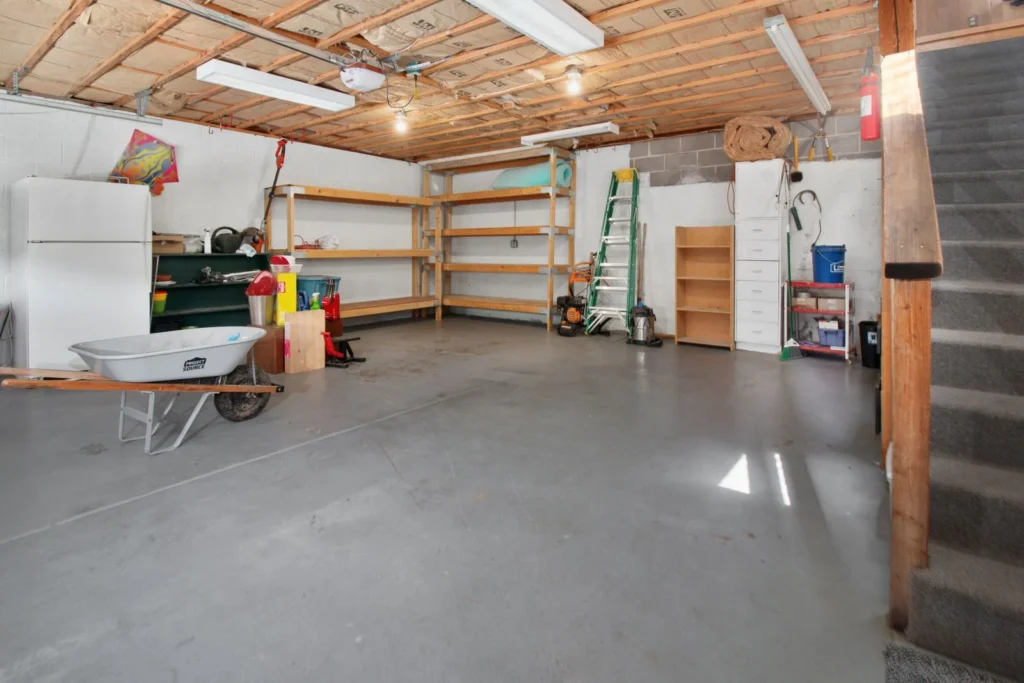
Close the garage, then trap
- Replace worn bottom seals and side weatherstrip on garage doors
- Seal pipe, cable and AC line openings with metal and sealant
- Set snap traps along walls, out of reach of kids and pets
- Show you how to store food in sealed plastic or metal bins
Source: Clermont, Florida (Wikipedia), National Training Center and city slogan history.
Building on the hills
New Construction Pushes Rodents Into Finished Homes
South Lake County keeps growing. The Wellness Way corridor south of Clermont covers more than 15,000 acres, and new neighborhoods keep going in along SR 50 and US 27. When a bulldozer clears an old grove or a pasture, the rats and mice living there move to the nearest houses.
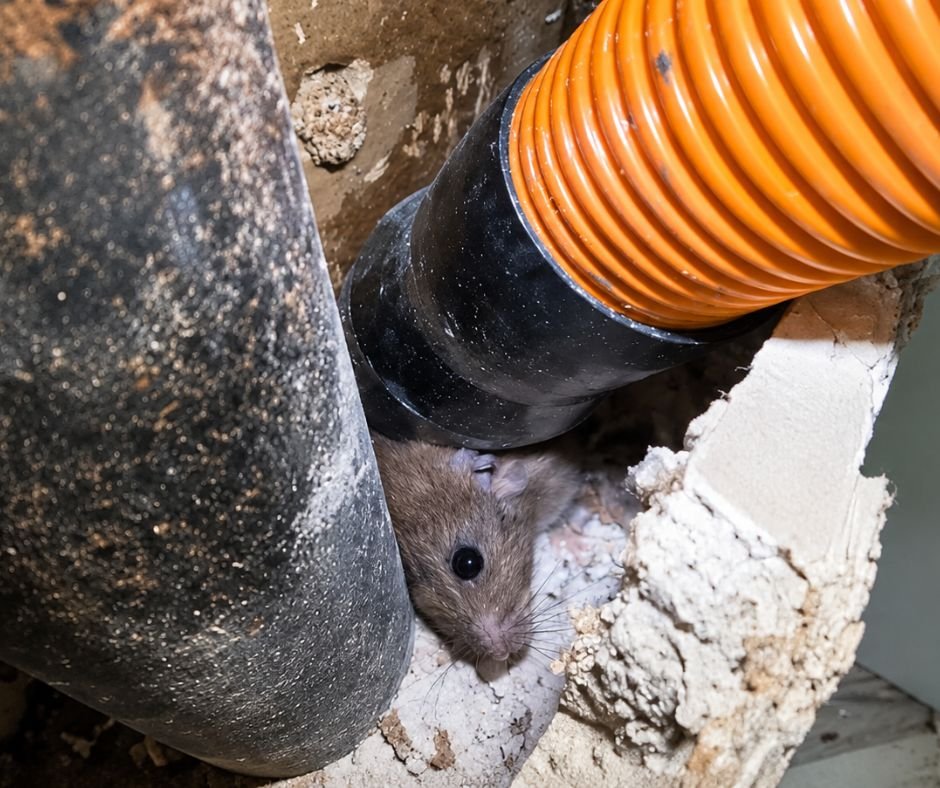
New homes are not rodent proof. Most are stucco on block with concrete tile roofs. Mice and young rats get in where tile meets the eaves, at unfinished ridge caps, at gaps around plumbing and cable, and under garage doors that were never adjusted.
If you live next to an active build site, the first few months are when we see the most new calls. Sealing early is easier than cleaning a nest out of attic insulation later. See our rodent exclusion service.
New build check list
- Tile roof edges and bird stops at the eaves
- Ridge and hip caps
- Soffit panels that pulled loose
- Holes where AC lines and cables enter
- Garage door seals and corners
- Dryer and bath fan vents without covers
Source: Central Florida Lifestyle, “The Wellness Way: How Lake County is Setting the Tone for Generations to Come.”
How the job runs
Your Clermont Rat Removal, Step by Step
Every home is different, but most jobs follow this order. You approve the plan and price before we start.
- Visit 1
Inspect and plan
We check the roof, attic, soffits, garage, slab, yard trees and any sheds or docks, then write up what we found and what it costs.
- Same visit or next
Seal the way in
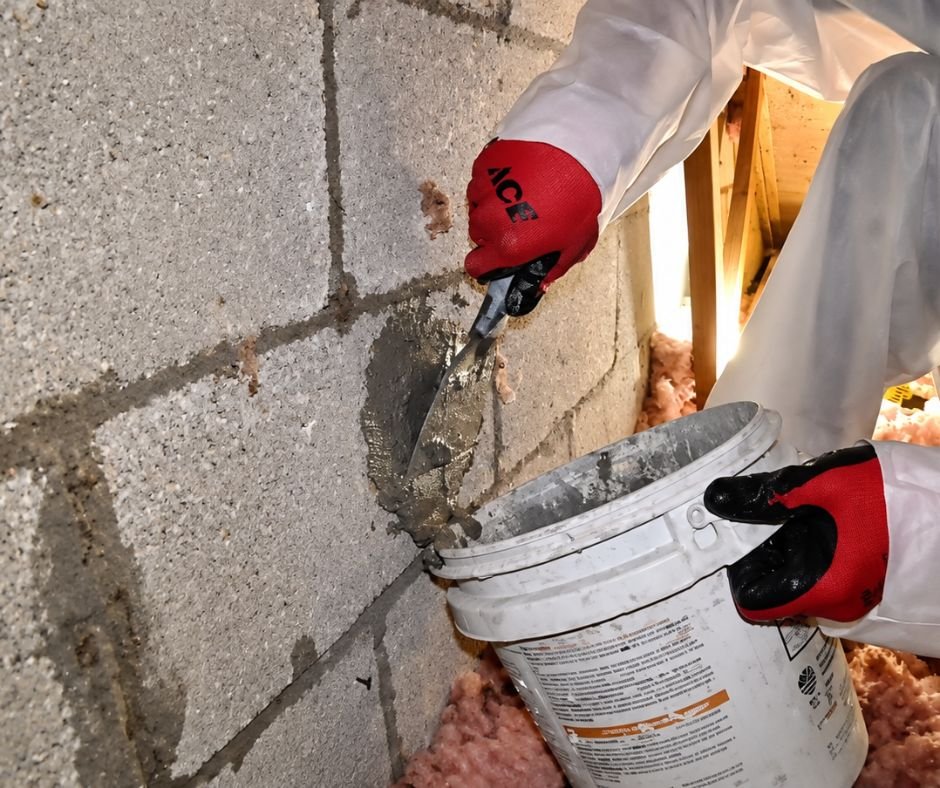
We close entry points with hardware cloth, metal flashing and sealant. Gaps a rat or mouse can use get closed, not stuffed with foam alone.
- Days 1 to 7
Trap inside
Traps go along runways in the attic and garage. UF/IFAS advises leaving traps out at least a week, because rats are wary of new objects.
- Follow-up
Check and remove
We come back, remove catches, move traps if needed and look for any new signs or fresh droppings.
- Final visit
Clean up
We remove droppings and nest material and treat the area following CDC cleanup guidance. See rodent cleanup.
Sources: UF/IFAS EDIS UW120; CDC, How to Clean Up After Rodents.
Save your money
What Does Not Stop Rats in a Lake County Home
We hear about these a lot from Clermont homeowners who tried to handle it first. None of them close the hole the rat is using.
- Ultrasonic plug in repellers
- Peppermint oil or dryer sheets in the attic
- Spray foam alone in a gap (rats chew through it)
- Loose poison thrown in the attic, which can leave a dead rat in a wall
- Trapping without sealing, so new rats keep coming in
Licensed and careful
- Certified
- EPA and FDACS certified team
- Florida law
- Pest control work is regulated under Chapter 482, Florida Statutes
- Outdoor bait
- Locked, tamper-resistant stations only, used per the label
- Dead rat smell
- See dead rodent removal
Primary Clermont response zone
Clermont service coverage
Is your ZIP on the route?
These are our most frequently served Clermont ZIP codes. Nearby areas may also qualify. Call if you do not see yours.
347113471234714
Areas we serve
Check my address →
Historic Downtown · Lake Minneola waterfront · Kings Ridge · Lake Louisa area · US 27 and Hancock Road corridor
Clermont questions
Rodent Control in Clermont: Common Questions
Straight answers for homeowners and businesses around the Chain of Lakes and South Lake County.
Call (561) 562-7607 →New homes in Clermont often have open spots at the tile roof edges, ridge caps, garage door corners and where AC lines and cables go through the wall. Building nearby can also push rodents out of open land and toward finished homes.
Usually not. Keep it trimmed away from the roof and screen enclosure, pick up dropped fruit every day and harvest ripe fruit early. Those steps take away the food and the bridge without losing the tree.
Norway rats burrow near water and under sheds, docks and slabs. They can work their way into garages and crawl spaces. We check the shoreline side of your property, not just the roof.
Rat burrows are about 2 to 4 inches wide and often show up along slabs, fences and sheds. A wide, half moon shaped hole is often a gopher tortoise, which is protected in Florida. We identify it before doing anything.
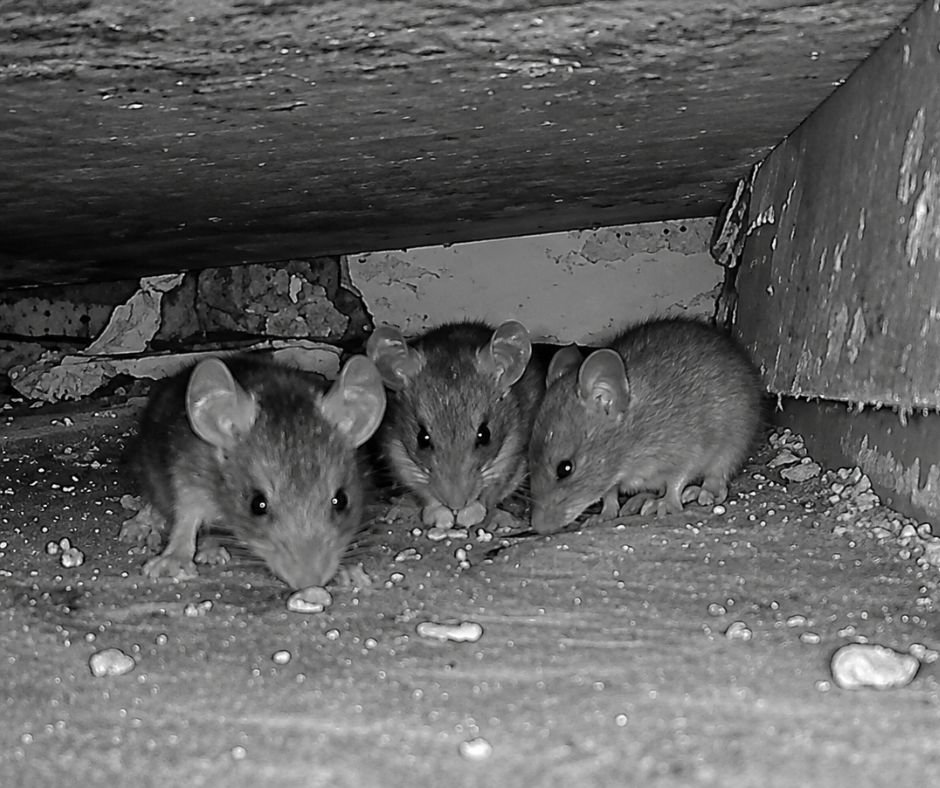
Bag and wash soft gear, throw out chewed food, and store nutrition products in sealed bins. Then we seal the garage door and wall openings and trap the mice still inside.
Yes. We offer commercial rodent control with scheduled visits, exterior bait stations and written service logs for restaurants, shops and rental properties.
Yes. We serve South Lake County, including Minneola and Groveland, and nearby Winter Garden and Horizon West in Orange County. Call (561) 562-7607 any time to set up an inspection.
Clermont dispatch is ready
Rats in Your Clermont Home or Business?
Call now. We will inspect the property, show you where rodents are getting in, and seal it so they stay out.
Request Clermont service
Give us a call. We’ll handle the next step.
Call us, tell us what you are seeing and where you are located, and our team will confirm the right appointment type and timing.
Serving ClermontClermont, Florida(561) 562-7607Open 24 hours · 7 days a week